By the GoVia Investigative Team
An elite multi-newsroom investigation into the price of a traffic stop, the cost of a bullet, and the technology that might just save us all
PROLOGUE: THE SPLIT SECOND
It takes 1.5 seconds to draw a service weapon. It takes 0.3 seconds to decide to fire. It takes a lifetime to bury the dead — whether they wore a badge or walked a street.
In 2025, American police officers killed 1,278 people. That’s more than three people every single day. There were only six days that year with no police killings. Another 363 law enforcement officers lost their lives in the line of duty. Black people were killed at nearly three times the rate of white people.
1,278 citizens. 363 officers. 1,641 lives.
What is a life worth?
CHAPTER ONE: THE NUMBERS DON’T LIE — BUT THEY DON’T TELL THE WHOLE STORY
National: A Crisis in Six Digits
Mapping Police Violence recorded 1,314 police-involved killings in 2025, a decline from 2024’s record high of 1,382 — but a decline that still leaves America with more than 1,000 police killings annually for the fifth consecutive year.
The cost of this crisis isn’t just measured in bodies.
Police misconduct settlements cost American taxpayers **$3.2 billion annually**. Each settlement averages $300,000. In 2019 alone, New York City spent $230 million. Chicago allocated $113 million in 2020. Los Angeles: $87 million. Cleveland: $18 million.
Beyond the settlements themselves: an estimated **$400 million** in legal defense fees annually, insurance premium increases of 15-25%, and $1.8 billion in lost productivity.
$3.2 billion.
What is a life worth when the aftermath alone costs billions?
Atlanta: The South’s Flashpoint
Georgia police shot and killed 38 people in 2025, with the most fatalities occurring in Atlanta. In one October incident alone, an off-duty Atlanta police officer shot Lintol Blackwell, a 44-year-old Black man, 17 times outside a hotel.
17 bullets. One man. Zero de-escalation.
Cleveland: A City Under Consent Decree
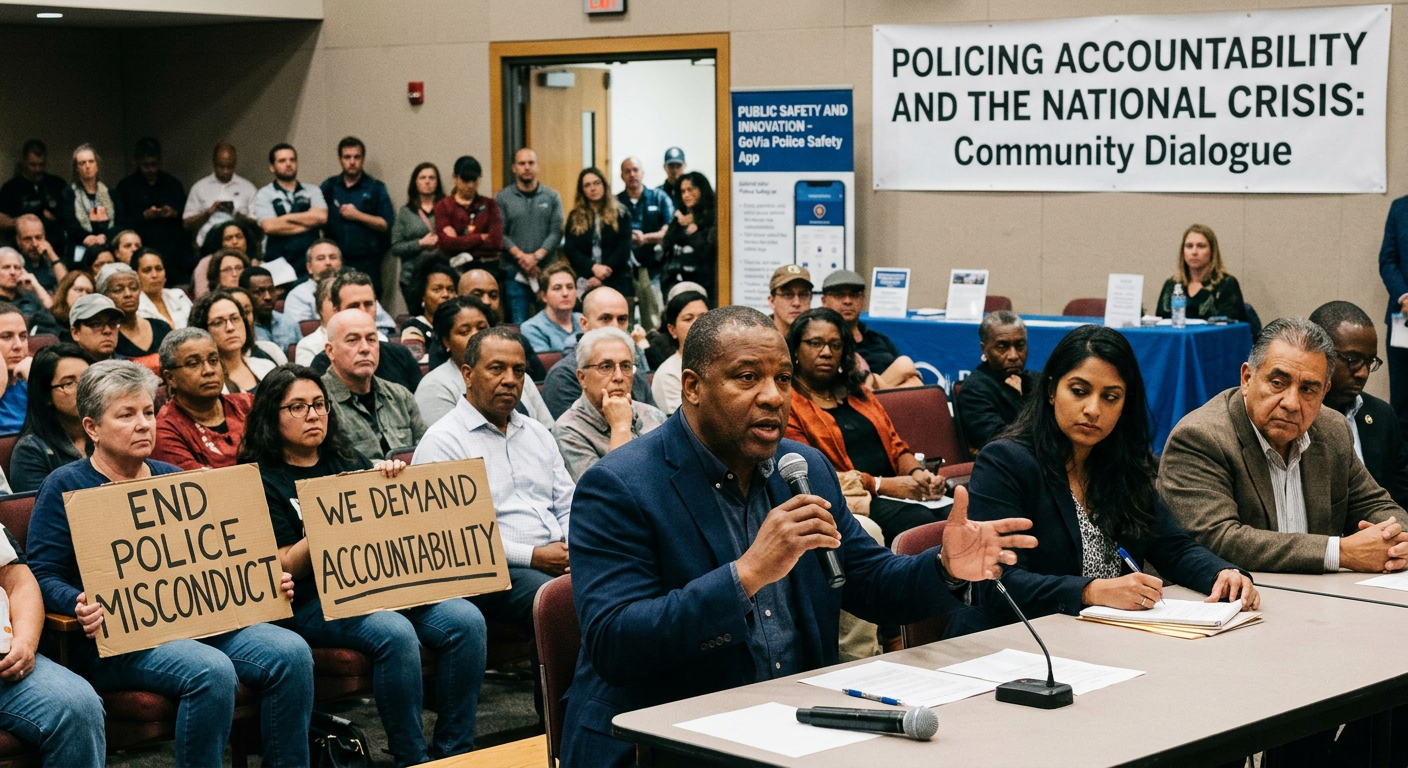
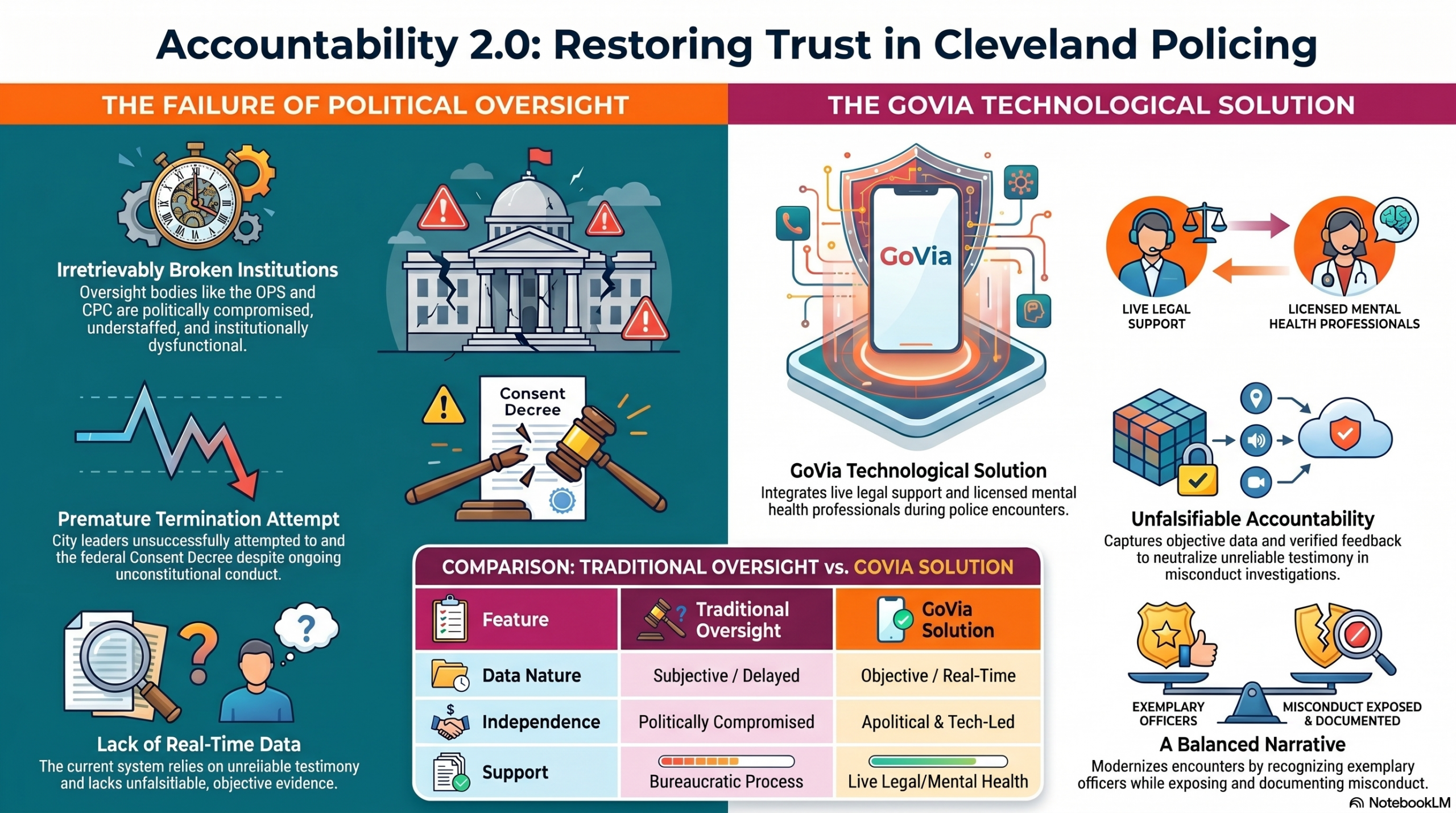
Cleveland entered a federal consent decree in 2015 after the Department of Justice found its police officers engaged in “a pattern and practice of excessive force”. A decade later, the city is still under federal oversight.
The numbers tell a story of slow progress and persistent pain: 279 use-of-force incidents in 2024, up from 211 in 2022. Black drivers are stopped at twice the rate of white drivers. And the city’s history includes a 23-mile car chase where 13 officers fired 137 shots into a vehicle, killing both unarmed occupants.
137 shots. Two lives. Zero weapons.
Los Angeles: The West Coast Spike
LAPD officers fired their weapons in 46 incidents in 2025 — a 70% increase from 2024 and the highest annual shooting total since 2015. Fourteen people were killed. LA County sheriff’s deputies killed nine more.
Mayor Karen Bass said she was “deeply concerned”. Concern, however, is not accountability.
New York: Progress Amidst Pain
NYPD recorded its fewest shooting victims in three decades in the first half of 2025. Yet the NYCLU’s lawsuit revealed that more than 84% of vehicles searched from 2022 through 2025 were driven by Black or Latino drivers, while white drivers made up less than 4%. Black and Latinx drivers are respectively about ten and six times more likely to have their cars searched by the NYPD than white drivers.
The city paid $117 million in 2025 to settle police misconduct lawsuits — the fourth straight year exceeding $100 million.
$117 million. One city. One year.
CHAPTER TWO: “WE THE PEOPLE” — THE CONSTITUTIONAL FRAMEWORK
The Fourth Amendment prohibits unreasonable searches and seizures. Evidence obtained in violation cannot generally be admitted at trial.
The Fourteenth Amendment’s Equal Protection Clause was designed to protect minorities from discriminatory acts — including being stopped by police because of their race. In U.S. v. Moore (4th Cir. 2025), a federal court found a traffic stop violated the Equal Protection Clause based on statistical evidence showing Black drivers were disproportionately stopped.
The Constitution promises “equal protection.”
But equal protection doesn’t mean equal outcomes. It doesn’t mean equal survival rates. It doesn’t mean equal justice.
GoVia’s mission is grounded in these constitutional guarantees: all evidence and property admitted into court, for judge and jury to decide. Live-streamed video from the citizen’s point of view. Real-time attorney access. Mental health intervention in the moment of crisis.
Because the Constitution doesn’t just promise rights — it promises process. And process requires evidence.
CHAPTER THREE: THE GO Via THESIS — SLOW DOWN TO SAVE LIVES
“If we can slow down the interaction and de-escalate, we can have a conversation. It’s fear and tension that create the threat of life and death.” — Georgio Sabino III, CEO & Founder of GoVia
GoVia: Highlight a Hero is not a replacement for policing. It is not a shield for criminals. It is not an obstacle to law enforcement.
It is a life raft.
The Technology: What GoVia Actually Does
The app connects civilians to crisis intervention specialists and attorneys during a police encounter, in real time. Citizens can instantly video call a lawyer or mental health expert who can guide them through the interaction — or even speak on their behalf.
For police departments, GoVia offers real-time tracking, communication tools, and information sharing. Police supervisors can view live-streamed video directly from the citizen’s point of view into the command center. Officers can communicate directly with the attorney to ensure safety and clarify charges.
Sentiment analysis helps identify the aggressor. Crowdsourced feedback highlights exemplary officer conduct. The “Highlight a Hero” feature allows communities to nominate officers for outstanding conduct.
The Stakeholders: Who Wants This and Why
Police departments want GoVia because it reduces liability, provides exculpatory evidence, and de-escalates encounters before they become deadly.
The Fraternal Order of Police (FOP) wants GoVia because it aligns with their mission to protect life, enhance public trust, and improve the working conditions of law enforcement personnel.
Fraternal Order of Police (FOP) — GoVia reduces the emotional and legal burdens on officers, allowing them to carry out their duty with enhanced security and support.
Fraternal Order of Police (FOP) — GoVia creates a transparent, third-party process that validates officer actions and protects them from false accusations.
Citizens and activists want GoVia because it provides accountability, legal representation in the moment, and a documented record of what actually happened.
The Economic Case: Why We Can Afford to Do This
America spends $3.2 billion annually on police misconduct settlements. GoVia’s annual operating cost would be a fraction of that.
$3.2 billion — or one app that could prevent the incidents that generate those settlements in the first place.
The math is simple: Prevention is cheaper than settlement. A life is worth more than a lawsuit.
CHAPTER FOUR: THE STORIES WE COULDN’T GET BACK
GoVia has interviewed hundreds of people in the field: police officers, attorneys, bail bondsmen, mental health agencies, legal aids.
They’ve heard the stories that keep people up at night.
The innocent policeman who pulled over the wrong car.
The innocent citizen who reached for a wallet instead of a weapon.
The traffic stop that lasted 90 seconds too long.
The mental health crisis that ended in a body bag instead of a hospital bed.
These are the stories we wish we could get back and live another day.
GoVia’s educational instruction teaches citizens:
- How to be pulled over safely
- How to comply with the attorney using tech and law
- How to be arrested without charge stacking
The goal: teach the citizen to de-escalate so the officer shows compassion, good judgment, and patience.
CHAPTER FIVE: THE OBJECTIONS — AND THE ANSWERS
“GoVia will obstruct police work.”
False. GoVia is not in the way of officers doing their business. It does not obstruct or defend. It is an added feature to make encounters safer — nothing more.
“GoVia will protect criminals.”
False. GoVia provides more evidence by live-recording. That evidence goes into discovery. The truth comes out — whether it helps or hurts. For criminals, the app can “only” help you get an attorney in the moment and try to help from getting extra charges.
“This is too expensive.”
False. The status quo costs $3.2 billion annually. GoVia is a fraction of that. The question isn’t whether we can afford to do this — it’s whether we can afford not to.
“This won’t change anything.”
False. In 2025, police killed 1,278 people. There were only six days without a police killing. If GoVia saves even one life, it’s worth it. If it saves ten, it’s a revolution. If it saves a hundred, it’s a moral imperative.
CHAPTER SIX: THE REVOLUTIONARY THEORY
GoVia is working on a revolutionary theory:
“WE the people” can create our destiny in the pursuit of happiness.
This isn’t just an app. It’s a reimagining of the social contract between citizens and the state. It’s a recognition that both sides — police and public — want the same thing: to go home alive at the end of the day.
The data is in. The interviews are done. The technology exists.
The only question is whether we have the courage to use it.
EPILOGUE: WHAT IS A LIFE WORTH?
A life is worth everything.
It’s worth the $3.2 billion we spend on settlements. It’s worth the $400 million in legal fees. It’s worth the $1.8 billion in lost productivity.
But more than that, a life is worth the effort to save it.
A life is worth slowing down a traffic stop by 30 seconds.
A life is worth connecting a citizen to a mental health professional instead of a handcuff.
A life is worth live-streaming an encounter so the truth — whatever it is — can be seen by judge and jury.
A life is worth teaching a citizen how to comply and an officer how to show compassion.
A life is worth GoVia.
WHAT YOU CAN DO
- Download the app. GoVia: Highlight a Hero is available on Google Play.
- Share your story. Your experience — good or bad — helps build a better product.
- Share your criticism. GoVia wants to make the very best product for “the people”.
- Demand that your police department partner with GoVia. Ask your city council. Ask your mayor. Ask your police chief.
- Remember: It only takes seconds for a life to end. But it also only takes seconds to save one.
GoVia: Highlight a Hero — The future of policing.
Because every life is worth saving.
Because every citizen deserves their day in court.
Because every officer deserves to go home.
Because “We the People” can create our destiny in the pursuit of happiness.
This investigation was conducted by the GoVia Investigative Team, incorporating data from Mapping Police Violence, the Police Brutality Center, the National Law Enforcement Officers Memorial Fund, and hundreds of interviews with police officers, attorneys, bail bondsmen, mental health agencies, and legal aids across Atlanta, Cleveland, Los Angeles, and New York.
Sources: Mapping Police Violence; Police Brutality Center; National Law Enforcement Officers Memorial Fund; NYCLU; City of Cleveland Consent Decure Reports; LAPD Use of Force Data; Atlanta Police Department Records; GoVia: Highlight a Hero platform documentation.
“What is a life worth when we can save someone’s life during a traffic stop?”
The answer: Everything.
GoVia: The future of policing.