An investigative story inspired by real criminal-justice challenges, civil-rights debates, and emerging public-safety technology.
Chapter 1: The Team Nobody Expected
In Atlanta, Georgia, inside a converted warehouse overlooking the skyline, a strange coalition gathered around a conference table.
There were attorneys for civil rights, a former investment banker, a public-finance economist, a govtech strategist, a legal-tech operator, a mental-health systems expert, a law-enforcement training specialist, a data scientist, IP counsel, and a policy analyst.
They called themselves the GoVia Team.
Their mission was simple to explain but difficult to achieve:
Tell the truth faster than misinformation. Protect citizens and officers before situations turn tragic.
On the wall was a quote from James Baldwin:
“Not everything that is faced can be changed; but nothing can be changed until it is faced.” [snopes.com], [quotle.info]
Everyone in the room understood why it was there.
America had spent decades arguing about policing, justice, accountability, race, public safety, mental health, and civil rights.
Yet communities in Atlanta, Cleveland, Los Angeles, and New York continued to ask the same question:
Why does the system still feel broken?
Chapter 2: The Real Stories Behind the Headlines
The team reviewed real reports.
In Chicago, a court-ordered study released in 2026 found continuing racial disparities in police use-of-force incidents, despite years of reform efforts. Researchers concluded systemic factors remained significant concerns. [news.wttw.com]
National investigations also documented concerns involving force used during mental-health encounters and questions regarding accountability after federal oversight was reduced in some jurisdictions. [davisvanguard.org], [propublica.org]
At the same time, law-enforcement leaders argued that officers were facing unprecedented stress, staffing shortages, political attacks, and dangerous situations daily. Departments such as the NYPD announced major investments in officer training, accountability systems, and policing modernization. [nyc.gov]
The data scientist looked around the table.
“Everybody has part of the truth,” she said.
The civil-rights attorney nodded.
“But nobody has the whole truth.”
Chapter 3: Interviewing America
The GoVia team traveled.
Atlanta
One officer quietly admitted:
“Most cops want to go home safe. Most citizens want the same thing. The technology isn’t the enemy. Bad information is.”
The officer liked the idea of automatic incident documentation.
Cleveland
A mother whose son was stopped by police said:
“I don’t hate the police. I hate uncertainty. I want accountability.”
Los Angeles
A veteran community organizer explained:
“We’ve spent decades arguing over narratives. What if the evidence existed in real time instead?”
New York
An officer with twenty years of service was less enthusiastic.
“I don’t love being monitored. But body cameras changed policing. Technology is here whether we like it or not.”
Then he shrugged.
“Tech and law are coming.”
Chapter 4: The Mental Health Crisis
The mental-health systems expert pointed to another challenge.
Many encounters were not criminal.
They were behavioral-health emergencies.
Across the nation, police are frequently called into situations involving mental-health crises, homelessness, addiction, trauma, and distress.
The expert explained:
“We often send a badge to solve problems that really need a therapist.”
Everyone fell silent.
The economist added:
“That’s also expensive.”
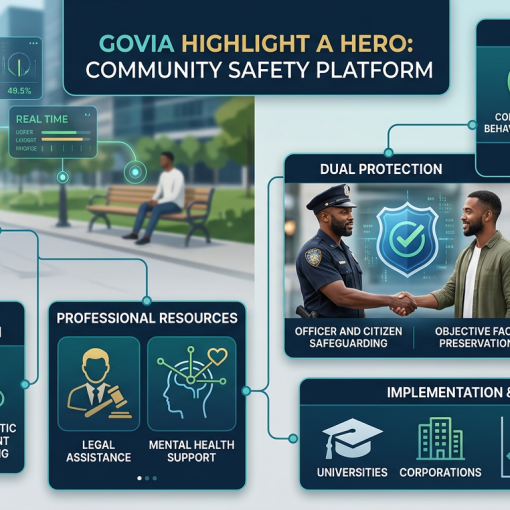
The team envisioned a future where AI-assisted tele-mental-health responses, legal guidance, crisis intervention resources, GPS routing, and accountability tools could work together before a situation escalated.
Not replacing police.
Not replacing attorneys.
Not replacing mental-health professionals.
Helping them.
Chapter 5: A Lesson from Baldwin and Wise
During a strategy meeting, another quote appeared on the screen.
Civil-rights educator Tim Wise once wrote:
“Ignorance of how we are shaped racially is the first sign of privilege. In other words, it is a privilege to ignore the consequences of race in America.” [goodreads.com], [azquotes.com]
A debate erupted.
Some officers disagreed.
Some activists strongly agreed.
The remarkable thing was that nobody left the room.
They kept talking.
The policy analyst smiled.
“That may be the biggest reform of all.”
Chapter 6: Can GoVia Become a Unicorn?
The investment banker flipped to a slide.
What makes a unicorn company?
A unicorn is generally a privately held company valued at over $1 billion.
Most never get there.
But GoVia possessed unusual characteristics.
Why Investors Could See Unicorn Potential
1. Massive Market
GoVia touches multiple industries simultaneously:
- GovTech
- LegalTech
- Public Safety
- Mental Health
- Civic Engagement
- Education
- Workforce Training
- ESG Reporting
Very few startups operate across all those sectors.
2. Network Effects
The more users participate:
- Citizens
- Attorneys
- Cities
- Police departments
- Courts
- Schools
- Community organizations
the more valuable the platform becomes.
3. Global Relevance
The problems are not uniquely American.
The team’s interviews expanded across:
- United States
- United Kingdom
- Tanzania
- Canada
- Australia
Each nation faced variations of the same challenge:
Trust. Accountability. Evidence. Transparency.
4. New Category Creation
The legal-tech operator explained:
“Uber transformed transportation.”
“Airbnb transformed hospitality.”
“What if GoVia transforms accountability?”
The room became quiet.
Because everyone understood the scale of the statement.
Chapter 7: Highlight A Hero
Then something unexpected happened.
The platform did not only document conflict.
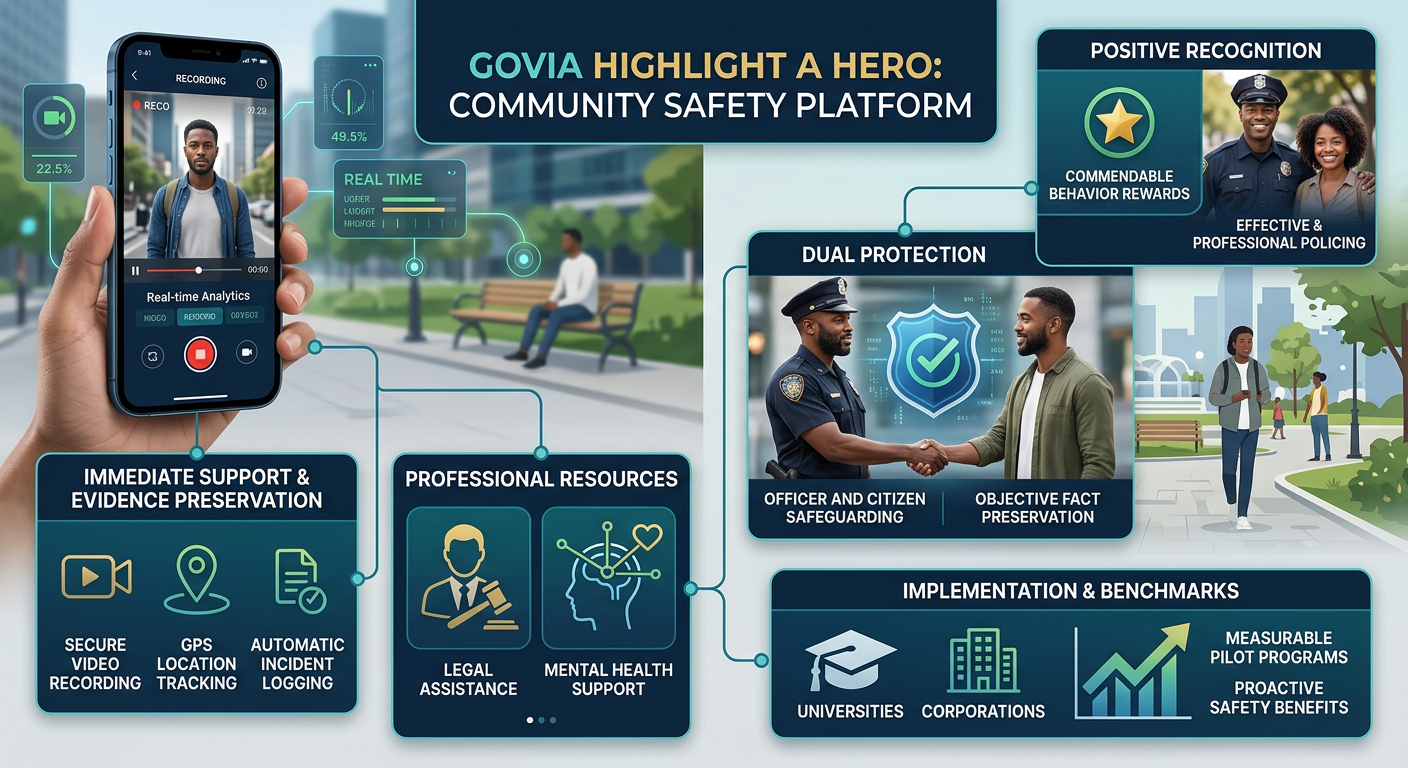
It celebrated success.
A Cleveland officer helping a stranded family.
An Atlanta teenager preventing violence.
A Los Angeles social worker saving a life.
A New York teacher mentoring students after school.
A nurse in Tanzania.
A firefighter in London.
An attorney fighting for constitutional rights.
A community volunteer no television station had ever interviewed.
The Highlight A Hero feature turned them into visible examples of public service.
Suddenly, the story was no longer only about what went wrong.
It became about what was going right.
Chapter 8: The Super Majority
As interviews continued across America and abroad, people disagreed on politics, taxes, policing, courts, race, and elections.
But one finding kept emerging.
Most people wanted:
- Accountability
- Equality under the law
- Officer safety
- Citizen safety
- Transparency
- Mental-health support
- Better technology
- Better institutions
Not chaos.
Not revenge.
Not division.
Better outcomes.
The team began calling that coalition:
The Super Majority
Not a political party.
Not an ideology.
A belief that truth, evidence, and human dignity matter.
Final Scene
A reporter asked GoVia founder Georgio Sabino III:
“Do you think technology can solve America’s justice problems?”
He smiled.
“No.”
The reporter looked confused.
Georgio continued:
“Technology alone cannot save us.”
“It can help us see.”
“And once we can see clearly, maybe we can finally face what James Baldwin told us decades ago.”
He pointed toward the quote on the wall.
“Not everything that is faced can be changed; but nothing can be changed until it is faced.” [snopes.com], [quotle.info]
Outside, people continued debating.
Inside, the work continued.
Because whether people loved it or hated it, one reality remained:
Law and technology were coming together.
And GoVia hoped the next wave would not simply document the truth—
but help communities, officers, attorneys, and everyday heroes build a safer future together.
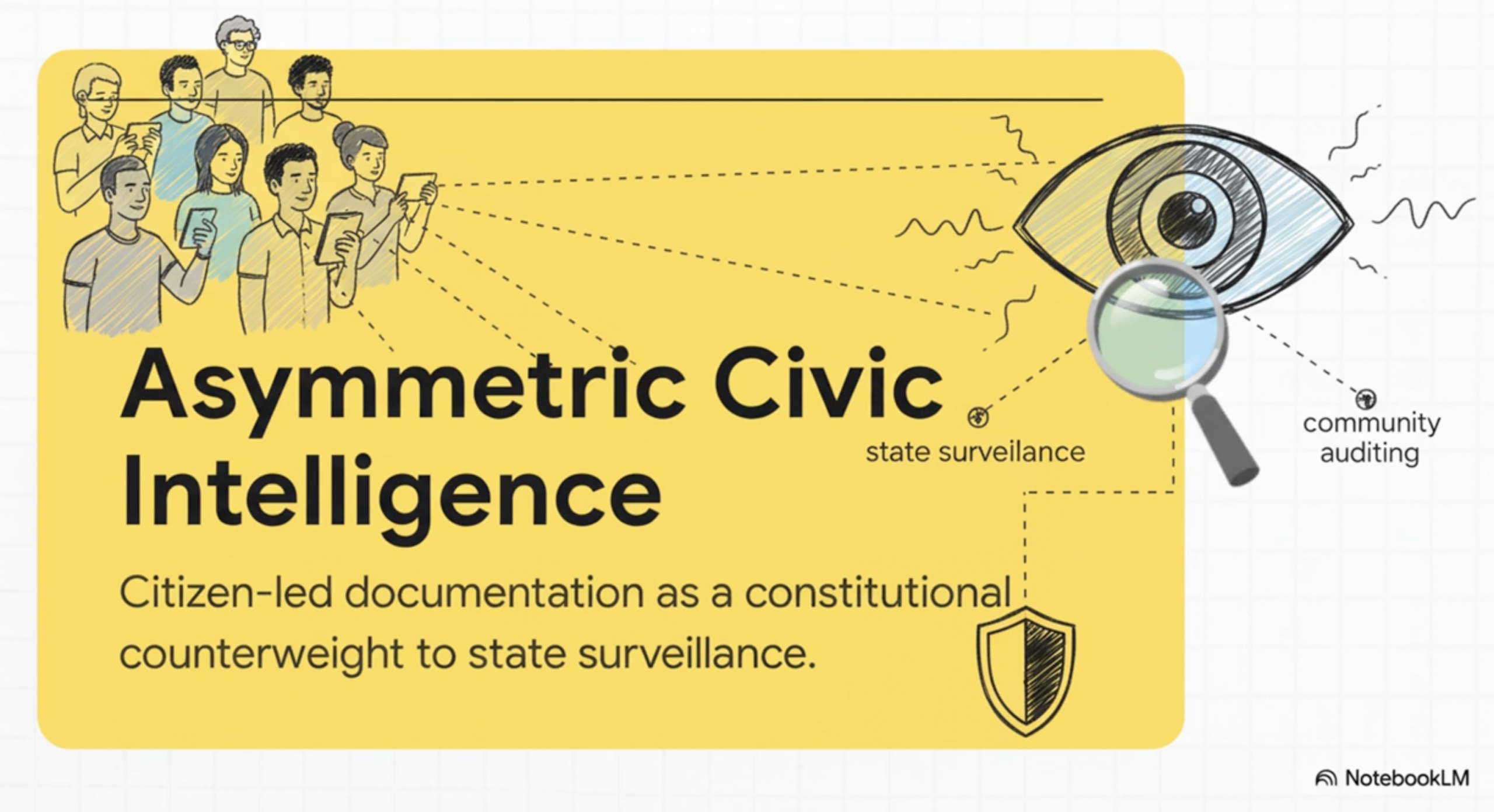
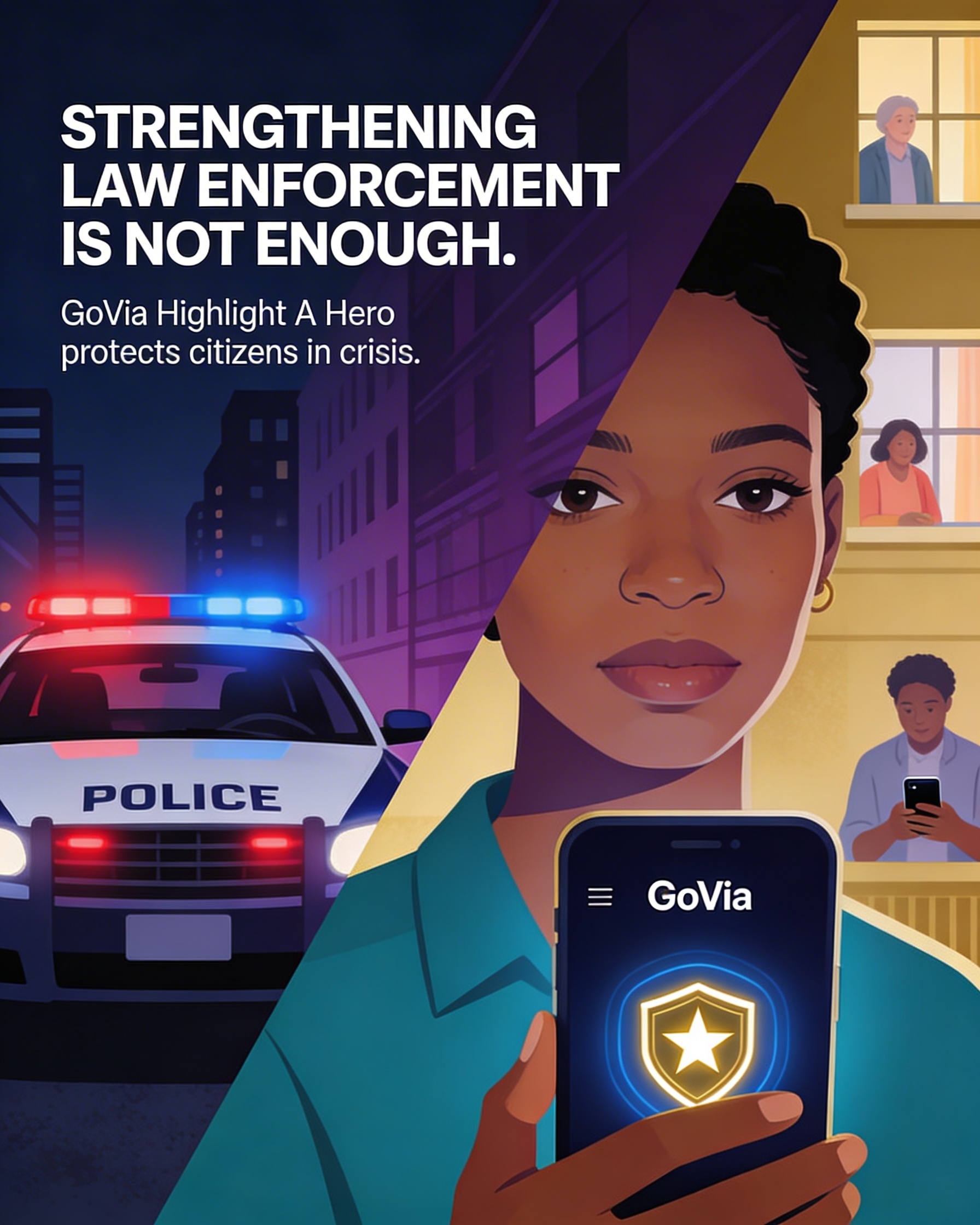
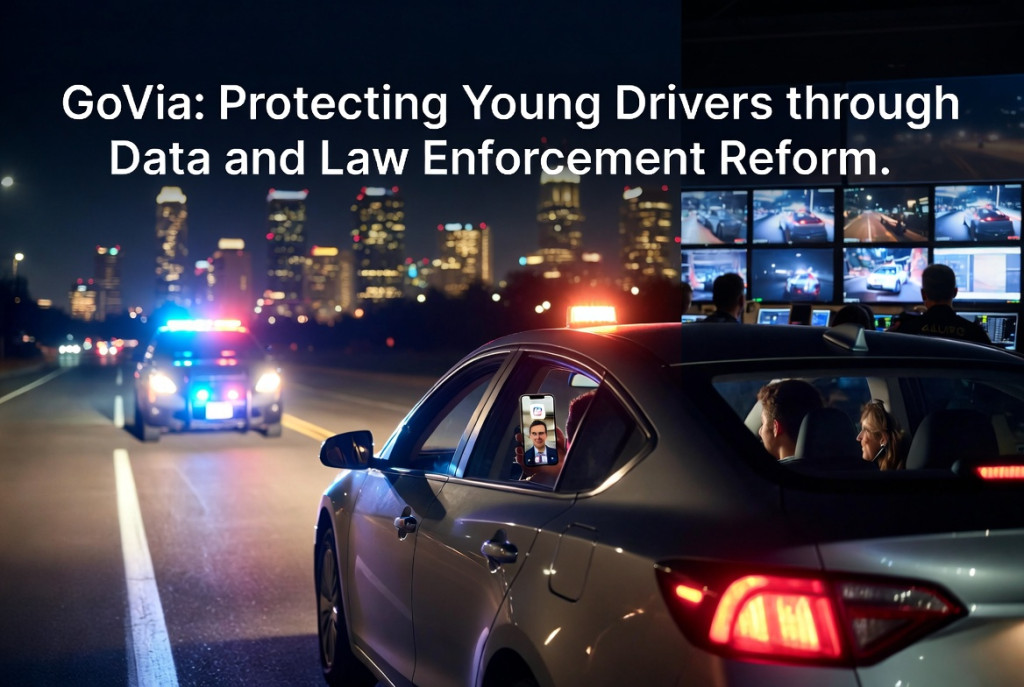
Note: GoVia: The Super Majority and the Future of Accountability
The provided text outlines the mission of GoVia, a diverse coalition of experts dedicated to addressing systemic failures in public safety, civil rights, and criminal justice. By integrating advanced technology with real-time data, the organization seeks to provide transparency and accountability for both law enforcement and the citizens they serve. The narrative emphasizes that while technological tools cannot solve social issues alone, they can facilitate the honest documentation necessary to face and improve complex human realities. Beyond monitoring conflict, the platform features a “Highlight A Hero” initiative to celebrate positive community contributions and foster trust. Ultimately, GoVia aims to unite a “Super Majority” of people who prioritize human dignity, mental health support, and evidence-based truth over political division. This ambitious endeavor positions itself as a potential “unicorn” company by transforming how society approaches legal-tech and institutional reform on a global scale.