Not as a slogan. Not as an excuse. As a reality.
A fourteen-year-old Black teenager walks home from school wearing a hoodie. A seventeen-year-old Latino student borrows his mother’s car. A twenty-three-year-old White construction worker drives home exhausted after a twelve-hour shift. A twenty-eight-year-old veteran is experiencing anxiety after years of trauma.
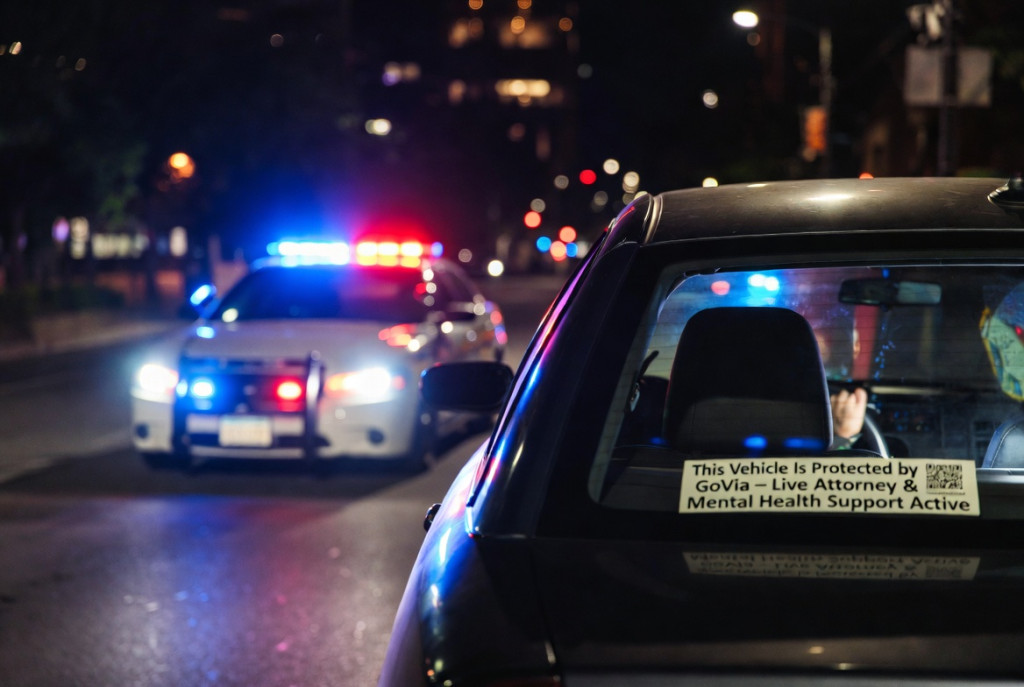
Different races. Different neighborhoods. Different stories. One common denominator. The flashing blue lights in the rearview mirror.
For millions of Americans, the police encounter itself is not merely a legal event. It is an emotional event. It is psychological. It is physiological. It is deeply human.
Long before anyone reaches for a driver’s license, their body has already made a decision.
Heart rate increases.
Hands shake.
Vision narrows.
Memory weakens.
Words disappear.
The brain is no longer solving problems.
It is surviving.
Psychologist Daniel Goleman describes this phenomenon as an “amygdala hijack,” where emotion temporarily overwhelms rational thinking. In high-stress situations, even good people can appear nervous, argumentative, forgetful, or defiant—not because they are criminals, but because their brains are operating in survival mode.
America has spent generations discussing police reform.
Far less time has been spent discussing citizen trauma.
What if both conversations belong together?
The Great Person Caught in the Middle
Every community has them.
The “great person.”
Not perfect.
Not famous.
Simply trying.
Trying to graduate.
Trying to keep a job.
Trying to care for younger siblings.
Trying to stay out of trouble.
Trying to become something greater than the neighborhood statistics predicted.
Yet these are often the very people caught in moments that forever change their lives.
One misunderstanding.
One sarcastic response.
One panic attack.
One officer having a difficult day.
One citizen reliving childhood trauma.
The encounter becomes larger than either individual.
The great person is caught between two systems.
One expects immediate obedience.
The other has never fully taught them how to exercise their rights while remaining emotionally regulated under pressure.
GoVia begins with a simple belief:
Most police encounters should never become tragedies.
From Middle School to Twenty-Nine
GoVia’s target audience is not defined merely by age.
It is defined by life stage.
Middle school students learning independence.
High school students gaining freedom.
College students leaving home.
Young adults entering the workforce.
Many are encountering authority without having ever been taught constitutional rights, emotional regulation during crisis, or effective communication under stress.
Schools teach algebra.
History.
Chemistry.
But very few teach:
How to survive a traffic stop.
How to communicate respectfully while preserving your legal rights.
How trauma affects decision-making.
How to request legal representation.
How to remain emotionally regulated during fear.
Civics cannot end with memorizing the branches of government.
Citizenship is also behavior under pressure.
Trauma Does Not Wear One Color
The national conversation often begins with race.
It should.
History demands it.
But trauma itself is not limited by race.
Black families carry generations of historical mistrust.
Brown communities often fear immigration consequences, profiling, or unequal treatment.
Poor White communities frequently experience addiction, mental illness, economic despair, and repeated law-enforcement contact.
Trauma speaks many languages.
Fear sounds remarkably similar in every one of them.
GoVia does not ask whether someone deserves compassion.
It assumes every human being deserves the opportunity to de-escalate.
The Psychology of Escalation
The greatest danger during many police encounters is not necessarily criminal intent.
It is emotional contagion.
Stress transfers.
Fear transfers.
Anger transfers.
Respect transfers.
Calm transfers.
One elevated voice can increase another.
One calm voice can lower another.
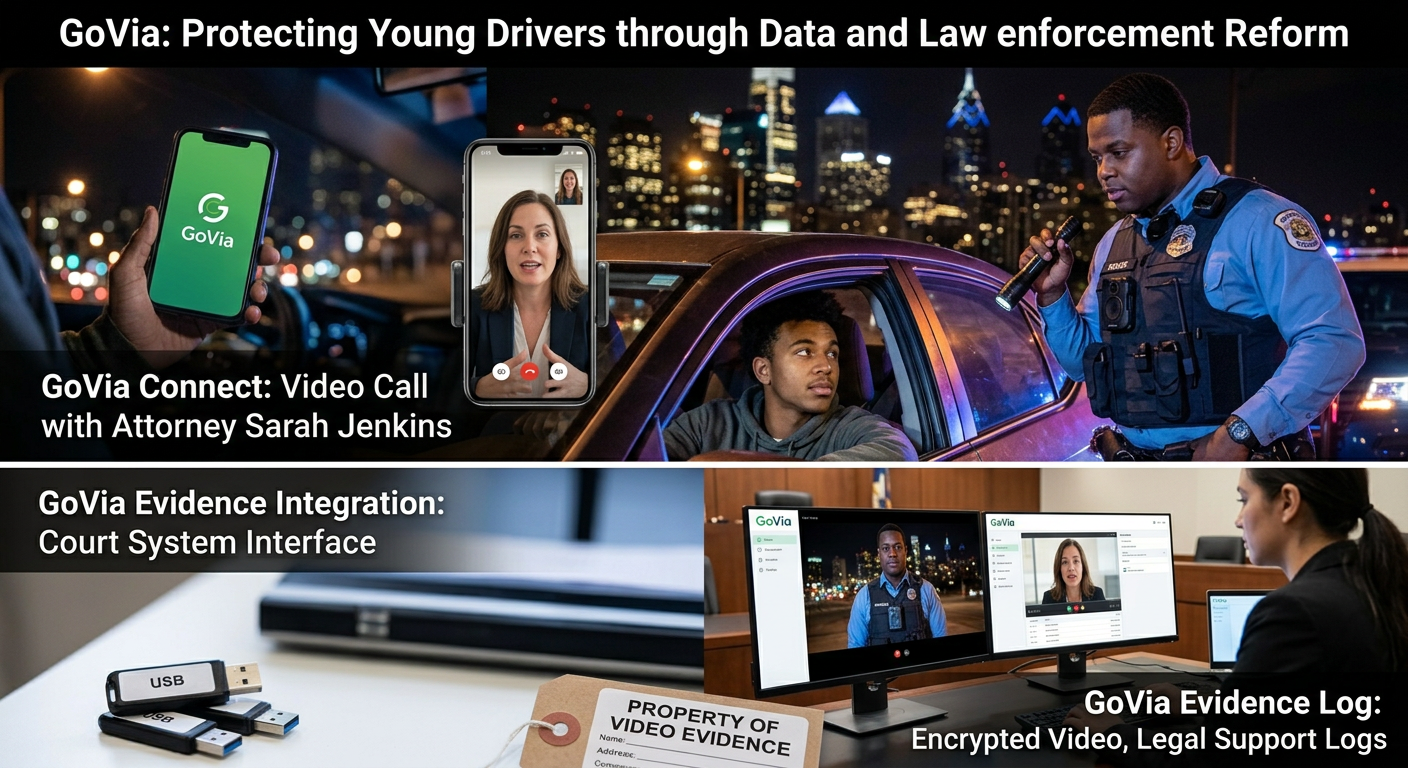
GoVia introduces something policing has rarely had available in real time:
A neutral professional.
An attorney.
A mental health professional.
Someone whose purpose is not to interfere with lawful policing but to help reduce emotional volatility before it becomes irreversible.
Imagine hearing:
“Take a deep breath.”
“I’m here with you.”
“Keep your hands visible.”
“Answer only what is required.”
“The officer is giving lawful instructions.”
“We’ll address the legal questions afterward.”
Sometimes wisdom arrives at exactly the right moment.
Sometimes that moment saves a life.
Accountability Is Not Anti-Police
GoVia is built on a principle that should unite rather than divide.
Police officers deserve citizens who are calmer.
Citizens deserve officers who consistently apply their training.
Neither side benefits from unnecessary escalation.
Professional accountability protects everyone.
A body camera protects evidence.
An attorney protects legal rights.
A mental health professional protects emotional stability.
These are complementary safeguards—not competing ones.
The Investment America Forgot
America spends billions every year on policing, courts, detention, corrections, and public safety.
Yet communities continue asking the same question:
“Why don’t we feel safer?”
Because safety is not merely the absence of crime.
Safety is the presence of trust.
Trust requires education.
Education requires investment.
Imagine every middle school student learning:
• Constitutional rights
• Emotional regulation
• Respectful communication
• Conflict resolution
• Police procedures
• Civic responsibility
Imagine every parent having access to free educational videos.
Imagine every officer knowing citizens are better prepared before encounters occur.
GoVia believes education is prevention.
“Justice Rolls Down Like Waters”
Dr. Martin Luther King Jr. reminded America:
“We will not be satisfied until justice rolls down like waters and righteousness like a mighty stream.”
Justice is not merely courtroom verdicts.
Justice begins at the roadside.
Justice begins with communication.
Justice begins before handcuffs.
Justice begins before force.
Justice begins before fear becomes tragedy.
President Barack Obama has often emphasized that trust between law enforcement and communities is built through accountability, transparency, and mutual respect.
Author Tim Wise has argued that honest conversations about race and inequality are necessary for meaningful reform.
These perspectives differ in emphasis, but they point toward a shared truth:
Ignoring fear never removes it.
Understanding fear can transform it.
Highlight A Hero
The hero is not always the officer.
The hero is not always the attorney.
The hero is not always the citizen.
Sometimes the hero is the person who prevented violence from happening at all.
GoVia calls that person a Hero.
The officer who used patience.
The citizen who stayed calm.
The attorney who protected constitutional rights.
The counselor who de-escalated panic.
The teacher who educated young people before crisis.
The parent who prepared their child.
The judge who valued fairness.
The community leader who built trust.
Heroes rarely make headlines.
They prevent them.
America Needs Another Layer
Technology has transformed banking.
Medicine.
Transportation.
Communication.
Why not public safety?
GoVia is not designed to replace law enforcement.
It is designed to strengthen one of the weakest moments in modern policing:
The first few minutes.
Those minutes determine outcomes.
Those minutes shape public trust.
Those minutes can define an entire lifetime.
Perhaps America’s greatest public safety innovation is not another weapon.
Not another law.
Not another prison.
Perhaps it is another conversation.
One that begins with dignity.
Continues with accountability.
Ends with everyone going home alive.
Because the greatest victory in public safety is not winning an argument.
It is preserving a life.
That is the future GoVia imagines.
That is the future worth building together.