Inside the bold gamble to rebuild trust, accountability, and public safety through GoVia Highlight A Hero
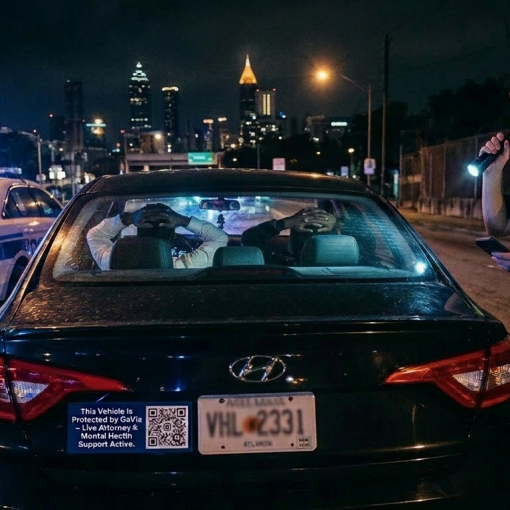
At 4:12 a.m., the sirens still sound the same in East Cleveland.
The flashing lights still bounce off aging apartment windows. Patrol cars still roll through streets shaped by decades of economic decline, political scandal, mistrust, and trauma. Mothers still wait for children to come home safely. Officers still walk into unpredictable situations carrying the weight of split-second decisions.
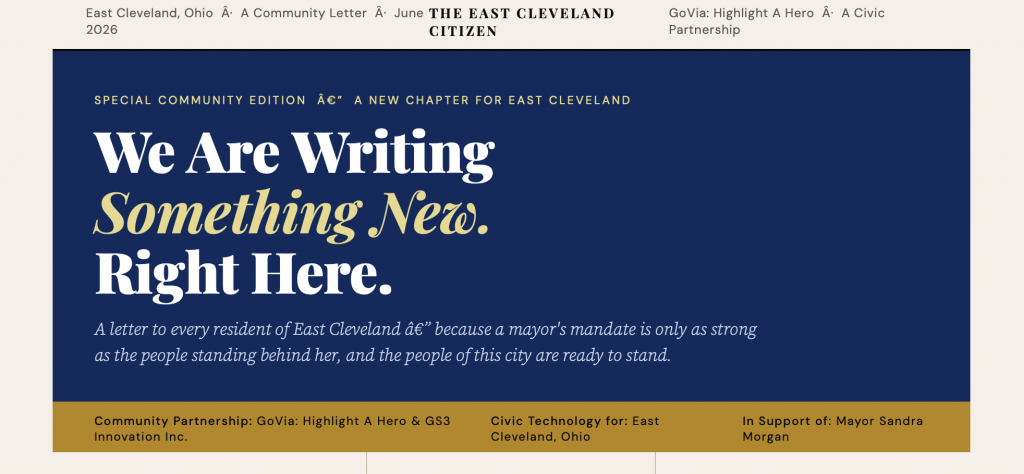
But something new is beginning to emerge in East Cleveland — not as a slogan, not as another empty campaign promise, but as a civic experiment that residents hope could become a national model for police accountability, mental-health response, and community truth-telling.
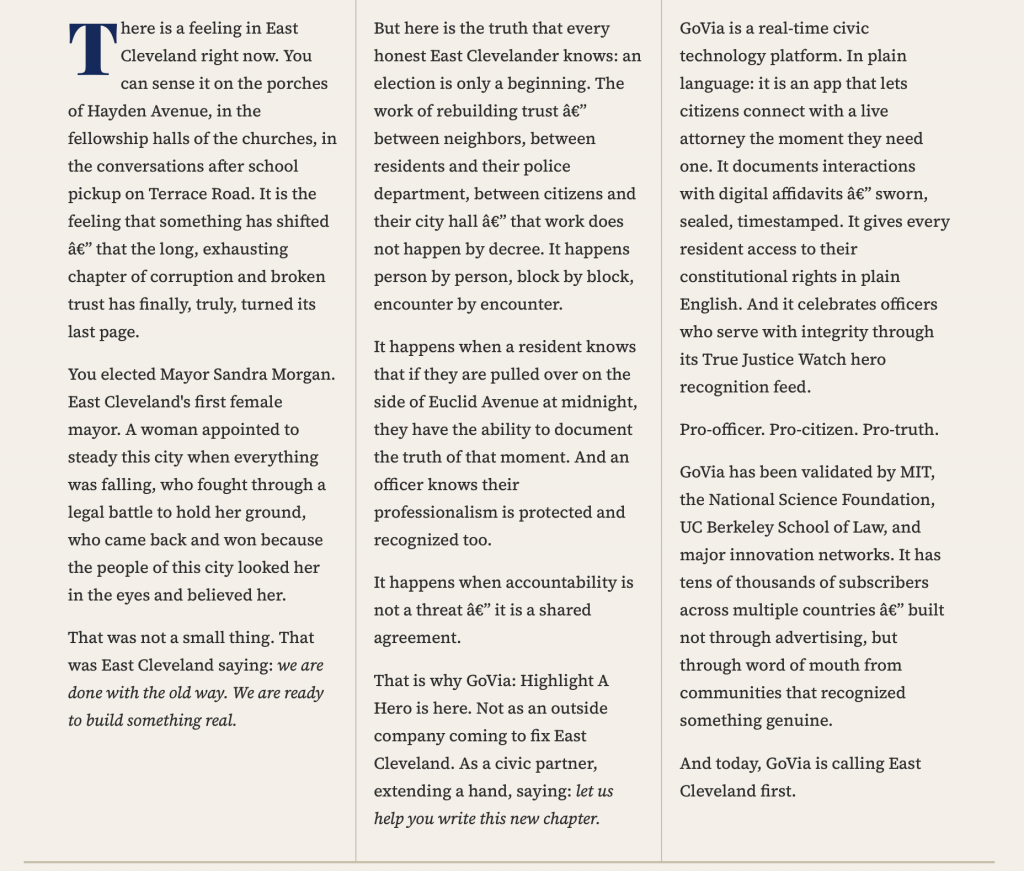
And at the center of that movement is a local technology and civic initiative called GoVia Highlight A Hero.
Its founder, Georgio Sabino, does not describe GoVia as anti-police. He describes it as pro-truth.
“We cannot heal what we refuse to document honestly,” Sabino says. “And we cannot rebuild trust unless citizens, officers, courts, students, and city leaders all participate together.”
That message is landing in a city desperate to turn the page.
For decades, East Cleveland has been known nationally less for innovation and more for crisis: population decline, corruption investigations, strained city finances, violence, deteriorating infrastructure, and repeated questions about public trust.
Now, residents say they want something different.
And many believe the city’s new leadership may represent the beginning of a new chapter.
Not simply another administration.
A reset.
A City Trying to Reintroduce Itself to America
Across the United States, public confidence in institutions has collapsed.
Gallup polling has repeatedly shown declining trust in government, media, and criminal justice systems. Nationally, communities remain divided over policing, accountability, prosecutorial fairness, and mental-health response failures.
At the same time, police departments themselves face staffing shortages, burnout, rising suicide rates among officers, and increasing public scrutiny.
Both citizens and officers often feel abandoned by the systems surrounding them.
East Cleveland understands this tension intimately.
Residents speak openly about years of pain: forgotten neighborhoods, vacant buildings, emergency response challenges, and public scandals that made national headlines for the wrong reasons.
But beneath the frustration lies something less visible:
Hope.
Not naive hope.
Earned hope.
The kind that appears when citizens begin believing they can help shape the next chapter themselves.
That is the emotional space where GoVia Highlight A Hero has entered the conversation.
The Core Idea: Radical Documentation and Radical Humanity
At its heart, GoVia proposes something deceptively simple:
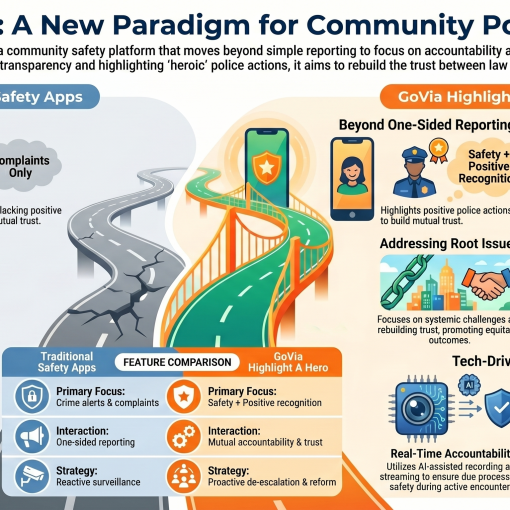
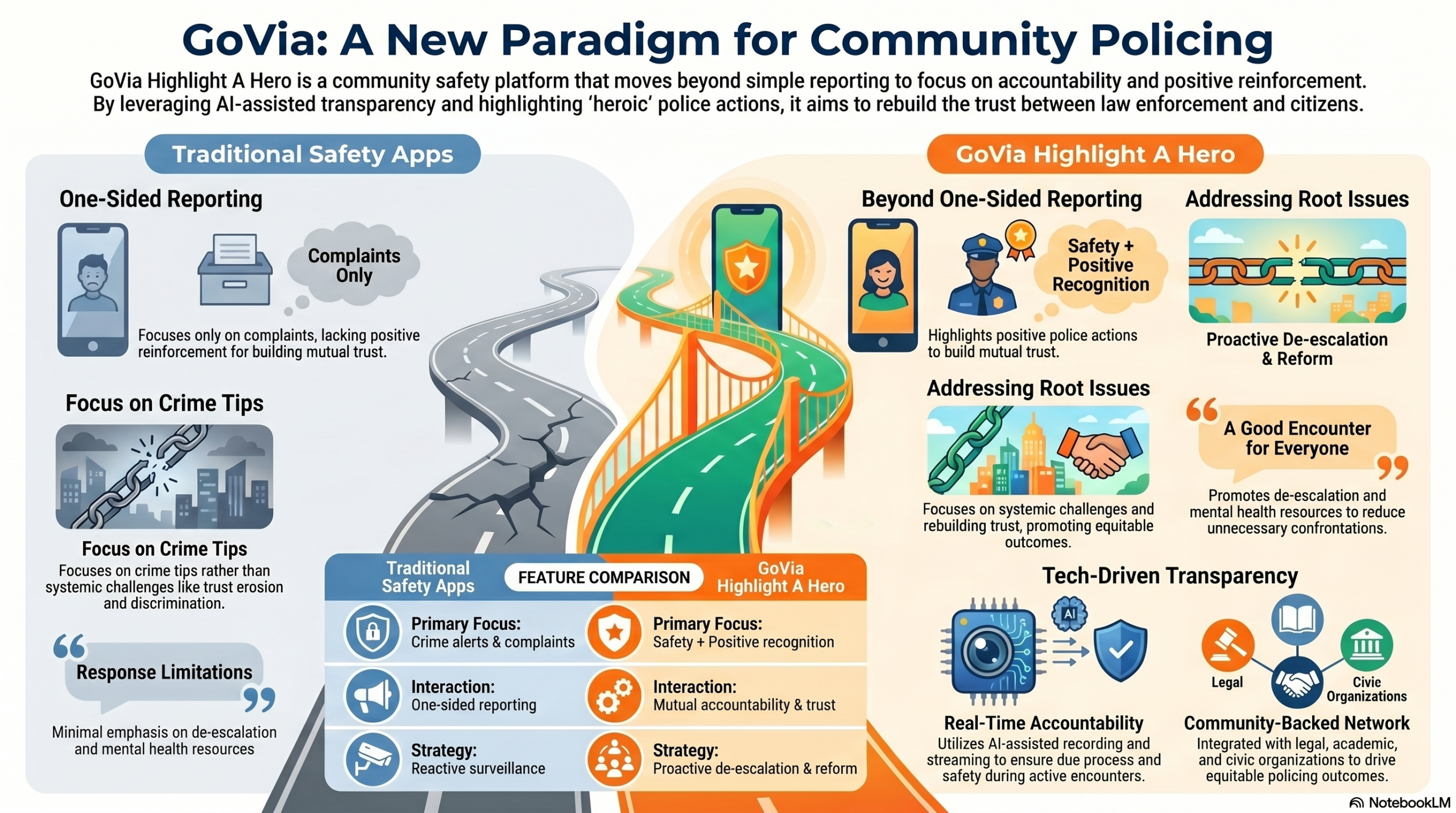
What if every critical interaction between citizens, police, attorneys, mental-health advocates, students, and public institutions could become more transparent, documented, and accountable — in real time?
The initiative combines elements of:
- civic technology,
- live communication tools,
- affidavit documentation systems,
- legal access,
- mental-health intervention support,
- public accountability,
- educational partnerships,
- and citizen participation.
The philosophy behind it is straightforward:
If everyone knows the interaction is documented, truthful, and reviewable, behavior changes.
Citizens behave differently.
Officers behave differently.
Institutions behave differently.
And communities begin rebuilding trust.
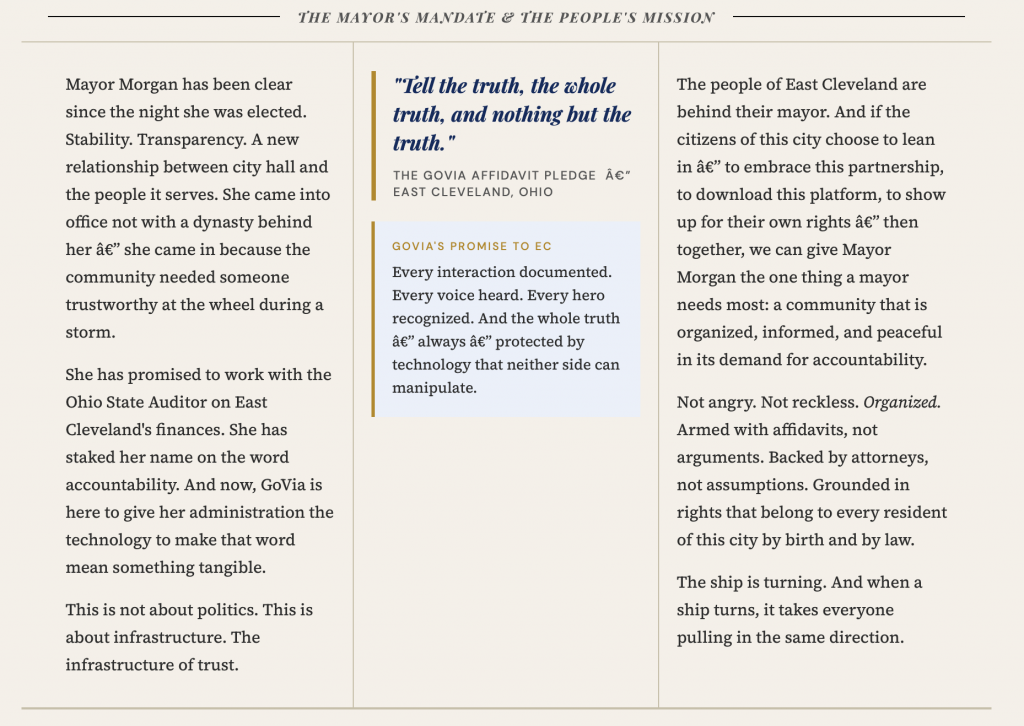
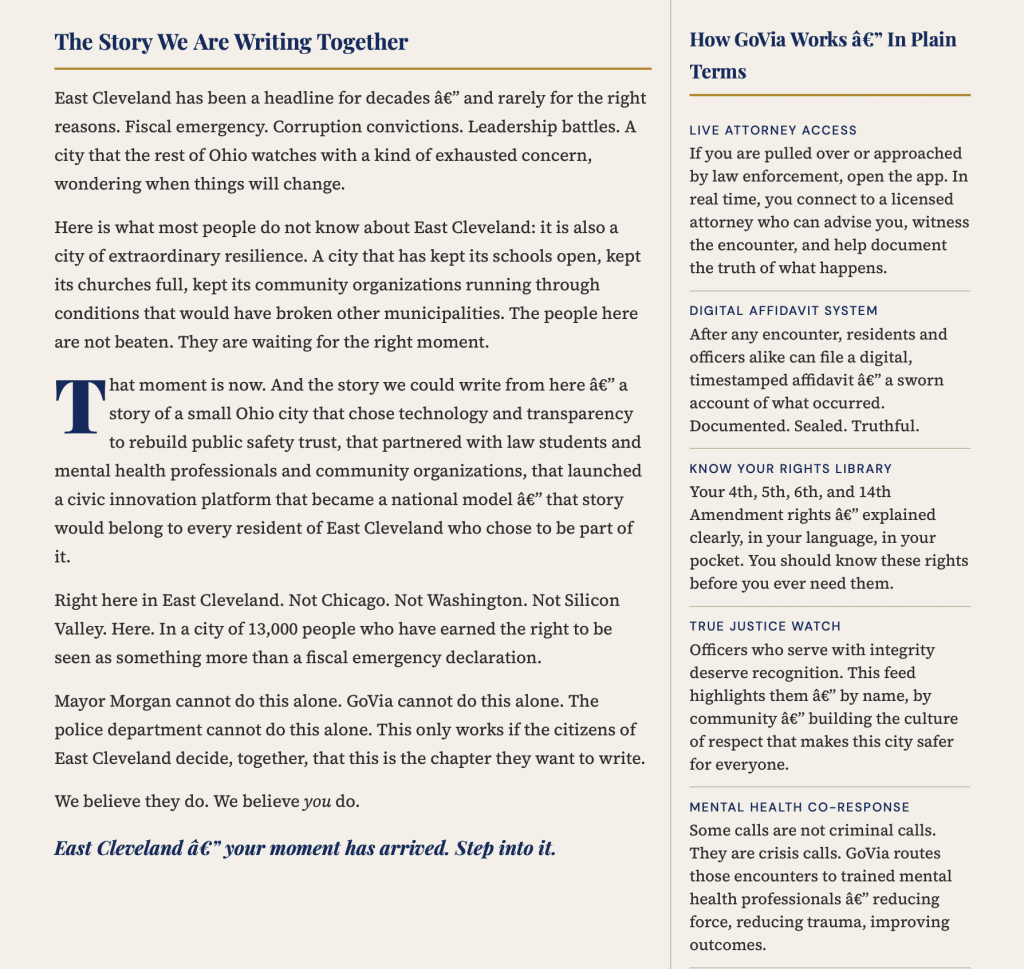
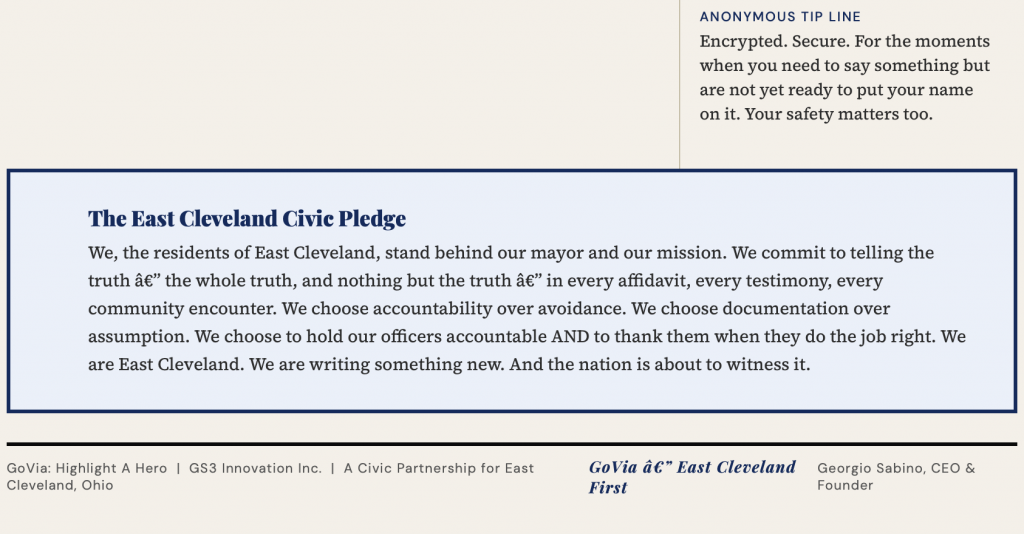
GoVia’s proposed affidavit-centered approach encourages residents to commit to “the truth, the whole truth, and nothing but the truth” when documenting incidents, complaints, wellness concerns, or public interactions.
Supporters argue that this creates something missing in modern civic life:
Shared accountability.
Not just police accountability.
Human accountability.
Why Mental Health Is Central to the Mission
One of the most overlooked realities in American policing is this:
Officers are often asked to become frontline mental-health responders.
According to national research, a significant percentage of police encounters involve individuals experiencing mental-health crises, addiction episodes, trauma responses, or emotional instability.
Yet many municipalities lack sufficient crisis counselors, social workers, or 24-hour intervention systems.
In cities like East Cleveland, where economic hardship and trauma frequently overlap, the pressure becomes even greater.
GoVia’s vision attempts to bridge that gap.
The initiative is calling upon:
- local universities,
- law schools,
- psychology departments,
- social-work programs,
- counseling students,
- mental-health agencies,
- nonprofit organizations,
- and civic volunteers
to participate in building a new support infrastructure around residents before moments become tragedies.
The proposal is ambitious:
Create a network where technology, students, professionals, and community organizations collaborate to de-escalate crises, document truthfully, and connect residents with resources earlier.
Not after violence.
Before it.
A Call to Universities: “Come Build the Future Here”
Perhaps the most striking part of the movement is its direct appeal to students.
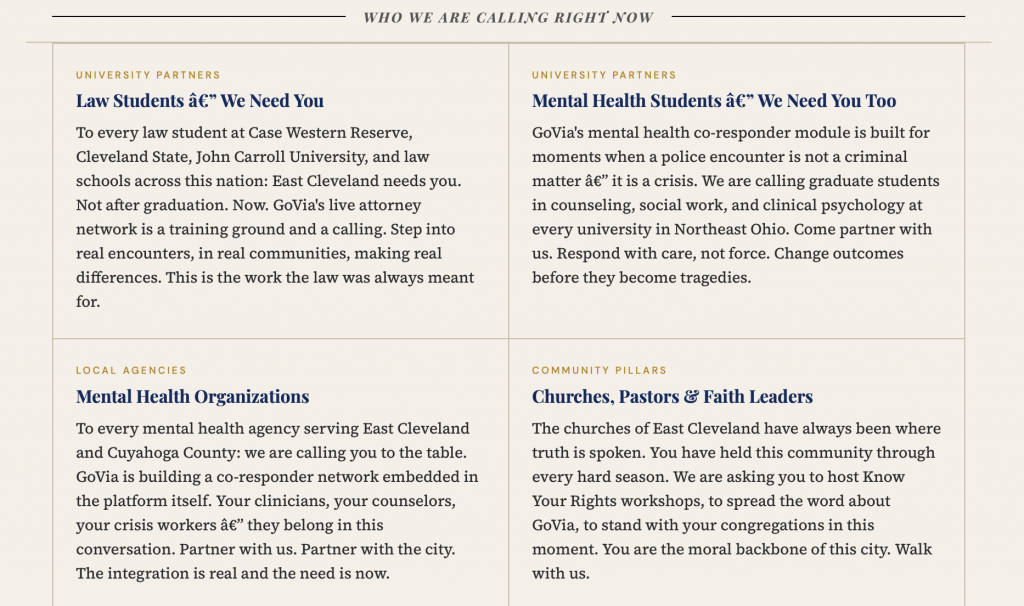
GoVia is actively calling upon:
- law students,
- criminal justice students,
- mental-health researchers,
- data scientists,
- public-policy scholars,
- civic technologists,
- and future attorneys
to help East Cleveland become a national laboratory for justice innovation.
Not a laboratory in the exploitative sense.
But a proving ground for solutions America desperately needs.
The argument is difficult to ignore:
If meaningful reform can work in a city that has endured decades of hardship, it can work anywhere.
Students would gain:
- real-world field experience,
- civic engagement opportunities,
- trauma-informed training,
- mediation experience,
- public-interest legal exposure,
- and direct involvement in rebuilding community trust.
Supporters envision university partnerships stretching far beyond Ohio — eventually involving national institutions interested in criminal justice reform, public safety modernization, behavioral health, and civic technology.
The Mayor’s Defining Test
For East Cleveland’s new leadership, the stakes are enormous.
Residents are not asking merely for speeches.
They are asking for transformation.
People want functioning systems.
Responsive governance.
Safer neighborhoods.
Transparent policing.
Economic renewal.
And perhaps most importantly:
A reason to believe again.
The city’s mayor now faces the same challenge confronting many urban leaders across America:
How do you restore legitimacy after years of institutional distrust?
Traditional approaches alone may no longer be enough.
That is why some residents believe partnerships with civic innovators like GoVia could become critical.
Not because technology magically fixes human problems.
But because public trust today increasingly depends on visibility, participation, and accountability.
Citizens want proof.
Not promises.
The Police Question
No issue remains more emotionally charged than policing.
Across America, conversations about police accountability often collapse into extremes: “pro-police” versus “anti-police.”
But many East Cleveland residents say reality is far more complicated.
Communities want safety.
Officers want to return home safely.
Families want fairness.
Victims want justice.
And good officers themselves often want stronger accountability systems because they understand public trust is essential to effective policing.
GoVia’s supporters argue the platform could help create:
- clearer documentation,
- improved transparency,
- faster evidence preservation,
- citizen affidavits,
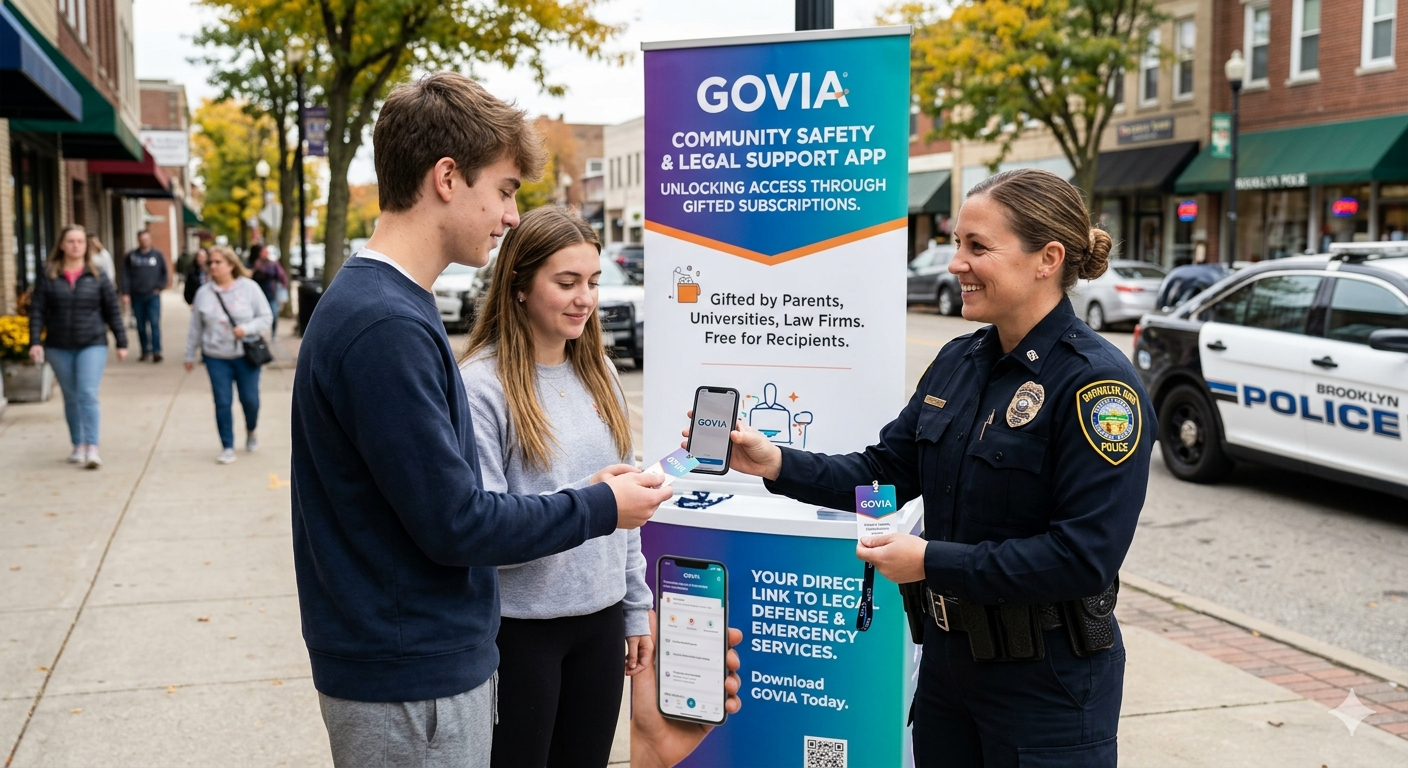
- live support access,
- and stronger communication channels between residents and authorities.
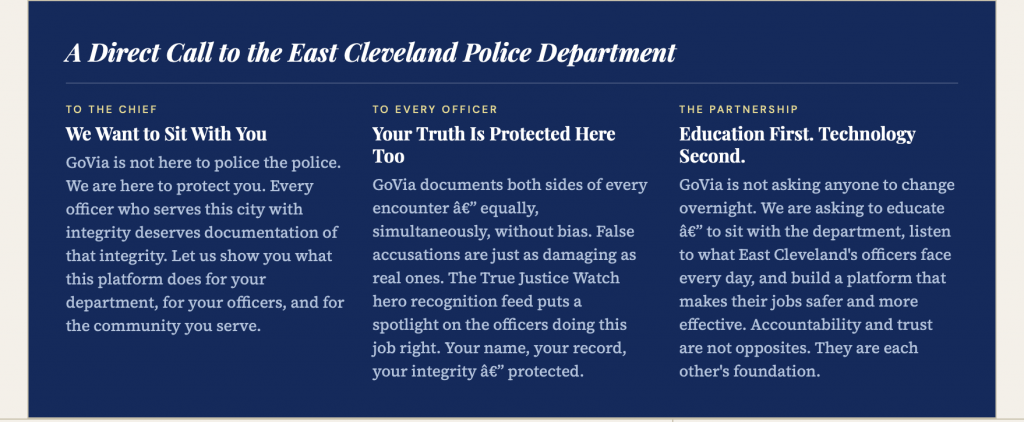
The initiative is also calling upon the East Cleveland Police Department and police leadership not to fear the conversation — but to help shape it.
Advocates say reform works best when departments participate directly rather than resisting change from outside pressure alone.
“Police officers are human beings too,” one community organizer involved in the effort explained. “Many are carrying trauma themselves. Accountability and support should exist together.”
Why Residents Are Paying Attention
In East Cleveland, people know what decline looks like.
They have lived it.
But they also know something outsiders often miss:
This city still possesses extraordinary human capital.
Teachers.
Grandmothers.
Coaches.
Artists.
Pastors.
Students.
Nurses.
Former officers.
Volunteers.
Working-class families trying to hold neighborhoods together block by block.
The movement surrounding GoVia is attempting to channel that civic energy into something larger than outrage.
Into participation.
Residents are being encouraged not only to complain about corruption or distrust — but to actively help build the replacement.
To march.
To organize.
To mentor.
To document truthfully.
To volunteer.
To support mental-health response systems.
To educate neighbors.
To become “Icon Members” of a broader civic movement focused on accountability and restoration.
Georgio Sabino’s Story
Those close to Georgio Sabino say the idea behind GoVia did not emerge from theory alone.
It emerged from watching ordinary people struggle to navigate systems that often felt inaccessible during moments of crisis.
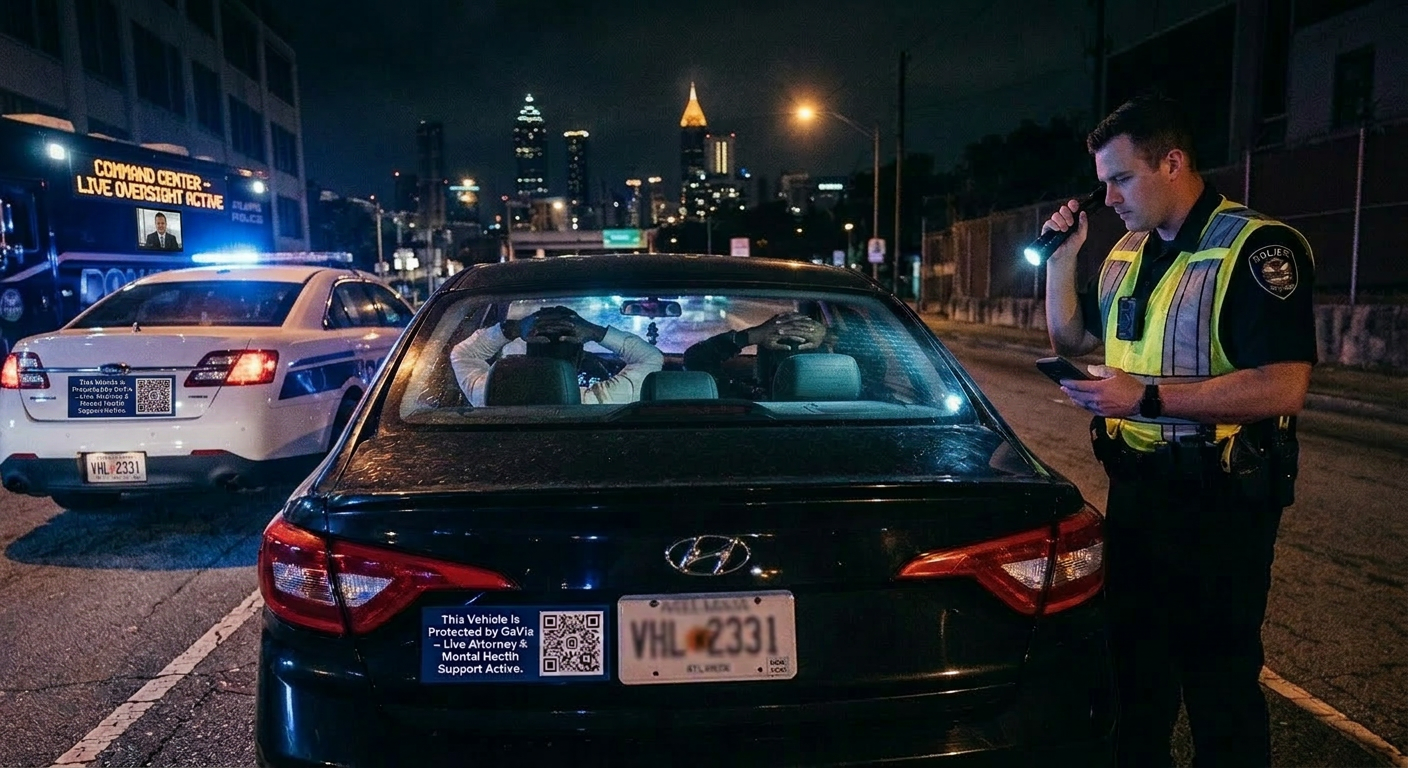
Traffic stops.
Mental-health emergencies.
Conflicts with institutions.
Moments where confusion, fear, trauma, or lack of legal knowledge could escalate rapidly.
Sabino began asking difficult questions:
What if communities had immediate support systems?
What if documentation tools protected both citizens and officers?
What if families had faster access to help?
What if mental-health interventions arrived earlier?
What if technology could reduce escalation instead of increasing it?
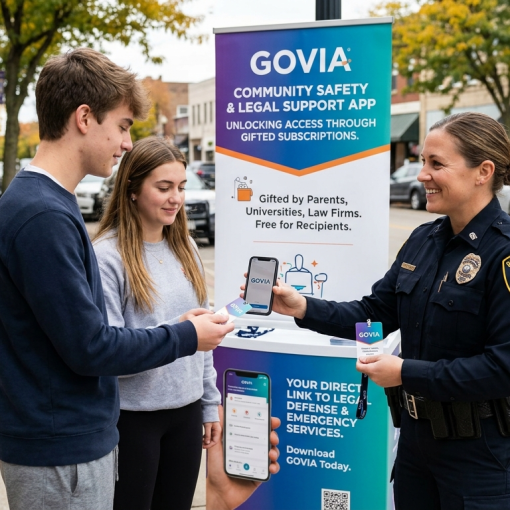
The answers evolved into GoVia Highlight A Hero — a platform designed not merely as software, but as a civic partnership model.
Its branding intentionally emphasizes the word “Hero.”
Not because communities need saviors.
But because sustainable reform requires ordinary people stepping forward consistently.
A student volunteering after class.
A counselor answering a crisis call.
A resident submitting a truthful affidavit.
A police officer choosing de-escalation.
A mayor willing to try something new.
The Real Challenge Ahead
None of this will be easy.
East Cleveland’s problems were not created overnight.
They will not disappear overnight either.
Skeptics will question funding.
Others will question implementation.
Some will resist transparency altogether.
There will be political fights.
Technical challenges.
Public criticism.
And moments where old distrust resurfaces.
But supporters argue that refusing innovation guarantees something worse:
More stagnation.
More division.
More disengagement.
More generations inheriting broken systems.
That is why organizers insist this moment matters.
Because East Cleveland may now have something it has lacked for years:
Momentum.
A Final Invitation to the Community
The message from supporters is ultimately simple:
This cannot belong only to politicians.
Or only to activists.
Or only to police.
Or only to technologists.
The future of East Cleveland belongs to its people.
And if residents truly want a different story, they must participate in writing it.
GoVia Highlight A Hero is now calling upon:
- residents,
- universities,
- law students,
- mental-health agencies,
- churches,
- nonprofits,
- businesses,
- civic leaders,
- attorneys,
- counselors,
- police officers,
- and community advocates
to help build what organizers hope becomes a new national model for accountability, dignity, and civic partnership.
Not someday.
Now.
The sirens still sound at 4 a.m.
But for the first time in a long time, many residents believe East Cleveland may finally have an opportunity to change what happens after they do.
And perhaps, if the city succeeds, the rest of America may eventually come here not to study failure —
but to study how a community rebuilt trust together.