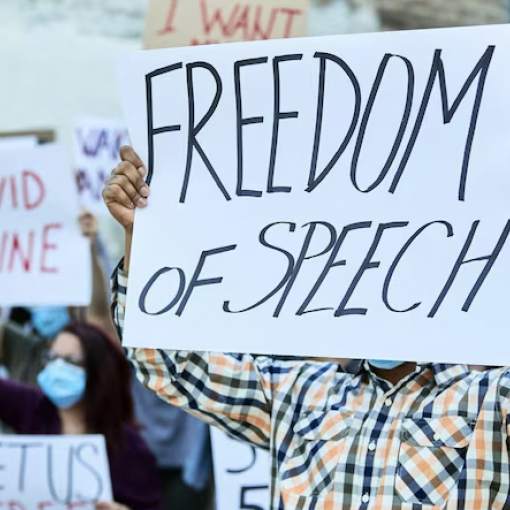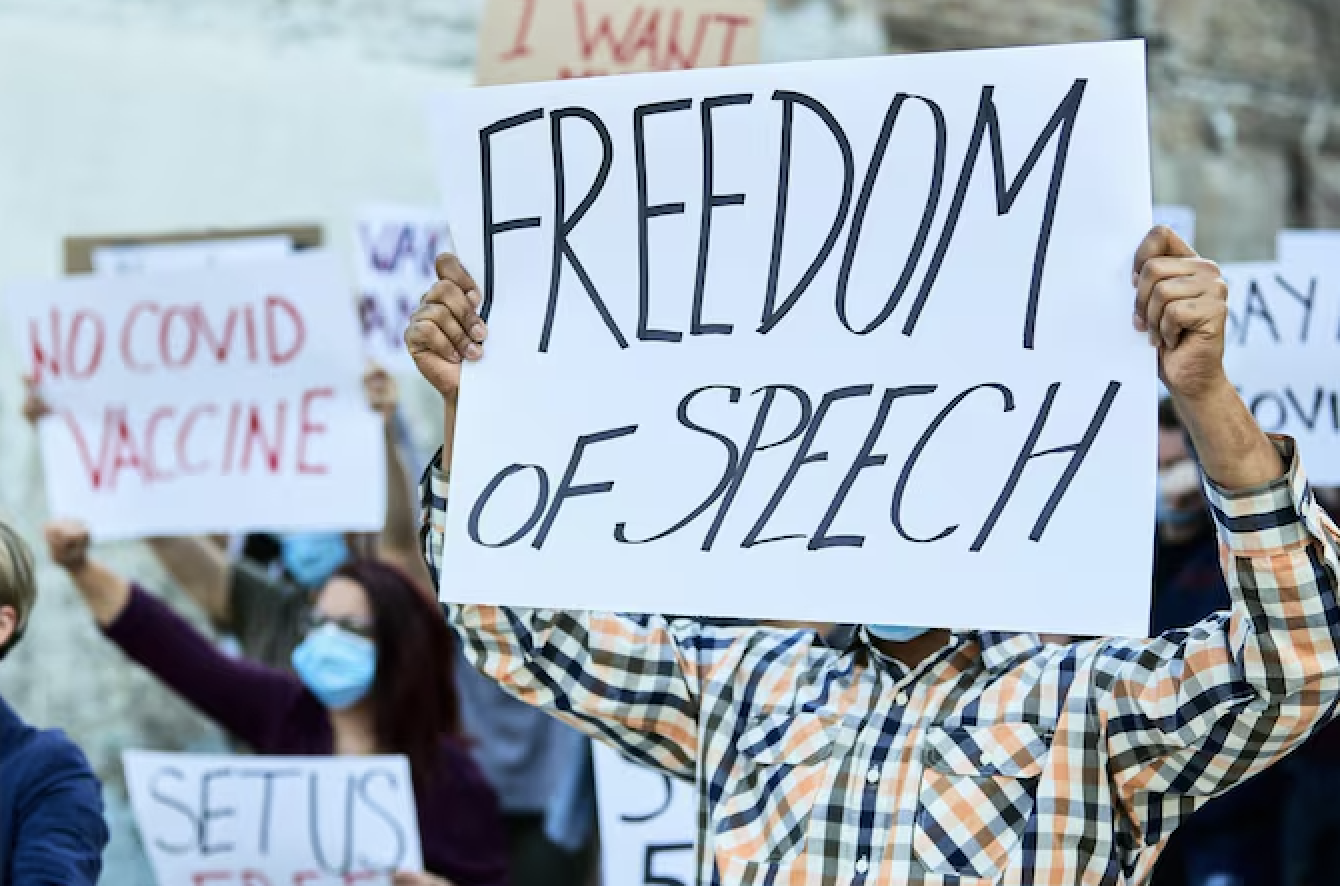
A police chief’s alleged slap of a paraplegic Black man is not just a viral outrage story; it is a case study in how power, disability, race, and public accountability can collide in seconds. The Osceola, Arkansas incident has already triggered resignation, an outside review, and a broader conversation about whether law enforcement is trained to protect dignity when force is least justified.
The incident
Local reporting and viral video clips indicate that the encounter involved Osceola Police Chief Robert Ephlin and a man in a wheelchair, with witnesses and residents describing the moment as an unprovoked slap that fueled immediate public anger. Ephlin resigned after the video spread, and the mayor said an outside agency would conduct an independent review.
What makes the case so combustible is not only the alleged violence itself, but the vulnerability of the person on the receiving end. In disability-rights reporting, incidents involving disabled people often reveal a basic failure to recognize threat, mobility constraints, or communication barriers before officers escalate.
WATCH: Police Chief SLAPS Paraplegic Black Man in Unhinged Attack, Outrage Erupts
Why it matters
This is not an isolated American problem. Research and watchdog reporting have repeatedly found that people with disabilities are disproportionately subjected to police force, and estimates cited by human-rights bodies suggest they make up roughly one-third to one-half of people killed by police. The ACLU has also documented that students with disabilities are far more likely to be arrested or referred to police in school settings, showing how early the system can start punishing disability as if it were
Race compounds the risk. The IACHR has warned that African-descended people with disabilities face patterns of excessive force and that these incidents often occur with legal impunity, especially during moments of crisis when police are treated as default first responders rather than last resort responders.
The AI question
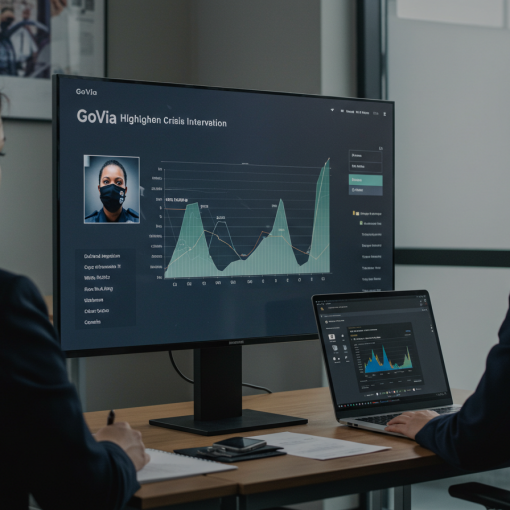
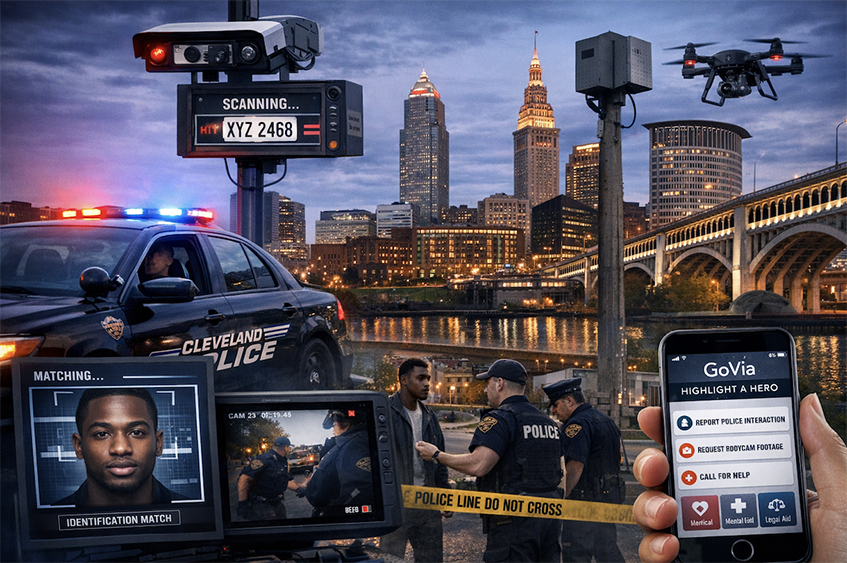
The deeper issue for justice systems is that technology can intensify the very biases communities are already trying to escape. A DOJ-related review of AI in criminal justice found major risks in identification, surveillance, forensic analysis, predictive policing, and risk assessment, especially because historical crime data already reflects biased enforcement patterns.
That means AI can make a bad system faster, not fairer. The same report warns that predictive policing can amplify feedback loops, while risk tools can produce unequal outcomes even when they appear accurate on the surface. In practical terms, if a police department already over-polices disabled, Black, or poor neighborhoods, an algorithm trained on those records may simply label those neighborhoods as “high risk” and justify more of the same.
DOJ and local police
At the federal level, DOJ policy says officers should use only objectively reasonable force, only when no safe and feasible alternative exists, and it explicitly prohibits chokeholds except under deadly-force necessity. That standard matters because cases like Osceola test whether local departments actually train and supervise officers to meet constitutional and ethical norms or merely repeat them in policy manuals.
The DOJ has also backed de-escalation and crisis-response training through recent grant programs, signaling a federal preference for reducing force rather than normalizing it. But local accountability still depends on independent investigations, transparent discipline, body-camera release, and whether cities treat complaints from disabled people as serious civil-rights matters rather than personnel disputes.
What should change
A serious reform package would start with disability-specific training, not generic “use of force” refreshers. Officers should be trained to identify mobility impairments, mental-health crises, and communication barriers before issuing commands that set people up to fail.
Departments should also be required to publish use-of-force data by race, disability status where legally and ethically collectable, and location, then audit the data for patterns of escalation. On the technology side, any AI used for policing should be independently tested for bias, publicly documented, and barred from making consequential decisions without human review and appeal rights.
GoVia’s Take
For a GoVia Highlight a Hero piece, the sharper frame is not only “what happened,” but “what kind of public safety culture allows this to happen.” The story can contrast the urgent need for humane, community-centered response with the reality that too many departments still default to force, especially when the person involved is Black, disabled, or both.
A strong line for the piece: this was not simply a bad moment — it was a stress test of whether American policing understands that the measure of authority is restraint, especially when the person in front of you cannot walk away.