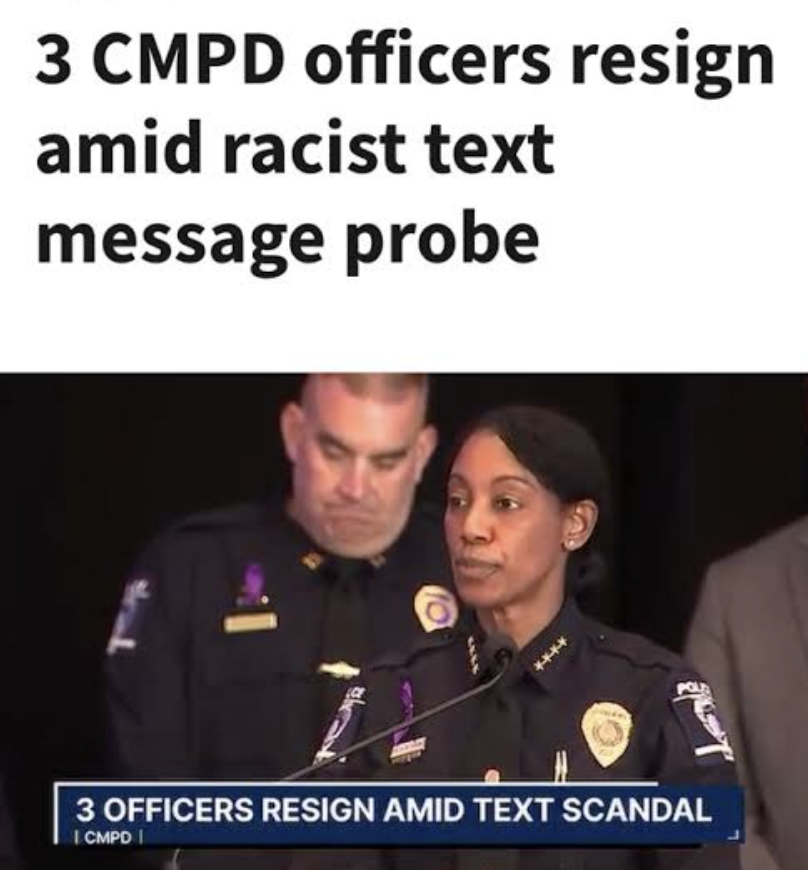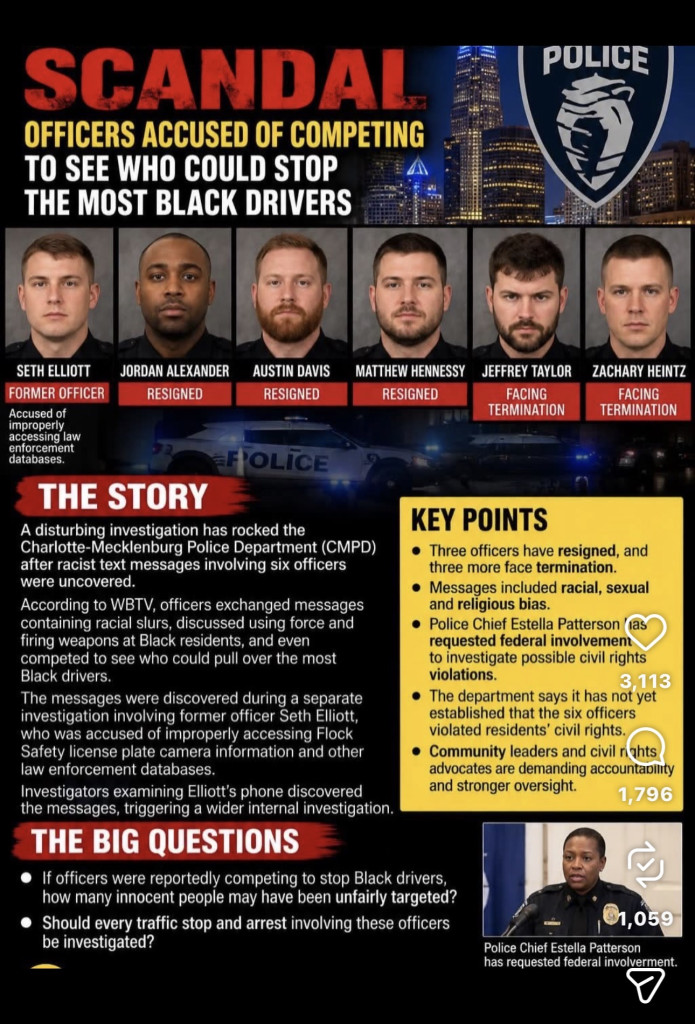
CHARLOTTE, N.C. — The text messages were not the product of a single bad night or a rogue unit. According to Chief Estella Patterson, they stretched back “several years,” circulating among six officers from the same 2024 graduating class—officers of three different races—and contained racial, sexual, and religious bias so pervasive that the chief described her personal reaction as “one of disgust.” Three officers resigned. Three more were recommended for termination. The FBI has opened a civil rights investigation. And the Mecklenburg County District Attorney’s Office has not yet begun to review whether the arrests those officers made can still be trusted.
The CMPD case is not an aberration. It is a data point in a pattern that stretches from San Francisco to Baltimore, from Torrance to Houston, from Chicago to New Orleans. The question is no longer whether racist and corrupt officers exist in American policing. The question is why the systems designed to catch them—internal affairs, civil service arbitration, state certification boards, federal pattern-or-practice oversight—so reliably fail to do so. And whether a technology platform called GoVia, built around real-time legal and mental-health support and a “Highlight a Hero” recognition engine, can create the missing layer of accountability that unions, departments, and officers themselves have reason to embrace.
I. The Charlotte Case: What We Know, and What It Signals
The CMPD investigation began not with a racism complaint but with a surveillance abuse case. Former Officer Seth Elliott was accused of misusing the department’s Flock Safety automated license-plate-reader system—looking up a plate at the request of a college friend. The State Bureau of Investigation seized his phone. On that phone, investigators found a group chat that allegedly included a competition to arrest the most Black drivers, alongside slurs targeting Black residents.
Chief Patterson has said she found no evidence that the involved officers’ traffic stops or arrest records were themselves problematic. But she acknowledged that “the allegations could call into question the soundness of criminal cases based on the involved officers’ arrests.” That is the prosecutorial tripwire that has detonated in city after city: once an officer’s credibility is compromised, every case they touched becomes a potential wrongful conviction.
Patterson has asked the FBI to investigate and wants the officers’ state policing certificates revoked. “I hope they will not be officers anywhere in the country,” she said. The department is auditing body-worn camera footage of all involved officers and conducting random department-wide audits.
Charlotte Mayor Rob Harrington issued a statement that racism and bias “have no place in our police department or anywhere in our city.” But statements do not review cases. Statements do not unwind convictions. Statements do not rebuild the evidentiary chain that a racist text message severs.
II. The DOJ Has the Tools—and Is Choosing Not to Use Them
The federal government knows how to investigate systemic police misconduct. Between 2021 and early 2025, the Justice Department launched 12 “pattern or practice” investigations into local police departments, documenting repeated civil rights violations—excessive force, racial targeting, constitutional violations “as a matter of practice.” But in May 2025, the Trump administration rescinded near-final agreements in Minneapolis and Louisville, withdrew findings from investigations in Arizona, New Jersey, Tennessee, New York, Oklahoma, and Louisiana, and disavowed what it called “dubious legal theories of disparate impact.”
The ACLU has filed public records requests to force transparency on what was terminated. “The administration has tried to discredit the findings of these investigations, but it cannot erase the truth,” said Brandon Buskey, director of the ACLU’s Criminal Law Reform Project. The DOJ’s Civil Rights Division, once the central federal engine for police accountability, has effectively walked away from new pattern-or-practice work.
This is the vacuum into which cases like Charlotte’s fall. A single U.S. Attorney’s Office can review federal cases tied to compromised officers. A single FBI field office can open a civil rights probe. But without a national standard, without a centralized misconduct database that states are required to feed, without DOJ pressure on state certification boards, the response to each scandal remains local, reactive, and incomplete. The National Decertification Index exists, but it relies on voluntary state reporting and is not public-facing; more than 30 states now report decertified officers, yet the system remains a patchwork, not a net.
Every state’s attorney general and certification board should be conducting a proactive audit of officers whose credibility has been impeached by racist communications, Brady disclosures, or sustained dishonesty findings. The DOJ should be compiling those audits into a national review. Neither is happening at the scale the evidence demands.
III. The Case-Review Ledger: Where Bad Cops Have Already Collapsed Convictions
The Charlotte DA’s review has not yet begun, but the historical record shows what happens when it does. The table below catalogues major police-corruption and bias scandals where convictions were reviewed, vacated, or flagged for appeal—and the scale of the collateral damage.
| City / Jurisdiction | Scandal | Officers Involved | Cases Flagged / Overturned | Key Detail |
| Baltimore, Md. | Gun Trace Task Force (GTTF) | 8 convicted | ~800 convictions vacated | Racketeering, planting evidence, robbery |
| Chicago, Ill. | Sgt. Ronald Watts | Watts + team | ~200 convictions overturned; 176 lawsuits settled for $90M | Systemic framing and false drug charges |
| Houston, Tex. | Det. Gerald Goines | 1 central figure | 69 defendants flagged; at least 22 convictions overturned | False evidence in drug cases; Harding Street raid |
| Philadelphia, Pa. | Multiple officers | Three officers’ testimony deemed untrustworthy | ~180 convictions vacated (Dec. 2025–Feb. 2026) | Statements and testimony no longer reliable |
| Los Angeles, Calif. | Rampart Division scandal | Multiple | ~170 wrongfully convicted; 200+ lawsuits | Framing, evidence planting |
| San Francisco, Calif. | 2015 racist/homophobic texts | 14 officers | 207 cases possibly affected | Texts surfaced during corruption probe |
| Torrance, Calif. | Racist/homophobic texts (2021) | Dozen+ officers | Hundreds of cases jeopardized | Decades-long pattern of racist policing |
| Antioch, Calif. | Racist/sexist texts (2023) | 45 officers | Cases under federal review | Texts exchanged 2019–2022; DOJ consent decree |
| Charlotte, N.C. | CMPD racist texts (2026) | 6 officers | DA review not yet begun | Texts included N-word, arrest competition |
The pattern is unmistakable: a small number of officers, empowered by a culture of impunity and protected by procedural delays, can compromise hundreds—sometimes nearly a thousand—cases. The Charlotte DA has a duty to review every arrest, search warrant, and affidavit those six officers touched. The state certification board has a duty to ensure they never wear a badge again. And the FBI has a duty to determine whether the text chat was a symptom of a broader civil rights violation.
IV. The Arbitration Trap: Why Firing Bad Cops Rarely Sticks
Even when departments identify officers who should be removed, the accountability system often reverses the outcome. A national analysis of grievance arbitration decisions found that 46% of fired officers were reinstated between 2006 and 2020. In Philadelphia, the figure is far worse: 75% of officers fired between 2019 and 2024 were reinstated through arbitration, and a later Citizens Police Oversight Commission report found that over 85% of fired officers were reinstated in recent years, including cases involving excessive force, discrimination, and dishonesty.
The Washington Post found that departments had been forced to reinstate more than 450 officers after appeals required by union contracts, with most regaining their jobs when arbitrators overruled police chiefs. A Civil Beat analysis in Hawaii found discharged officers reinstated at a rate of nearly 75%. The New Orleans Police Department has kept officers on the force despite dozens of policy violations; one officer remained active while facing domestic abuse and gun charges, with 18 additional violations found from 2011 to 2023. Another officer fired for a drunken crash won his job back through Civil Service.
These are not arguments against due process. They are arguments against a due-process system that treats reinstatement as the default and public safety as the exception. The structural problem is threefold: arbitrators are often selected through union-influenced processes; the “just cause” standard in many contracts is applied with near-total deference to the arbitrator’s factual findings; and departments frequently lose on procedural technicalities rather than on the merits of the misconduct. The result is a revolving door that teaches officers the wrong lesson and teaches communities that accountability is theater.
V. The Scale of the Problem: How Many Bad Cops?
Precise national counts are impossible because the United States has no public, comprehensive police misconduct database. The best estimates converge on a small percentage of officers causing a disproportionate share of harm—but in absolute numbers, that small percentage is substantial.
A USA TODAY Network investigation identified at least 85,000 officers who had been investigated for misconduct. The Christopher Commission found that less than 0.5% of LAPD officers could be labeled “problematic”; criminologists have estimated that less than 1% of the roughly 800,000 sworn officers in the U.S. are “bad cops.” One percent of the NYPD alone would be roughly 340 officers. The National Decertification Index contains records of more than 30,000 officers who lost certification due to misconduct, but because reporting is voluntary and the database is not public, that figure almost certainly understates the true number.
The financial cost is measurable. Chicago taxpayers spent $107.5 million in 2024 to resolve 122 police misconduct lawsuits—43% more than in 2023—and $259 million in 2025, nearly triple the city’s budget for such settlements. A WTTW analysis found that 272 Chicago officers were associated with repeated misconduct that cost taxpayers $295 million between 2019 and 2024. New York City paid $206.4 million in 2024 and $117 million in 2025 to settle police and prosecutorial misconduct lawsuits, resolving 1,044 cases in 2025 alone. Los Angeles has paid $384 million in LAPD-related settlements, with $48 million spent in the first two and a half months of the 2024–25 fiscal year—nearly a quarter of its annual litigation budget.
These payouts are not the cost of “a few bad apples.” They are the cost of a system that cannot reliably identify, remove, or deter the apples that rot—and that forces cities to pay for the orchard.
VI. From San Francisco to Charlotte: A Timeline of the Same Scandal
The CMPD case is the latest in a line of racist-text scandals that have surfaced in American policing over the past decade. The comparison is damning because the institutional response has barely evolved.
- 2015 — San Francisco and Fort Lauderdale. Six SFPD officers accused of stealing from drug dealers; federal prosecutors released racist and homophobic texts, turning a corruption case into a racial scandal. The DA examined whether the problem was systemic; the department insisted it was isolated. In Fort Lauderdale, three officers were fired and one resigned over racist messages about colleagues and a predominantly Black neighborhood.
- 2021 — Torrance, California. A dozen officers were investigated for racist and homophobic texts. A Los Angeles Times investigation noted the department had been accused of widespread racism since the 1990s, when officers used racial-slur acronyms to describe Black people “in Torrance” and “in Torrance after dark.”
- 2023 — Antioch, California. Racist and sexist texts shared by 45 officers between 2019 and 2022 surfaced as part of a federal investigation. The department eventually agreed to independent oversight and training upgrades.
- 2026 — Charlotte, North Carolina. Six officers, same graduating class, texts spanning “several years,” an FBI civil rights probe, and a prosecutorial review that has not yet begun.
Each city was told it was an isolated incident. Each city’s scandal revealed a deeper pattern. The through-line is not geography or department size. It is the absence of a mechanism that catches bias before it becomes a text thread, a traffic stop, an arrest, a conviction.
VII. The GoVia Thesis: Why Unions, Departments, and Good Officers Have a Stake
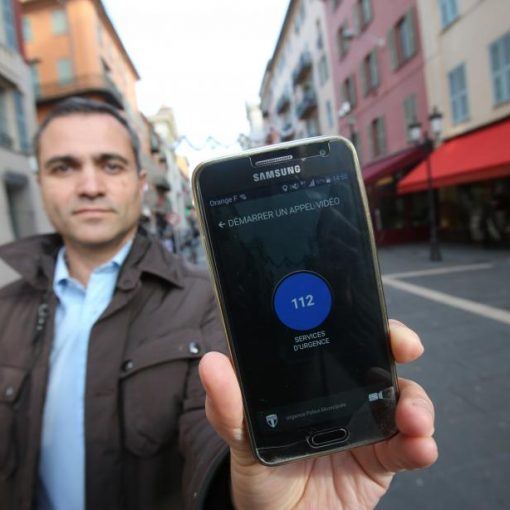
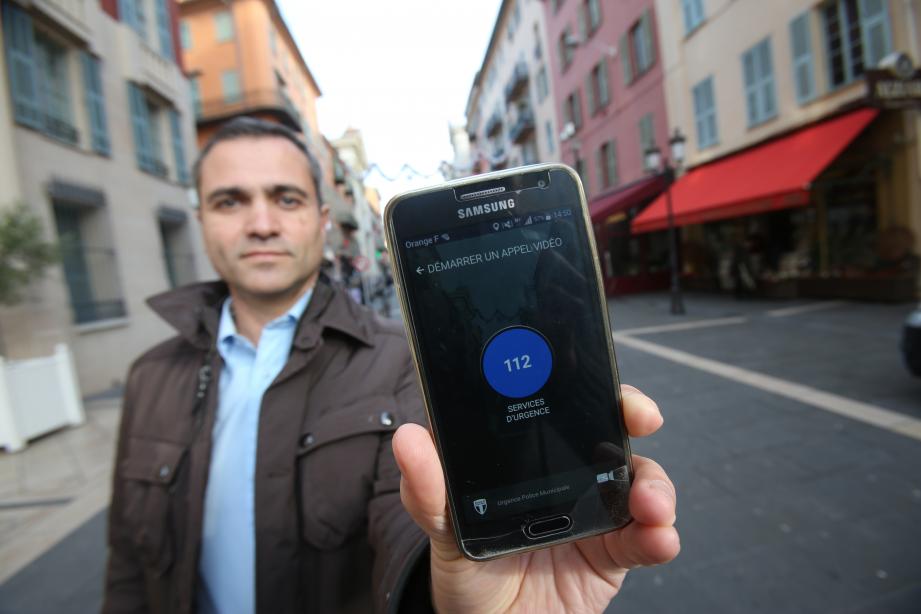
GoVia: Highlight A Hero was not designed as a disciplinary tool. It was designed as an encounter-level safety and accountability ecosystem: a patented platform that connects citizens and officers to licensed attorneys and mental-health professionals in real time during police encounters, records the interaction, and allows citizens to submit verified affidavits recognizing exemplary officer conduct through its “Highlight a Hero” feature.
The platform’s public materials describe two granted U.S. patents and one pending, covering crisis-streaming, officer-rating, and safety workflows, and more than 31,000 users worldwide. It is built around the premise that the moment of encounter is where trust is either built or broken—and that both officers and citizens behave better when a neutral, professional presence is watching and when positive conduct is recognized rather than ignored.
For police unions, GoVia offers something that arbitration reform does not: a way to protect good officers from being tarred by the misconduct of a few. The “Highlight a Hero” system creates a verified record of de-escalation, professionalism, and community praise. When a department faces a scandal, that record becomes evidence that the culture is not monolithic. Unions that embrace verified positive-conduct data can argue credibly that their members are part of the solution, not the problem.
For departments, GoVia offers a real-time risk-management layer. Encounters that begin with a live attorney and mental-health professional on the stream are less likely to escalate, less likely to produce a complaint, and more likely to generate evidence that survives review. The platform’s educational curricula—traffic-stop protocols, constitutional rights, de-escalation—can supplement academy training with encounter-level reinforcement. For agencies facing consent decrees or federal investigations, a documented record of positive encounters and structured oversight is an asset, not a threat.
For officers themselves, the value proposition is professional self-interest. The officers who do the job well—the majority, by every available estimate—are the ones who suffer most when a racist text thread or a corrupt task force poisons public trust. A system that verifiably distinguishes the 99% from the 1% gives good officers a reputational shield and a morale boost. GoVia’s materials describe partnerships with the Fraternal Order of Police as a pathway to “a national model for advancing public trust in policing.” Public recognition, the platform argues, improves recruiting and retention—two of the most acute crises in American law enforcement.
This is not a substitute for decertification, prosecution, or conviction review. It is a complement: a prevention layer that operates before the misconduct becomes a scandal, and a recognition layer that operates alongside the accountability layer. The $3.2 billion annual burden of police misconduct payouts is not solved by an app. But an app that reduces escalations, documents positive conduct, and gives departments a real-time training and oversight tool addresses one of the upstream conditions that produce the payouts in the first place.
VIII. What Must Happen Now
For Charlotte: The Mecklenburg County DA must immediately begin a case-by-case review of every arrest, search, and affidavit involving the six officers. The state certification board must move to revoke certifications, not merely accept resignations. The FBI must determine whether the text thread reflects a broader pattern of racially motivated policing, not merely individual bias.
For every state: Attorneys general and POST commissions should audit officers whose credibility has been impeached by racist communications, Brady disclosures, or sustained dishonesty findings—and should publish the number of cases affected. The National Decertification Index should be made public, mandatory, and interoperable across states.
For the DOJ: The Civil Rights Division should resume pattern-or-practice work and treat racist text scandals as potential indicators of constitutional violations, not merely HR problems. A national standard for case review after officer-credibility collapses should be developed and tied to federal funding.
For departments and unions: The choice is not between protecting officers and holding them accountable. The choice is between a reactive system that punishes everyone when a few are exposed, and a proactive system that distinguishes the honorable from the corrupt. GoVia’s encounter-level model—real-time counsel, mental-health support, verified heroism—is one infrastructure for that distinction. It will not replace the hard work of decertification and case review. But it can make the hard work less frequent, and it can give the officers who deserve recognition a way to earn it in public.
The Charlotte text messages were not written in a vacuum. They were written in a system that had no real-time accountability, no reliable removal mechanism, and no way to prove that most officers are not like the six who wrote them. Until that changes, the next scandal is already being typed.
Methodology note: Statistics on wrongful convictions are drawn from the National Registry of Exonerations’ 2025 Annual Report and supplementary NRE data. Police misconduct payout figures are drawn from municipal analyses and investigative reporting in Chicago, New York, and Los Angeles. Arbitration reinstatement rates are drawn from academic and oversight-body analyses cited in the text. GoVia platform descriptions are drawn from the company’s public materials and do not constitute an independent evaluation of efficacy.