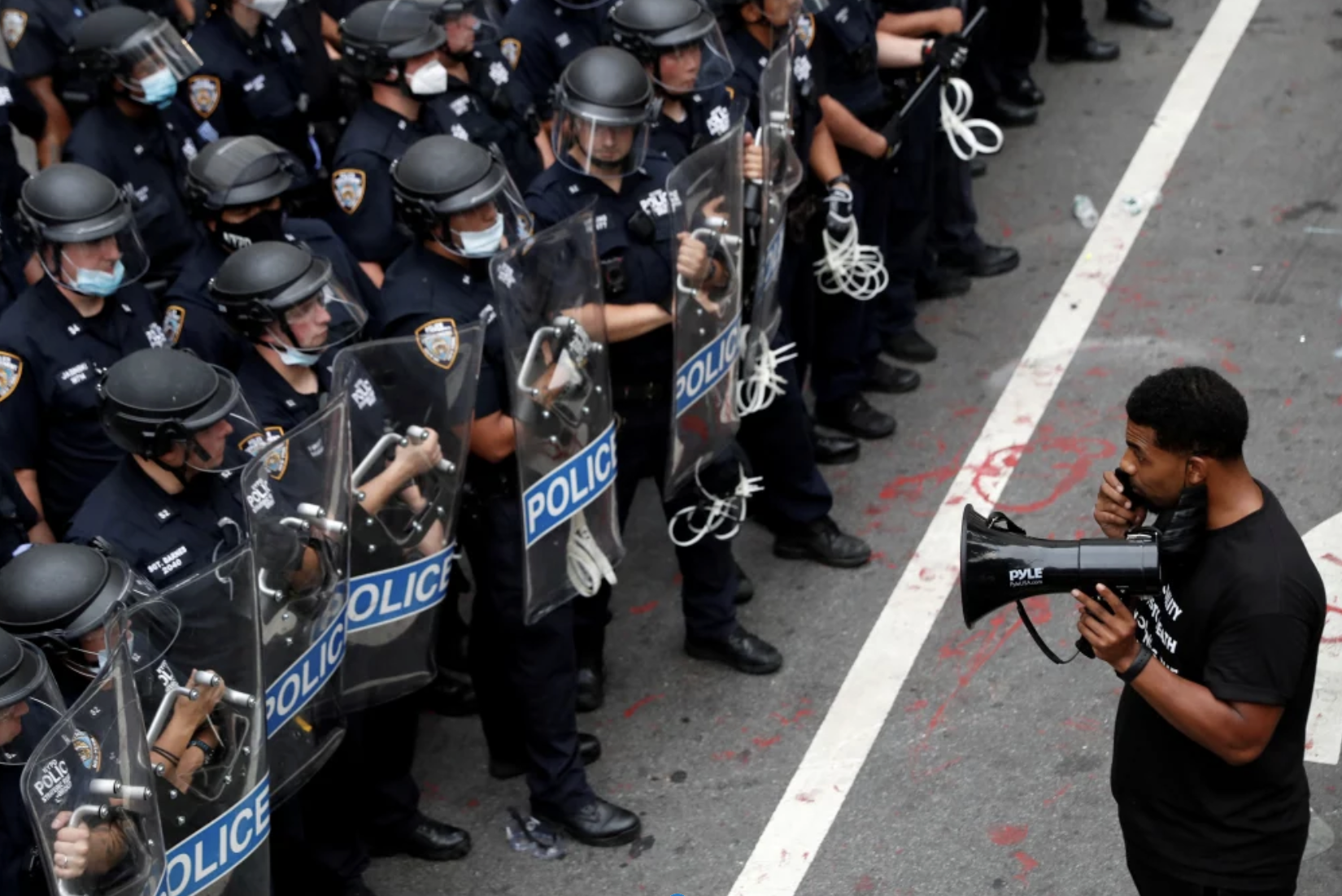
*In an era of mass surveillance, consent decree rollbacks, and AI‑driven police tools, one platform promises to flip the script—but can technology truly restore fairness when the legal guardrails are being dismantled?*
I. The New Front Line of Justice Is No Longer a Courtroom
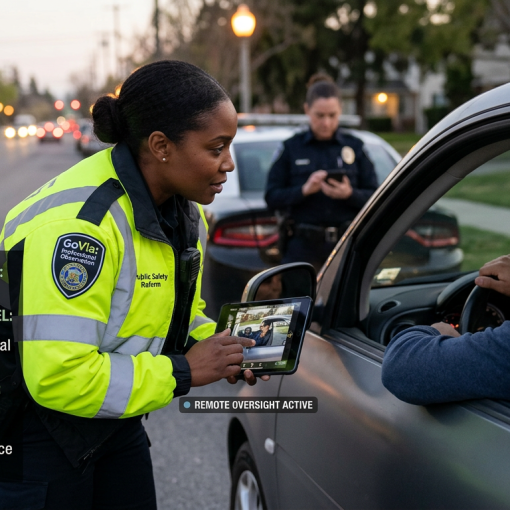
Across the United States, the earliest moment of criminal justice is not a judge’s gavel—it is a roadside interaction between a citizen and a police officer. That moment, historically shaped by discretion, tension, and ambiguity, is now being re‑engineered by artificial intelligence systems, real‑time communication tools, and emerging “live legal presence” technologies designed to intervene before escalation begins.
Under the broader policy shifts that intensified during the Trump‑era Department of Justice focus on “law‑and‑order modernization,” local police departments were encouraged—directly and indirectly—to adopt technologies that improve officer safety, reduce confrontation time, and increase evidentiary documentation. Body‑worn cameras became the most visible symbol; now a second wave is emerging: AI‑assisted situational awareness and live counsel systems embedded directly into civilian interaction points.
One of the most controversial entrants in this space is a platform known as **GoVia Highlight A Hero**. But to understand why such a tool is necessary—and whether it can succeed—we must first grasp the scale of the surveillance infrastructure it is trying to navigate.
II. The Watching Machine: Surveillance, Bias, and the Erosion of Trust
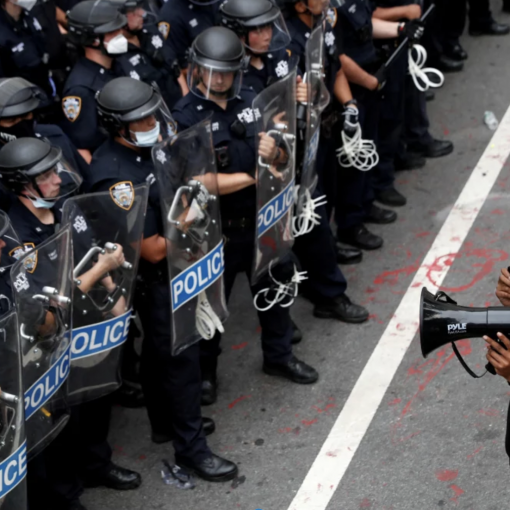
Cities and counties across the U.S. have quietly built a digital dragnet that captures millions of data points on ordinary citizens every day. Vendors like **Flock Safety** have deployed automated license plate readers (ALPRs) and PTZ cameras nationwide. In San Diego alone, officers conducted more than **244,000 searches** of Flock’s ALPR database in 2025. The data is not merely stored; it is shared across jurisdictional lines. In South Portland, Maine, residents forced the police to stop sharing vehicle data with a national database after privacy concerns erupted.
Facial recognition technology has proven even more troubling. A nationwide review found that **at least 10 people have been wrongly arrested** after being identified by facial recognition systems—every known case involved a Black person. In Detroit, a pregnant woman was charged with carjacking partly because of a faulty face match; she lost her lawsuit against the police, but the department now says it will not arrest solely based on such results.
Racial disparities remain stark. Black people are **six times more likely to experience police misconduct** than white people, twice as likely to be subjected to yelling or cursing, three times as likely to face the threat or use of force, and twice as likely to be shot and killed by police. Black Americans are also **nearly three times more likely to be killed by police** than white Americans.
The cost of this broken trust is staggering. The annual **$3.2 billion cost** of police misconduct settlements reveals a system in crisis. In 2019 alone, New York City spent **$230 million** on such settlements; Chicago allocated **$113 million** in 2020. **Critical body camera footage is missing in 35%** of reported incidents, limiting accountability.
III. GoVia Highlight A Hero: A QR Code as a Constitutional Interface
Into this landscape steps GoVia Highlight A Hero—a platform that reframes the power dynamic of a police encounter. At first glance, it looks like a bumper sticker. In design philosophy, it is closer to a portable constitutional shield.
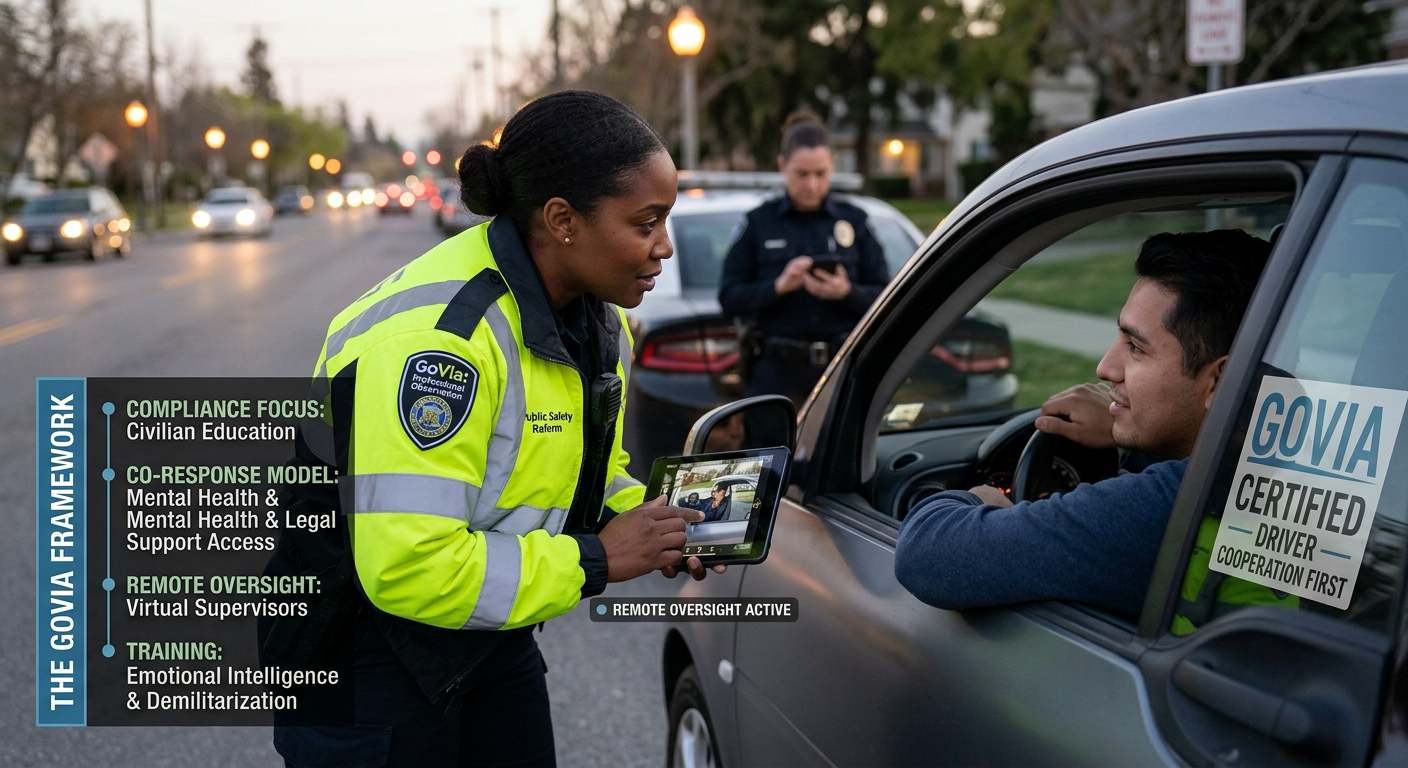
The system proposes a QR‑enabled (secured) decal on a vehicle that, when scanned, connects law enforcement, the driver, and a live attorney into a synchronized communication session. The moment a stop begins, the interaction becomes triadic: officer, citizen, and counsel.
**Core Technology Components:**
– **Live Legal Intervention:** Users can initiate real‑time video calls with attorneys and mental health professionals, building on the *Miranda* right to counsel by making it active and accessible at the moment of danger.
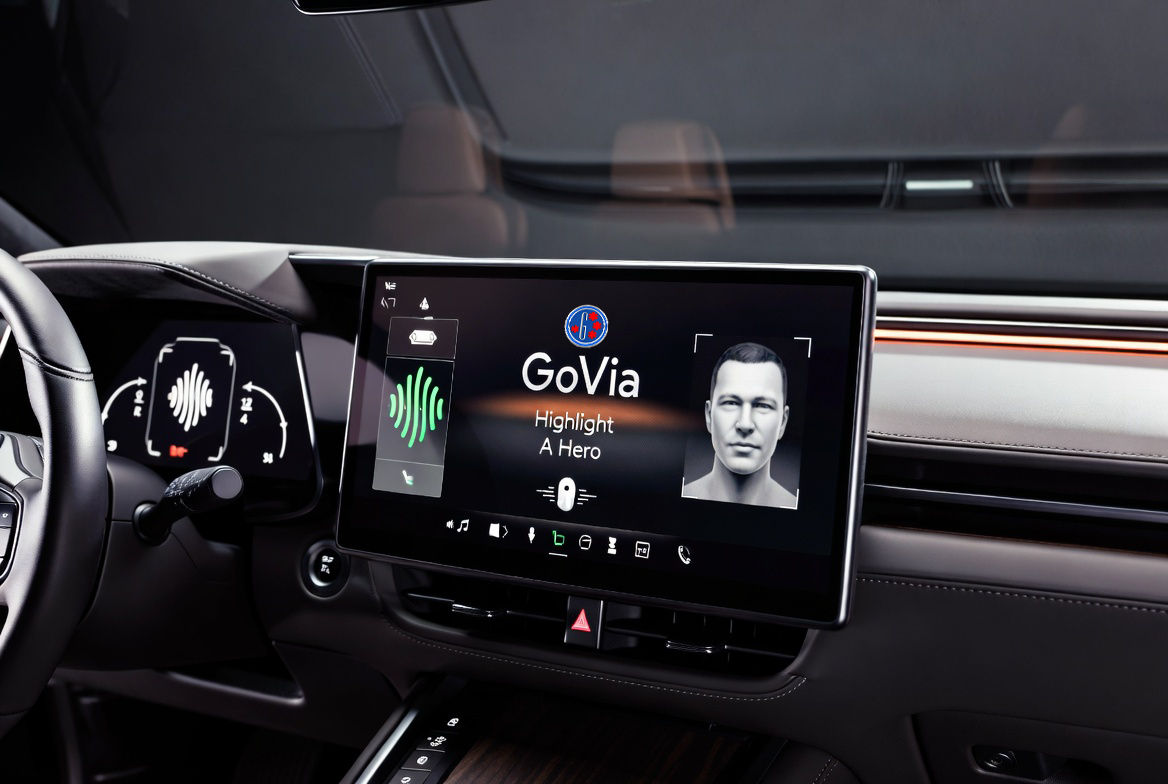
– **AI Sentiment Analysis:** The system analyzes tone of voice, speech pace, interruptions, and stress indicators. This data becomes admissible to show the psychological and emotional landscape of the encounter, meeting *Daubert* standards for scientific evidence.
– **Court‑Ready Documentation:** A chain‑of‑custody secured recording system produces timestamped, hashed, and validated evidence—affidavits, transcripts, and metadata—ensuring nothing is lost or buried, in line with *Brady v. Maryland*.
– **Highlight a Hero Feature:** Communities can nominate officers for outstanding conduct, track achievements, and share success stories, fostering positive recognition alongside accountability.
GoVia’s philosophy is not anti‑police; it is pro‑accountability. As the platform states: “We are forging a shared future where both citizens and police have equity in what we are building—a system with credibility, transparency, and privilege afforded by truth”. One of GoVia’s slogans is “Pro Law, Pro Police, Pro Citizen Pro Safety and Pro Constitution!”
IV. The Trump DOJ’s About‑Face: Unshackling Police Oversight
While GoVia attempts to build bottom‑up accountability, the Trump administration has systematically dismantled the federal government’s top‑down oversight of local police. In April 2025, President Trump issued **Executive Order 14288**, titled “Strengthening and Unleashing America’s Law Enforcement To Pursue Criminals and Protect Innocent Citizens,” which ordered the Attorney General to review all federal consent decrees and “modify, rescind or conclude” the agreements.
The DOJ moved to dismiss proposed consent decrees in **Minneapolis** (spawned by the killing of George Floyd) and **Louisville** (spawned by the killing of Breonna Taylor). In December 2025, a federal judge dismissed the Louisville reform plan. Cleveland’s Obama‑era consent decree remains under threat, with Ohio Senator Bernie Moreno praising the administration for “freeing police departments nationwide from the shackles of costly consent decrees”.
Civil rights groups have condemned the move. Ranking Members of the House Oversight Committee demanded the DOJ “halt its attacks on consent decrees,” warning that the administration is “giving a free pass to police departments with demonstrated histories of misconduct to continue with their flawed, dangerous, and often discriminatory tactics”. And in Cleveland Ohio Judge Oliver struct down Mayor Bibb and President of council Blaine Griffin from officially denied a joint motion to end the federal police consent decree.
This rollback has direct implications for GoVia’s mission. When federal oversight vanishes, platforms that empower citizens to document and challenge police conduct become not merely useful but essential.
V. The Data‑Broker Loophole and the Surveillance‑State Paradox
A parallel threat to civil liberties has emerged from a different direction: the **data‑broker loophole**. Under current law, intelligence agencies and law enforcement can bypass warrant requirements by purchasing Americans’ location data, communications metadata, and browsing histories from commercial brokers.
Section 702 of the Foreign Intelligence Surveillance Act (FISA)—set to expire on June 12, 2026—has been stretched far beyond its original purpose. A bipartisan coalition in Congress, including Senators Wyden and Lee and Representatives Davidson and Lofgren, has introduced the **Government Surveillance Reform Act**, which would require a warrant to search Americans’ data and would close the data‑broker loophole. As of June 2026, the Senate has failed to pass an extension, creating a legislative deadlock—though a secret FISA court renewed the program’s authorization until March 2027.
GoVia faces a paradox: it relies on digital documentation to protect citizens, yet its users are also subject to a massive state surveillance apparatus that can purchase their data without their knowledge or consent. The platform’s encryption and metadata‑stripping features are designed to counter this, but the asymmetry of power remains stark. But else can you do in the moment you need help? GoVia’s strict policy is to give the user more privacy then it collects.
### VI. Palantir, ICE, and the Architecture of Deportation
No discussion of modern surveillance is complete without addressing **Palantir Technologies**, the data‑fusion giant that powers much of the federal government’s intelligence infrastructure. In 2025, Palantir banked **$81.1 million** in ICE contracts from the Trump administration—a four‑fold increase over the previous year—and was awarded a new **$1 billion** “blanket purchase agreement”.
ICE is developing **ImmigrationOS**, a Palantir platform promising “granular tracking” of immigrants, including real‑time monitoring of self‑deportations. Internal documents also reveal a tool called **ELITE**, which populates a map with potential deportation targets using IDs, locations, and photos. The ACLU warns that the U.S. is “increasingly becoming a digital police state,” where AI algorithms pull out “suspicious activity” from private data.
Meanwhile, local police departments continue to deploy Flock Safety cameras at scale. In Fargo, North Dakota, every passing vehicle is photographed and stored in a searchable database. In Arizona, nearly one‑in‑four searches of an ALPR database came from the Scottsdale Police Department—almost as many as the statewide Department of Public Safety. The Electronic Frontier Foundation found that officers used these networks for school residency verification and background checks, showing clear “mission creep”.
VII. What We, the People, Can Do: A Guide for Action in 2026/2027/2028
In this environment, awareness must be paired with action. GoVia represents a technological answer—but technology alone cannot restore justice. Citizens must also engage in political and legal advocacy. GoVia recommends to advocate and follow:
**For Personal Digital Privacy:**
– Use end‑to‑end encrypted messaging apps like **Signal**. GoVia’s is doing
– Disable location services whenever possible and consider a **Faraday bag** for true isolation.
– Support privacy‑focused browsers and search engines.
**For Systemic Political & Legal Action:**
– Urge Congress to close the **data‑broker loophole** and pass the **Surveillance Accountability Act**.
– Contact your representatives to demand that FISA Section 702 reform include a warrant requirement.
– Push for comprehensive data privacy laws at the state level—**19 states already have them** as of 2026.
– Support civil liberties organizations: **ACLU**, **Electronic Frontier Foundation (EFF)** , and **Electronic Privacy Information Center (EPIC)** .
VIII. GoVia’s Take: The Truthmode Imperative
GoVia Highlight A Hero is not a panacea. Its AI sentiment analysis, live legal streaming, and community feedback loops cannot single‑handedly reverse decades of systemic bias or restore consent decrees that the DOJ has abandoned. But it offers something that has been conspicuously absent from American policing: **real‑time, verifiable, democratized documentation**.
As the Trump administration continues to dismantle federal oversight, and as surveillance technologies from Flock to Palantir proliferate, the only remaining check on power may be the citizen with a smartphone and a QR code. The platform’s guiding principle is stark: “We are not just watching—we’re fighting for equity, justice, and a future where no one is forgotten behind the bars of silence”.
The question is whether that fight can succeed against a machine that is always watching back.
*This report is based on public records, Patriot Act, NSA breach, investigative journalism, and data published by civil liberties organizations, police transparency portals, and congressional sources. GoVia Press Team maintains editorial independence from the GoVia platform’s commercial operations.*