A Quiet Signal in the Sky
The first sign was the hum — faint, metallic, almost forgettable. A drone tracing a slow arc above Gresham Park. Then a second hum, deeper, from a police helicopter drifting over the treeline. No one on the ground knew who controlled which aircraft, or why they were there. But the cameras were rolling, and the footage, according to officials, was already subject to subpoena.
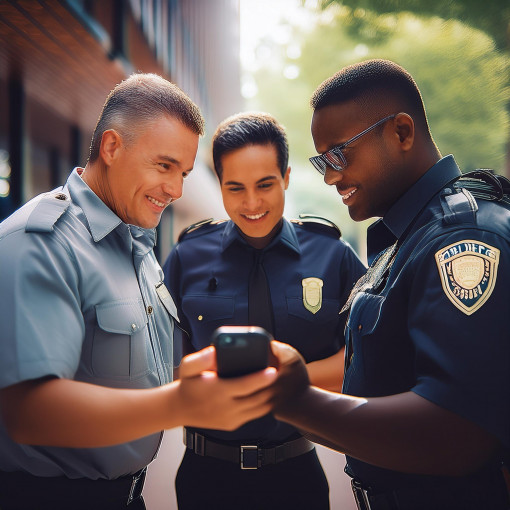
Tim Needler, a veteran patrol officer with a reputation for calm under pressure, stepped out of his cruiser and tapped the small device clipped to his vest. “My body cam is on,” he said, almost ceremonially. But Dwight Davis shared “my body cam is on too,” The phrase has become shorthand for a new kind of encounter — one shaped by GoVia, a community‑safety application quietly gaining traction among activists, and a handful of police and military observers.
What followed was not dramatic. A routine stop, a brief conversation, a resolution. Yet the moment carried a strange weight, as if everyone involved sensed they were participating in something larger than the incident itself.
A Cover‑Up, or a System Under Strain?
Rumors spread quickly. Why were multiple aircraft overhead? Why did supervisors request live access to the footage? Why did activists claim they were blocked from viewing the stream? And why, some asked, did the encounter feel like the beginning of a nightmare rather than a step toward transparency?
“You’re taking away our freedom,” one resident said later, describing the presence of so many cameras. But the officers on scene insisted the opposite. “We’re providing the beginning of the encounter,” Ramsy the attorney said. “With video proof. The citizen is going to be de‑escalated.”
The truth was harder to pin down. The footage moved through a chain of custody that stretched from the street to the courthouse, passing through hands that rarely speak to one another: police supervisors, civil‑rights attorneys, municipal IT staff, and, increasingly, GoVia’s own compliance team.
The connections between these groups were never fully explained. They didn’t need to be. The public only saw the outcome — a growing archive of encounters, each one preserved with the precision of a legal instrument.
The App That Makes Everyone Uncomfortable
GoVia’s creators describe the platform as a civic‑safety tool. Its critics call it a surveillance engine. Its supporters say it is the first technology to give ordinary people the credibility they’ve long lacked in police encounters.
The discomfort is real. The app streams live video to supervisors, attorneys, and, in some pilot programs, community observers. It can integrate with military‑grade cameras, though officials decline to say how often that capability is used. It can request footage from drones, airplanes, and helicopters — and in some jurisdictions, those feeds can be subpoenaed directly through the app.
Yet for many families, especially those with grandchildren navigating a world of unpredictable encounters, GoVia represents something simpler: a way to humble the moment. A way to slow it down. A way to ensure that no one’s story disappears.
“It makes people uncomfortable,” said one public‑finance economist who has studied the app’s adoption. “But if you really understand it, it makes everybody comfortable. That’s the paradox.”
A Tool Searching for the Right Minds and Hearts
Inside a small conference room in Atlanta, an unusual cross‑functional team has been studying GoVia’s trajectory: an investment banker, a govtech strategist, a mental‑health systems expert, a law‑enforcement training specialist, a data scientist, an IP counsel, and a policy analyst. Their mandate is not public. Their conclusions are not published. But their presence signals something: GoVia is no longer just an app. It is becoming infrastructure.
The team’s internal notes describe a technology “too powerful to ignore,” capable of reshaping police training, courtroom evidence, and even military field operations. They warn that the app must find “the right minds and hearts” before it becomes ubiquitous — people who understand both its promise and its risks.
They also acknowledge the fear. The chain of custody is long. The footage is permanent. The implications are vast.
But they return, again and again, to a single idea: credibility. In a world where truth is contested, GoVia offers a record. Not a perfect one, not an unbiased one, but a beginning.
The Connection No One Wants to Name
The drone footage. The helicopter feed. The body cam. The livestream. The courthouse. The military observers. The community activists. The quiet team in online waiting for the next police encounter.
The connection between them is never stated outright. It doesn’t need to be. The story is already unfolding — in the sky, on the street, and in the servers where the footage waits for someone to ask for it.
GoVia may be the future. Or it may be a warning. For now, it is simply a signal: an app on the phone, a phrase spoken into the air, a moment preserved. “Hey, GoVia Record!”
“My body cam is on, and it’s GoVia” Davis said.
And everything else followed.
The GoVia Paradox: Infrastructure of Modern Credibility – Summary
The provided text explores the emergence of GoVia, a sophisticated mobile application designed to record and live-stream police interactions to a network of observers. This technology functions as a new form of infrastructure that bridges the gap between law enforcement, civilian activists, and legal professionals by creating an indisputable digital record. While the app is praised for its potential to de-escalate tension and provide marginalized voices with institutional credibility, it also raises significant concerns regarding perpetual surveillance and the involvement of military-grade monitoring. High-level experts are currently analyzing the platform’s power, noting that its ability to integrate footage from drones and body cameras makes it a formidable tool in modern governance. Ultimately, the source portrays GoVia as a double-edged sword that offers unprecedented transparency while simultaneously introducing a permanent, inescapable layer of digital oversight to public life.