A multi-newsroom investigative analysis
1. The New Front Line of Justice Is No Longer a Courtroom
Across the United States, the earliest moment of criminal justice is not a judge’s gavel or a jury box—it is a roadside interaction between a citizen and a police officer.
That moment, historically shaped by discretion, tension, and ambiguity, is now being re-engineered by artificial intelligence systems, real-time communication tools, and emerging “live legal presence” technologies designed to intervene before escalation begins.
Under the broader policy shifts that intensified during the Trump-era Department of Justice focus on “law-and-order modernization,” local police departments were encouraged—directly and indirectly—to adopt technologies that improve officer safety, reduce confrontation time, and increase evidentiary documentation. While body-worn cameras became the most visible symbol, a second wave is now emerging: AI-assisted situational awareness and live counsel systems embedded directly into civilian interaction points.
One of the most controversial conceptual entrants in this space is a platform known as “GoVia Highlight A Hero.”
2. GoVia Highlight A Hero: The Bumper Sticker as a Legal Interface
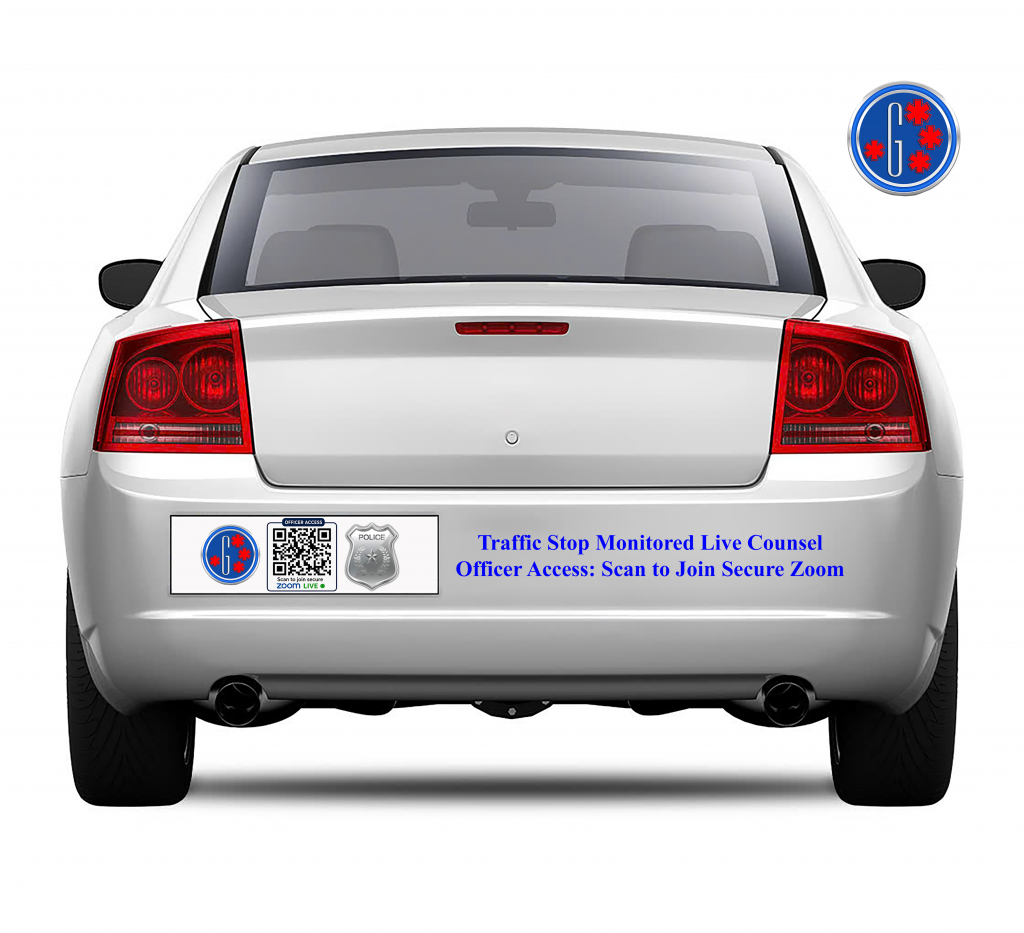
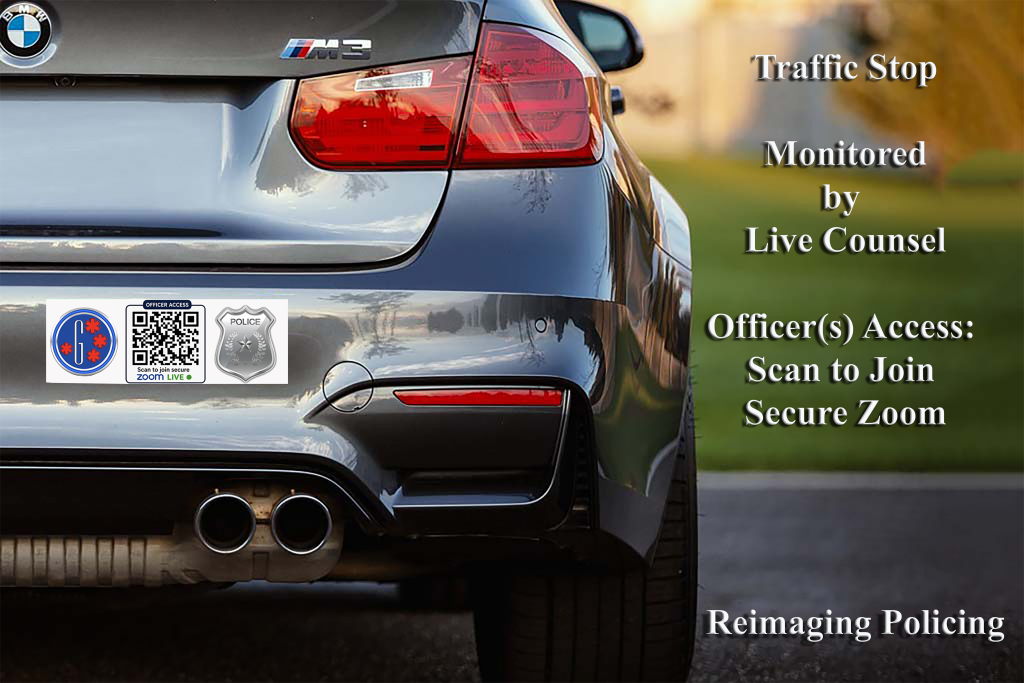
At first glance, it looks like a simple bumper sticker.
But in design philosophy, it is closer to a portable constitutional interface.
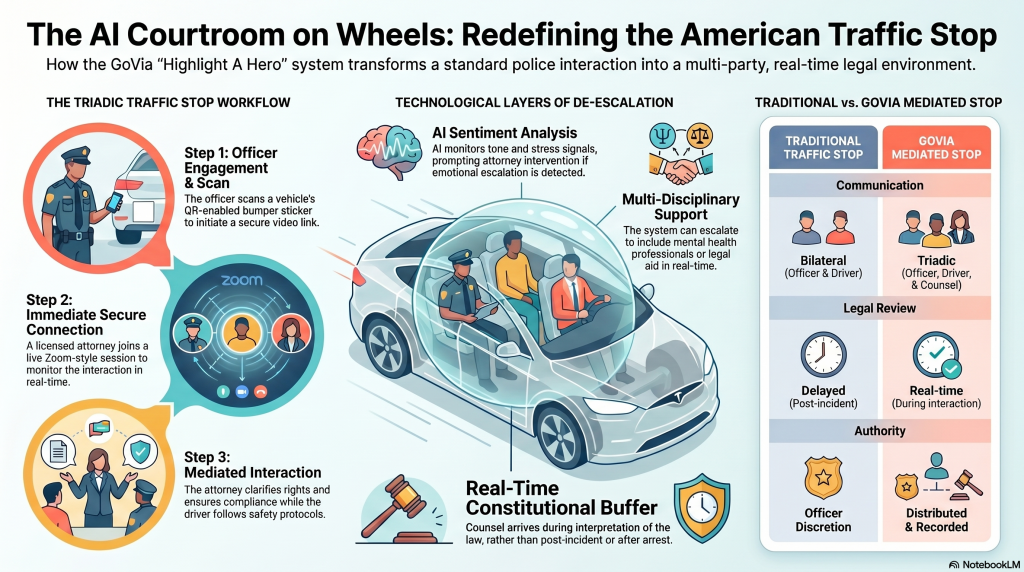
The system proposes a QR-enabled decal placed on a vehicle that, when scanned, connects law enforcement, the driver, and a live attorney into a synchronized communication session.
The stated goal is not surveillance—but de-escalation through transparency.
Core Concept:
- A QR-enabled bumper sticker visible to law enforcement
- Immediate access to a secure live Zoom-style legal link
- Real-time participation of:
- The citizen
- A licensed attorney (on-demand or pre-assigned)
- Optionally third-party support services
The moment a stop begins, the interaction is no longer bilateral. It becomes triadic: officer, citizen, and counsel.
3. The Proposed Traffic Stop Workflow (As Designed by the System)
In its idealized operational structure, GoVia Highlight A Hero functions like this:
Step 1: Officer Engagement
- Officer initiates traffic stop as normal
- Vehicle displays “Live Legal Support Active” indicator via bumper decal
- Officer scans QR code using departmental device or mobile interface
Step 2: Immediate Secure Connection
- A secure video link opens
- The attorney is notified and joins live within moments (or is already on standby queue)
Step 3: Citizen Safety Protocol
Citizens are instructed—via pre-stop onboarding education—to:
- Keep hands visible (commonly on steering wheel or clearly in sight)
- Avoid sudden movement or reaching into compartments unless directed
- Remain verbally responsive through attorney-mediated communication when needed
Passengers, if present:
- May join the session via mobile device link
- Become visible participants in the shared communication environment
This transforms what is traditionally a low-information, high-stress encounter into a multi-channel verified environment.
4. The Attorney as Real-Time Constitutional Buffer
In traditional policing, legal counsel arrives after detention, arrest, or escalation.
In this model, counsel arrives during interpretation.
The attorney’s role includes:
- Clarifying citizen rights in real time
- Ensuring lawful compliance with officer requests
- Preventing miscommunication during high-stress interactions
- Advising de-escalation language to both parties when appropriate
The system reframes legal counsel not as post-incident defense—but as active procedural stabilization.
5. AI Sentiment Analysis: Reading the Emotional Temperature of the Stop
A proposed layer of the system integrates artificial intelligence to analyze:
- Tone of voice
- Speech pace
- Interruptions
- Stress indicators in communication patterns
The AI does not “decide guilt,” but instead flags emotional escalation risk:
- Elevated stress signals → prompts attorney intervention
- Calm cooperative signals → reduces system alerts
- Mutual verbal tension → suggests de-escalation scripting to attorney interface
In theory, this creates a feedback loop of emotional regulation during encounters that are otherwise driven by instinct and authority dynamics.
Critics, however, argue this introduces a parallel surveillance layer that may:
- Profile emotional behavior
- Misinterpret cultural communication styles
- Encode bias into “risk scoring” models
6. Expanded Network: Legal Aid, Bail Support, and Mental Health Response
Unlike traditional police encounters, GoVia’s proposed framework allows optional third-party escalation support:
- Legal Aid attorneys (for low-income or public defense pathways)
- Bail bonds representatives (activated post-arrest scenarios only)
- Mental health professionals, when a participant discloses or displays indicators of psychological distress
The intention is to convert a single interaction point into a multi-disciplinary response node—similar to emergency medical triage, but for legal encounters.
7. Where This Collides With Real-World Policing Systems
Civil liberties experts note a structural tension:
Traditional policing is built on:
- Officer discretion
- Chain-of-command authority
- Delayed legal review
Systems like GoVia propose:
- Immediate external legal presence
- Distributed authority during encounters
- Real-time recording + advisory intervention
Former DOJ policy analysts from the Trump-era enforcement period emphasized efficiency, officer protection, and deterrence. Critics argue that live legal embedding may:
- Slow enforcement actions
- Challenge officer command clarity
- Introduce procedural conflict during high-risk stops
Supporters counter that:
- Transparency reduces false escalation
- Real-time counsel lowers litigation costs
- Citizens gain immediate rights literacy under stress
8. The Central Question: Does Technology Reduce Force or Redistribute It?
Across academic research in police reform and algorithmic governance, a consistent tension emerges:
Technology in justice systems rarely removes power—it redistributes it.
Body cameras shifted visibility toward evidence.
Predictive policing shifted attention toward data.
AI sentiment systems shift attention toward emotion.
GoVia Highlight A Hero, if implemented as described, would shift legal power into the live moment of encounter.
The unresolved question is whether this produces:
- Greater constitutional safety, or
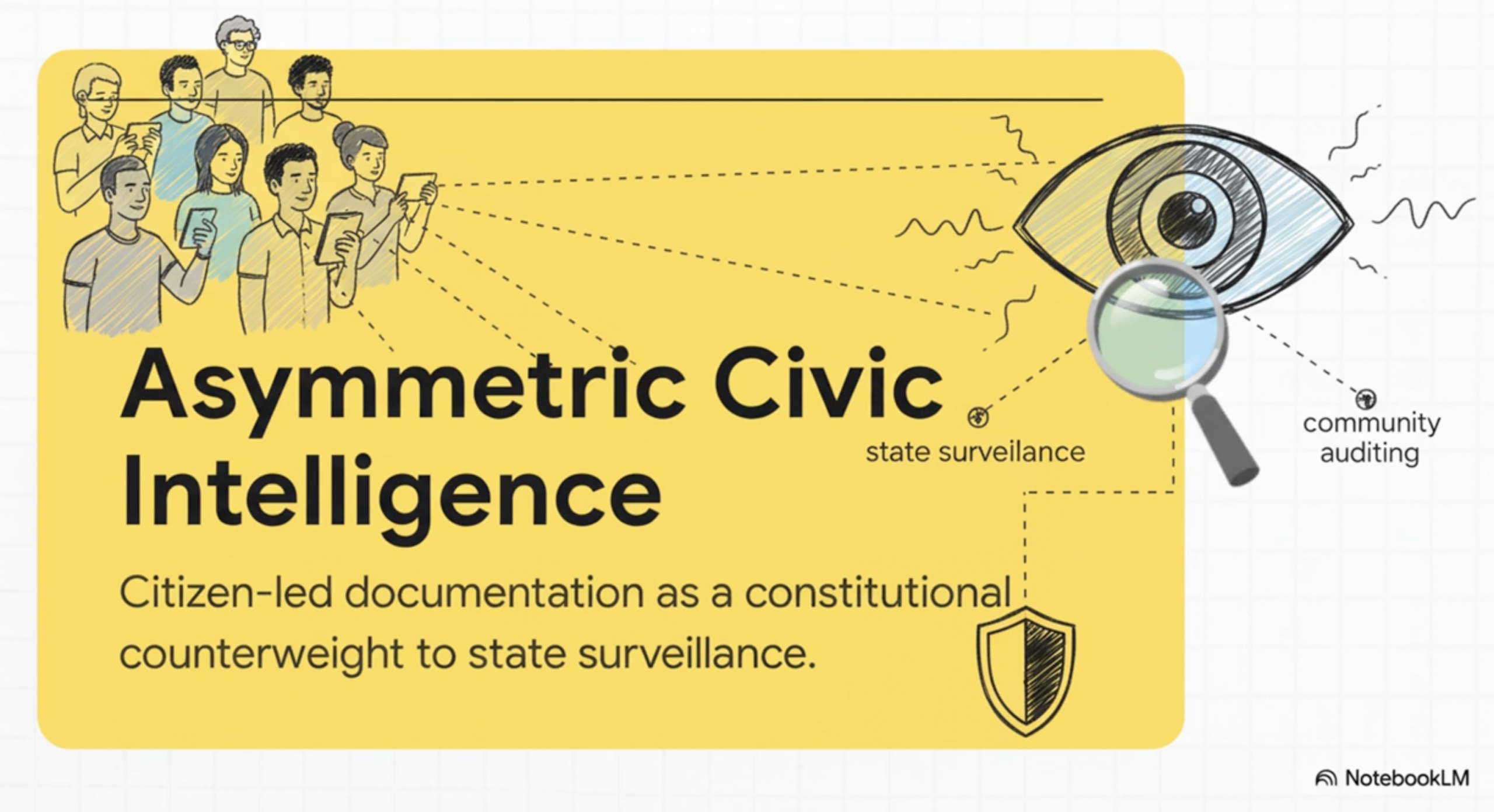
- A new form of technologically mediated surveillance policing
9. GoVia’s Conclusion: The Roadside Courtroom Problem
The American traffic stop has always been a compressed version of the justice system—fast, human, imperfect, and often opaque.
What systems like GoVia propose is not simply reform.
It is a redesign of the encounter itself:
- From bilateral confrontation → to multi-party legal transparency node
- From delayed counsel → to real-time constitutional guidance
- From instinct-driven escalation → to AI-assisted emotional monitoring
Whether this becomes a safeguard or a new layer of control will depend not on the technology alone—but on who governs its rules, its access, and its limits.
Because the most important courtroom in America may no longer have walls.
It may be mounted on a windshield.