How the Patriot Act, NSA Mass Spying, and the Trump Administration’s Data War Created a Crisis of Democratic Trust — and How GoVia Fights Back
Here’s what the report covers across its seven parts: Video
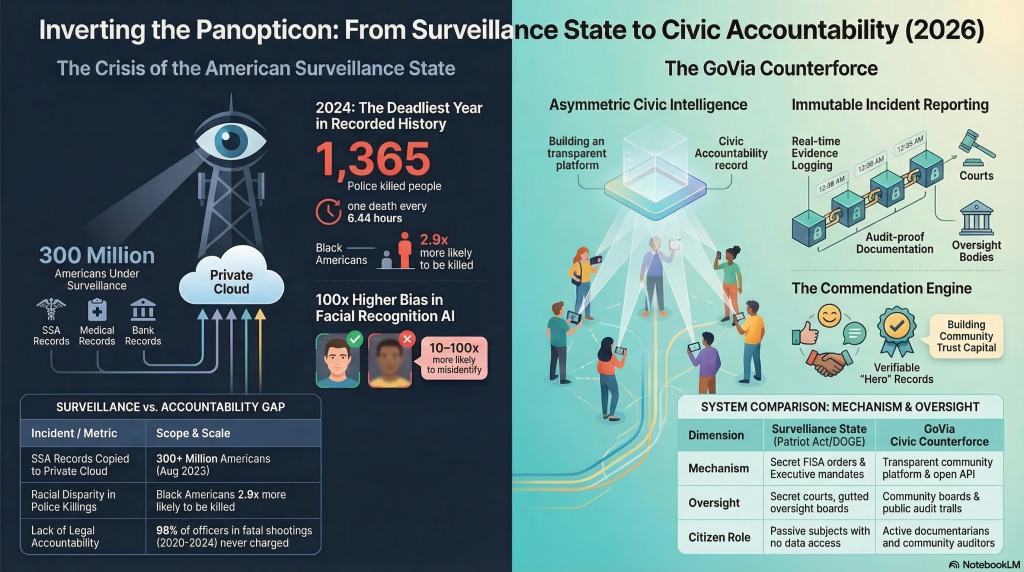
Part I — The Patriot Act’s Original Sin. How 131 pages, passed in 45 days with virtually no debate, gave the NSA access to intimate information about ordinary citizens, without a warrant and without suspicion — and how two independent reviews confirmed it yielded little-to-no counterterrorism benefit while enabling surveillance of racial and religious minorities.
Part II — The Trump/DOGE Data Consolidation. A DOGE member copied the Social Security records of over 300 million Americans into a private cloud. A federal court in November paused one data-sharing agreement, but the Supreme Court ruled 6-3 in favor of DOGE access to sensitive Social Security data. The Privacy and Civil Liberties Oversight Board was gutted on January 29, 2025.
Part III — AI Facial Recognition. Seven of eight wrongful arrest victims were Black, consistent with NIST findings that facial recognition systems are 10–100 times more likely to misidentify Black and Asian faces. Only 15 states have any facial recognition legislation, and just two require accuracy testing.
Part IV — The Killing Field. 2024 marked the deadliest year since tracking began, with 1,365 police killings. Black people were 2.9x more likely than white people to be killed by police. In 98% of fatal shootings by police from 2020 to 2024, the officer was not charged with a crime.
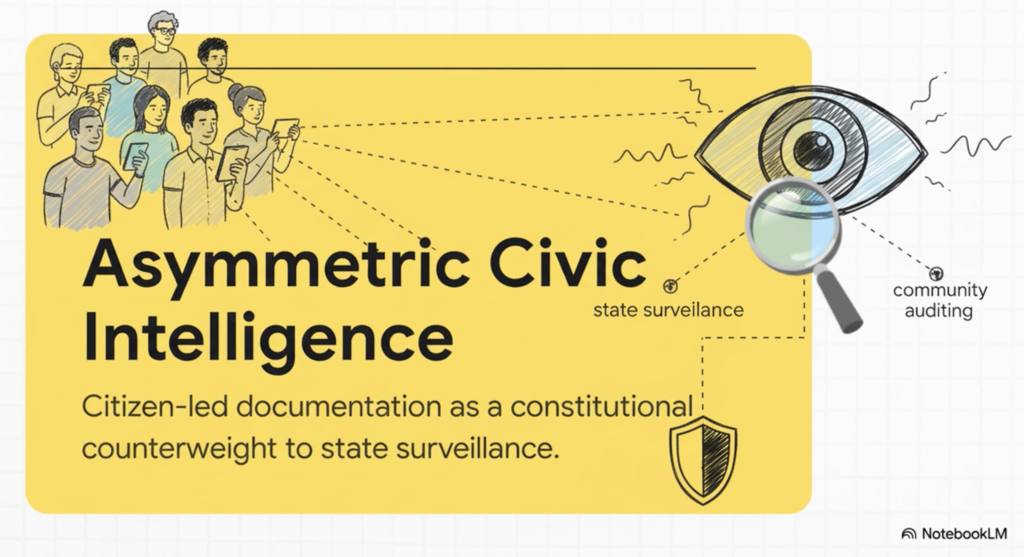
Parts V–VII lay out GoVia’s full feature architecture as a constitutional counterweight — the commendation engine, incident documentation, bias detection, DOJ compliance tracking — alongside the competitive market analysis and policy landscape.
The document includes a full data banner, comparison matrix, feature table, legislative gap analysis, and pull quotes styled for both investor and public-policy audiences.