AN ENTREPRENEURSHIP • PUBLIC SAFETY • SOCIAL INNOVATION • ARTIFICIAL INTELLIGENCE • CLEVELAND, OHIO
By GoVia: Highlight A Hero | Founder’s Perspective | November 2026
There is a difference between having an idea that could change society and dedicating years to building the institution, technology, partnerships and public trust required to make that idea work.
For Georgio Sabino III, founder and business developer of GoVia: Highlight A Hero, that distinction has defined the company’s development.
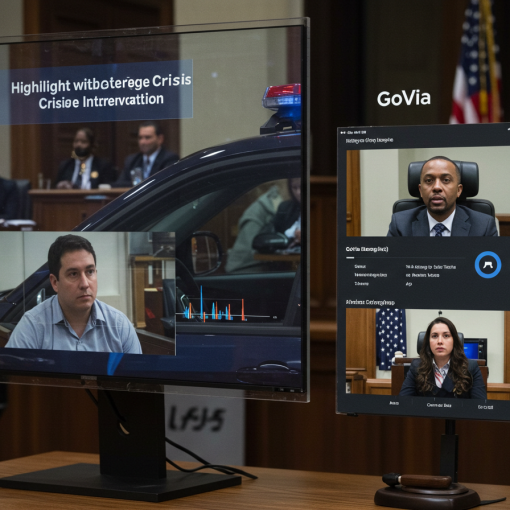
GoVia began with a difficult question: What if a police encounter could be safer, more transparent and better supported for everyone involved? What if we slowed time down?
What if a citizen could connect with an attorney or a mental health professional during a stressful encounter? What if an officer could receive relevant information about a person’s special needs? What if artificial intelligence could help people find educational resources about their rights, responsibilities, public safety and available community support?
And what if the technology recognized positive policing while also supporting transparency and accountability?
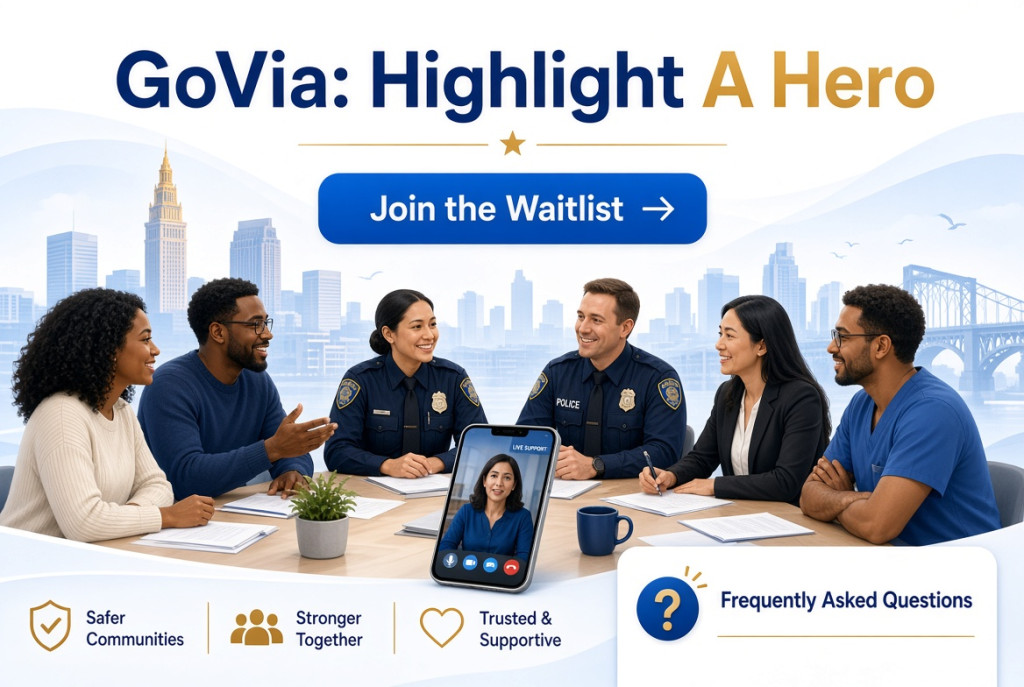
These questions became the foundation of GoVia, a proposed community-police safety platform designed to modernize the way citizens, law enforcement, legal professionals and healthcare resources interact.
But the story of GoVia is not simply a story about developing an application.
It is a story about building a business capable of addressing a complicated social problem. It is also a story about the institutions that helped a founder move from an early concept toward a more structured, legally informed, customer-tested and investment-conscious enterprise.
The cohorts were not merely names on a résumé. They represented different classrooms in the development of a company.
Some challenged the original business model. Others introduced legal structure, customer discovery, financial planning, commercialization, investor readiness and community engagement. Still others opened doors to universities, public institutions, attorneys, business leaders and potential implementation partners.
Together, these experiences illustrate an important part of entrepreneurship that is often overlooked: innovation requires more than invention. It requires the discipline to test an idea, listen to people who may disagree with it, understand the market and build something that can operate responsibly.
1. MIT Solve: A global challenge meets a Cleveland-born idea
MIT Solve Reimagine Policing and Public Safety / Stand Together Ventures Lab – Unbundle Policing Challenge. Public safety innovation • Social entrepreneurship • Technology
GoVia’s published MIT Solve solution profile
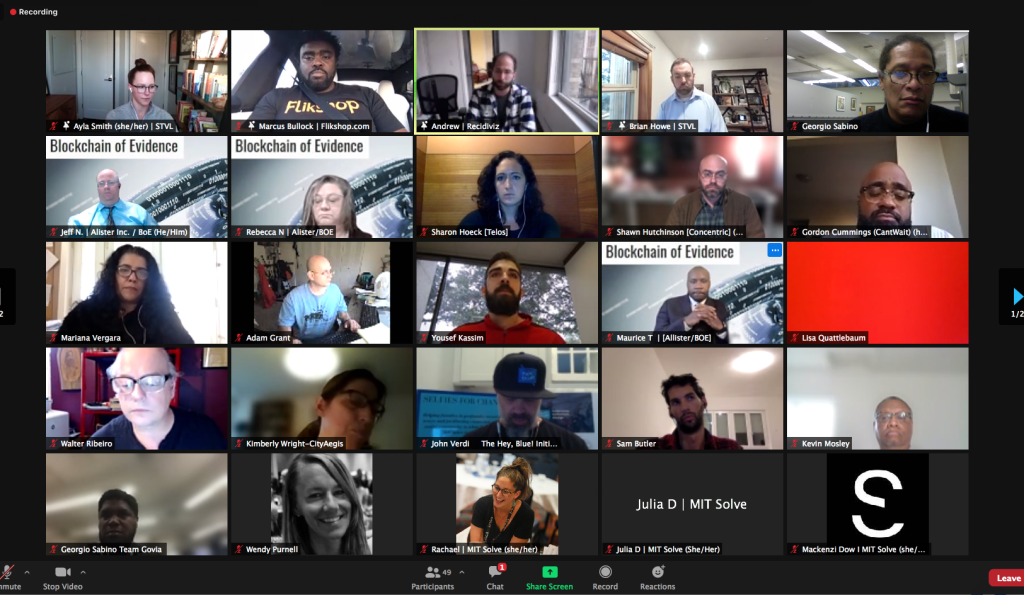
One of the most significant milestones in GoVia’s development was its entry into the MIT Solve innovation ecosystem through the Unbundle Policing: Reimagine Public Safety Challenge.
This was not an ordinary technology competition. The challenge addressed a fundamental question about American public safety: How can communities reduce unnecessary and harmful law-enforcement encounters while improving public health, safety and well-being?
MIT Solve partnered with Stand Together Ventures Lab to develop the challenge. Its premise was that policing involves a range of responsibilities that might be better handled through collaboration with healthcare professionals, social workers, community organizations and other specialized resources.
The challenge’s definition of unbundling policing is particularly relevant to GoVia. It recognizes that not every situation requires the same response, and that the most appropriate resource should be available when a crisis occurs.
The challenge included two distinct development stages:
- Incubator: Expert instruction, mentorship, stakeholder feedback, product development resources and access to cloud services.
- Accelerator: A six-month deployment and scaling program, with $50,000 in initial non-dilutive funding for accepted teams and potential access to additional investment.
The challenge also identified resources such as AWS Activate credits, Adobe Creative Cloud licenses, project planning, product design and impact consulting. For GoVia, the importance of this opportunity was its alignment with the company’s central premise: public safety should not be treated as a problem belonging exclusively to police departments.The solution describes GoVia as a community/police safety application combining artificial intelligence sentiment analysis, connections to community resources and crowdsourced accountability.
The original submission also described three principal components:
- AI-supported sentiment analysis to help recognize emotional intensity during encounters.
- A proposed accountability and transparency system.
- Immediate connections to legal, mental-health and other community resources.
The submission identified the company as being at the prototype stage, with initial front-end registration and menu development underway and additional back-end functionality still in development.
That distinction matters. Being publicly listed on MIT Solve is a meaningful record of participation in its open innovation challenge ecosystem. For GoVia, the deeper value was having its proposed solution situated within a national conversation about how public safety systems could evolve.
The central question became bigger than whether GoVia could build an app. Could it build a practical bridge between people and the professionals who can help them when an encounter becomes stressful, confusing or potentially dangerous?
That question continues to guide the company’s development.
2. MORTAR: Building an entrepreneur, not just a business
MORTAR – Cleveland Entrepreneurship Academy / Iron Chest Fund
Official program If MIT Solve helped frame the public-safety problem, MORTAR represented another important dimension of GoVia’s development: the discipline of entrepreneurship.
Through the Cleveland entrepreneurship experience, with the academy’s Cincinnati-based organization and support through the Iron Chest Fund, GoVia’s founder continued developing the business fundamentals necessary to transform an ambitious concept into a sustainable enterprise.
MORTAR’s Entrepreneurship Academy is a 15-week program designed for people starting or growing businesses. Its curriculum includes weekly classes, guest speakers, mentors, practical activities, business planning and work outside the classroom. Its alumni receive additional support and access to resources.
#WeAreMORTAR
The value of this experience for GoVia was the opportunity to approach entrepreneurship as a discipline rather than simply a passion. Building a public safety technology company requires more than understanding the problem. It requires knowing how to:
- Define the customer and the market.
- Establish a revenue model.
- Understand operating expenses.
- Develop a sales strategy.
- Establish organizational policies.
- Build a sustainable business structure.
- Prepare for the responsibilities that come with growth.
Through its Cleveland-based entrepreneurial development, GoVia also recognizes the importance of the United Black Fund of Greater Cleveland, Inc., in the surrounding community-support ecosystem. The significance of MORTAR is its emphasis on entrepreneurship as an economic development tool, particularly for founders building businesses that need access to capital, expertise and professional networks.
For GoVia, the lesson was straightforward: a social mission must have a viable business model if it is going to survive long enough to deliver meaningful impact.
3. JumpStart: Moving from an idea toward a pre-seed company
JumpStart – Small Business Impact Program
JumpStart In GoVia’s early years, one of the most important challenges was explaining the concept to people who represented different sides of the public safety system. How could a technology platform serve both a citizen and a police officer without becoming an instrument of hostility toward either? How could a company build credibility with law enforcement while maintaining a meaningful commitment to citizen protections?
JumpStart’s Small Business Impact Program became part of that early business-development process. Under the support of Ron Stubblefield, GoVia’s founder recalls an important early forum that brought together police representatives, Kent State participants, citizens, community elders and an attorney to discuss the concept.
The forum was important because it moved the conversation outside the founder’s own perspective. Instead of assuming what police officers needed, or what citizens wanted, the company had an opportunity to hear different perspectives in the same room. This was particularly important for a company attempting to serve a market in which trust is often difficult to establish. The experience helped shape a foundational principle: GoVia must be designed with an understanding of all the stakeholders involved in a police encounter.
That includes the officer performing a difficult assignment, the citizen experiencing the encounter, the attorney who may provide legal guidance, and the mental-health professional who may help address a crisis. For an early-stage company, these conversations are part of customer discovery and market development, not simply community outreach.
4. Lightship Foundation and Launchpad: Building an investment-ready business
Lightship Foundation & JobsOhio – Launchpad / Business development support
Lightship Foundation One of the most important transitions for GoVia was recognizing that a compelling mission does not automatically translate into an investable company.
Investors need more than a presentation describing a social problem. They want to understand the business model, financial projections, customer acquisition strategy, intellectual property, operational structure, competitive position and the team’s ability to execute.
Through the Lightship and Launchpad ecosystem, GoVia pursued the practical work of becoming a more investment-ready business.
The Launchpad program described by JobsOhio is a six-week, hands-on business development experience with nine guided online courses. Its objectives include developing realistic financial models, refining a company’s value proposition, identifying customers, documenting standard operating procedures and establishing a professional data room.
For GoVia, these are not administrative details. They are the infrastructure required to pursue institutional partnerships and private investment. The founder also credits connections through the Lightship ecosystem, including Morrow/Gan-related startup support, with helping explore access to corporate technology resources.
This is particularly relevant for a company building a technology platform that may require substantial cloud infrastructure, cybersecurity, data storage, video communication and AI capabilities.
The distinction is important: access to startup services or cloud credits is not the same as receiving a million dollars in cash or an investment. These resources can nevertheless reduce early operating costs and help founders experiment with technology that might otherwise be expensive to access.
5. UC Berkeley Startup Law Initiative: Understanding the legal architecture of a company
UC Berkeley School of Law – Startup Law Initiative (SLI)
Official SLI program Technology companies often spend considerable time developing products before fully understanding the legal structures required to operate them.
GoVia’s participation in the Startup Law Initiative ecosystem brought attention to an equally important part of building a business: legal organization.
UC Berkeley Law’s SLI provides qualifying low-income and diverse startup founders with access to free legal incorporation services through supervised law-student teams. Its work includes incorporation documents, transactional research, business documentation and education on startup law.
For GoVia, the experience was part of the effort to establish the appropriate corporate structure and documentation as the company moved toward a more formal operating model.
That work is especially relevant for a company that expects to work with:
- Government entities and police departments.
- Attorneys and legal service providers.
- Healthcare and mental-health professionals.
- Universities and research institutions.
- Technology vendors and investors.
Each relationship introduces different contractual, privacy, intellectual property and operational considerations.
The objective is to build a company whose legal foundation can support future commercial growth without losing sight of the public interest it seeks to serve.
6. University of Akron Research Foundation: Learning to validate the market
University of Akron Research Foundation Early-stage entrepreneurship / customer discovery
Official UARF One of the most consequential lessons in startup development is learning that founders are not necessarily their own customers. A founder may understand a problem personally, but that does not automatically establish that a customer will purchase the solution.
GoVia’s work with the University of Akron Research Foundation focused on the importance of customer discovery, market research and business-model validation. UARF’s programs include Starting Line, a pre-accelerator introducing entrepreneurs to customer discovery and the Business Model Canvas, as well as I-Corps and Advanced Customer Discovery.
UARF reports that more than 895 entrepreneurial teams, and 2,136 individual participants have completed its six-week I-Corps program. GoVia’s founder reports conducting approximately 500 customers around the world (Los Angeles, Atlanta, Pascagoula, San Francisco and New York) and stakeholder interviews as part of the company’s wider market-validation efforts. Those conversations are especially important because GoVia does not have just one customer.
A citizen may value access to educational resources and legal support. A police department may value officer safety, communication and encounter documentation. A public defender may be interested in reliable records and access to relevant information. An attorney may value timely communication with a client.
The company must understand the different incentives, purchasing processes and operational needs of each group. The central lesson of customer discovery is that a company should not build solely around what it believes people need. It must test whether the proposed solution addresses a problem that people recognize and are willing and able to adopt.
7. Global Silicon Valley: Learning from an international innovation ecosystem
Global Silicon Valley – GSV Cohort / Fellowship experience
GSV GoVia’s participation in the GSV ecosystem introduced another important perspective: innovation is not limited by geography.
The company was conceived and developed in Cleveland, but its potential applications involve public safety, healthcare, education and technology challenges that extend beyond one city.
The founder describes the GSV experience as an opportunity to learn alongside leaders and innovators, broadening his understanding of how emerging technologies can be developed, communicated and scaled.
This exposure matters for a company considering a future in which educational resources, AI-supported information access and public safety tools could be used across different jurisdictions.
However, global scalability must come after local validation. Police procedures, privacy laws, emergency response systems and government procurement requirements differ across jurisdictions.
The lesson is to think internationally while building responsibly at home.
8. gBETA: Preparing for acceleration and investor conversations
gener8tor – accelerator ecosystem
gBETA For a founder developing a complicated technology platform, learning how to communicate the business to investors is an essential skill. gBETA is a free, seven-week accelerator for early-stage companies. The program offers individualized mentorship, investor preparation, mentor meetings and opportunities to present to investors.
According to gener8tor, participating companies can also access more than $1 million in vendor deals and perks across its participating companies and programs. This represents potential in-kind benefits, not a guaranteed cash award to each startup. For GoVia, this type of programming addresses a critical challenge: translating a broad social mission into a focused investment proposition.
A public safety company cannot simply tell investors that it wants to improve policing.
It must explain:
- Who pays for the product?
- What problem does the product solve?
- How does the company acquire customers?
- What makes its technology defensible?
- What are the costs of deployment?
- How will the business generate recurring revenue?
- What evidence demonstrates that customers need it?
GoVia’s proposed business model includes business-to-consumer, business-to-business and business-to-government opportunities.
Each requires a different sales strategy and a different understanding of procurement, adoption and implementation.
gener8tor – 2024 Fall Accelerator Lightning Rounds
Exposure to the accelerator ecosystem, startup presentations, business feedback and the importance of communicating a company’s value proposition clearly.
9. The remaining entrepreneurship and leadership classrooms
Beyond the major programs above, GoVia’s development has included additional educational, institutional and business-support relationships. These experiences collectively helped address the operational and leadership challenges that accompany an emerging public safety technology company.
Education, leadership and business development
10. The King Center – Nonviolence365® Masterclass
The founder’s Nonviolence365® education and certificate experience reinforced the importance of disciplined communication, conflict resolution, empathy and nonviolent social change. The King Center describes Nonviolence365 as education rooted in Dr. King’s philosophy and methodology of nonviolence. For GoVia, this is particularly relevant to the company’s commitment to de-escalation and constructive relationships between citizens and law enforcement.
11. Verizon Digital Ready
Business education covering digital marketing, entrepreneurship, sales, financial literacy and the practical skills needed to operate and grow a company. For GoVia, the experience helped strengthen the business-development side of the organization.
12. John Carroll University – Entrepreneurship Bootcamp
Strategic planning, risk management, business-model development and understanding how a company makes money. The founder particularly values the support and encouragement provided by the program team.
13. Wells Fargo – Equitable Access Business Boost Camp, Session 1&2
Building a Sales Strategy. This experience addressed the importance of developing a repeatable approach to customer acquisition, sales conversations and business growth.
14. Greater Cleveland Partnership – Business development and internship support
A particularly valuable relationship for GoVia. Through this ecosystem, the company reports receiving paid internship support, introductions and access to business events.
These opportunities helped connect the startup with emerging talent, business leaders and the wider Cleveland entrepreneurial community.
15. Dinsmore – Pro Bono Legal Assistance
A company working in public safety must address issues that extend far beyond application development. Legal protection, data governance, institutional credibility, community engagement and operational readiness all matter. Legal, technical and community-support infrastructure. GoVia credits Dinsmore with legal assistance involving patent matters and business documentation. The founder reports two issued U.S. patents and one pending application.
The broader legal work has included preparation of nondisclosure agreements, employee documentation and other organizational materials. Intellectual property is especially relevant to a company developing proprietary technology and contemplating licensing, partnerships and future commercialization.
16. W. Scott Ramsey Law Firm – Legal Guidance
Legal guidance and support as GoVia explores early-adopter relationships, business development and the responsibilities associated with operating in a regulated public safety environment.
17. I-Corps – Seven-Week Experiential Training
I-Corps taught GoVia to examine the competitive market rather than develop its business around assumptions. The program describes its seven-week program as an intensive customer-discovery experience. Each team are expected to conduct at least 100 interviews with potential customers and stakeholders. GoVia did well over all over the country and internationally for this type of application to understand the clients.
GoVia’s founder reports learning about companies such as Legal Shield, Attorney Shield and TurnSignl, which operate in adjacent legal and roadside assistance markets (just in law not mental health, sentiment analysis or patent GoVia has i.e. CJIS evidence and property). This helped clarify that there is an identifiable market for technology connecting people with legal assistance during police encounters, while also highlighting the need for GoVia to differentiate its broader community, police and mental-health approach.
18. Hispanic Business Center – Technical Assistance
Business guidance and technical assistance supporting GoVia’s organizational and entrepreneurial development. This relationship also reflects the importance of building public safety technology with an understanding of the needs of diverse communities.
19. Comité Mexicano de Cleveland – Community and Cultural Engagement
An organization supporting Mexican residents and academic and social research related to the Mexican community. For GoVia, community engagement is important because access to public safety information, legal resources and trustworthy communication should not depend on a person’s background or familiarity with the justice system.
20. Cuyahoga County – Innovation and Technology Lab
Engagement with the county’s innovation and technology ecosystem as GoVia explores how a public safety technology platform might interact with local government systems.
Government technology adoption requires more than a working application. It requires security, procurement readiness, interoperability, documented outcomes and a clear understanding of institutional responsibilities.
21. Cuyahoga County Public Defender Office – Beta and Early-Stage Engagement
GoVia reports engagement with the Public Defender Office concerning beta exploration. This is an important area because public defenders see the consequences of police encounters through the experiences of people navigating the criminal justice system.
Their perspective can help inform the design of educational resources, documentation, legal-resource access and appropriate referral processes. This should be understood as reported engagement, not a claim of formal county endorsement or an approved department-wide deployment. GoVia and the Public Defender’s Office could work together to pre-approve citizens for support during police encounters. If an encounter occurs, a public defender could join via livestream to assist the citizen and help de-escalate the situation. Asking the police officer for accountability.
22. The Presidents’ Council – Business Community
Connections to Cleveland’s African American business leadership and entrepreneurial network. For GoVia, these relationships are important in developing local credibility, identifying potential partners and creating opportunities for economic participation.
23. Urban League of Greater Cleveland – Community-Based Engagement
Engagement with an established community-based organization working on economic and social advancement. Community-based organizations can offer an important perspective on whether public safety technology is understandable, accessible and responsive to the people it is intended to serve.
University talent pipeline: Bringing research, education and technology together
One of the less visible but important dimensions of GoVia’s development has been its engagement with university students. A startup cannot develop every capability internally, particularly when it is working with limited early-stage resources.
Universities can provide access to emerging talent, research perspectives, technical skills and interdisciplinary thinking. GoVia reports working with students from the following institutions:
Reported university internship and student participation. 10 Case Western Reserve UniversityGraduate and undergraduate students, 5 Kent State University Undergraduate students, 5 Cleveland State University, 1 Howard University Undergraduate, college credit 1, Ohio State University, and 1 Columbus State College totaling Reported total 23
Founder-reported participation figures. Includes students across different academic levels and arrangements. The university relationships include the Case Western Reserve University Entrepreneur Studies Department and the CWRU/Kent State LaunchNet ecosystem. This talent pipeline is important for several reasons.
First, it gives students an opportunity to apply their education to a complex real-world business problem.
Second, it provides GoVia with perspectives from different academic disciplines, including entrepreneurship, technology, research and community engagement.
Third, it creates an opportunity for students to understand how an emerging company is built, including the difficult work that takes place before a product reaches the market.
The founder’s commitment to involving students also reflects an important economic development principle: entrepreneurship can create educational and professional opportunities while building technology that addresses community needs.
The Cleveland Police Consent Decree: Understanding the institutional environment
Another important component of GoVia’s research has been its effort to understand the Cleveland Division of Police Consent Decree and the reforms surrounding police practices. The Cleveland consent decree emerged from a federal civil-rights investigation and established requirements involving use of force, crisis intervention, accountability, supervision, training and community engagement.
For a startup proposing technology in this environment, understanding the decree is not optional background research. It is part of understanding the operational environment in which the technology would have to function.
GoVia’s team has undertaken engagement and research to better understand these complexities and how a technology architecture might address relevant needs. There is an important distinction here: a technology company cannot independently resolve systemic policing problems, nor does the existence of an application establish compliance with a federal consent decree.
However, responsible technology may contribute to specific objectives if it is developed with the appropriate stakeholders and tested against measurable standards.
For GoVia, the research raises several practical questions: The answer is yes with tech and experts in all stakeholders’ positions:
- Can relevant information be made available to the right people at the right time?
- Can communication with attorneys and mental-health professionals be facilitated appropriately?
- Can encounter documentation be securely maintained?
- Can technology support transparency without compromising privacy?
- Can departments evaluate whether the technology improves outcomes?
The objective is not to replace police training, professional judgment, oversight or established accountability systems.
It is to explore whether technology can provide another layer of support.
The community conversations: Testing the idea beyond the classroom
Perhaps the most important part of GoVia’s development has happened outside formal accelerator programs.
The founder reports that GoVia has engaged with: Founder-reported stakeholder engagement with 400+ Attorneys, conversations and outreach 30 Bail bondsmen, industry conversations, 4 Police chiefsreported discussions, 3 Mayors reported outreach and discussions:
Additional reported engagement
- Police leadership in Atlanta, East Cleveland, Cleveland and University Circle, as well as Washington, D.C.
- Ohio Governor Mike DeWine.
- Community members, attorneys, legal professionals and public safety stakeholders.
These are founder-reported outreach and engagement figures. They should not be interpreted as endorsements, contracts, procurement commitments or completed pilot deployments.
Why does this matter?
Because GoVia is attempting to enter a market where different stakeholders have different definitions of success. A police chief may prioritize officer safety, department operations and public trust. An attorney may prioritize access to clients, accurate information, legal rights and reliable documentation. A bail bondsman may be interested in timely information, family communication and the processes surrounding arrest and release. A citizen may simply want to understand what is happening, communicate effectively and have access to appropriate assistance. A mental-health professional may be concerned with whether a situation involving distress, disability or behavioral crisis is receiving an appropriate response.
The founder’s reported conversations provide a foundation for understanding these different perspectives. They do not, by themselves, establish market demand or product-market fit. Those conclusions will require documented customer validation, paid adoption and measurable outcomes. In-which GoVia is committed and doing to ensure the success of the company.
Nevertheless, the willingness to approach people across institutional boundaries is an important part of developing a company in this field.
What GoVia is actually building: A different approach to the police encounter
The partnerships and cohorts have helped GoVia develop a broader understanding of what the technology should accomplish. At its core, GoVia is being developed as a community-police safety platform with a high-tech, human-centered approach. It is not intended to replace police officers, attorneys, healthcare professionals or existing emergency response systems.
Its purpose is to explore how technology can connect these resources more effectively.
The proposed technology architecture
1. Real-time video communication with attorneys
A central feature of the GoVia concept is the ability for a citizen to connect with an attorney through video communication during a police encounter. The objective is to make legal assistance more accessible at a moment when people may feel uncertain, intimidated or confused about their rights and responsibilities. For this to work responsibly, attorney availability, jurisdiction, confidentiality, informed consent and the distinction between general legal education and an attorney-client relationship must be addressed.
2. Mental-health professional connectivity
GoVia also envisions access to mental-health professionals through integrated video communication. This feature recognizes that some encounters involve anxiety, emotional distress, PTSD, behavioral health needs or other circumstances in which appropriate professional support may be valuable. It is important that the application complement, rather than interfere with, emergency response protocols and established crisis intervention practices.
3. AI-powered educational search
Artificial intelligence is another important dimension of GoVia’s development. The proposed AI educational search experience is intended to help users locate understandable information about:
- Legal rights and responsibilities.
- Police encounter procedures.
- Community resources.
- De-escalation education.
- Mental-health awareness.
- Relevant public safety information.
- Legal and social-service referrals.
This is an important distinction: GoVia’s AI should help people find and understand educational information, not make legal determinations, diagnose mental-health conditions or independently direct police activity.
The system should use reliable sources, clearly identify uncertainty, protect personal information and direct users to qualified professionals when needed.
4. Police-side special-needs and safety awareness
The company also envisions capabilities that could allow relevant information about a person’s special needs or circumstances to be communicated appropriately to law enforcement.
The goal is to improve awareness and support more informed interactions.
Any such system must be voluntary where appropriate, carefully governed and designed to prevent sensitive information from becoming an unjustified basis for discriminatory treatment.
5. Highlight A Hero: Recognizing positive policing
The Highlight A Hero component is central to the company’s identity.
Public conversations about policing often focus on incidents of misconduct. Accountability is necessary, but positive conduct also deserves meaningful recognition.
GoVia wants to create a framework that makes it possible to highlight officers who demonstrate professionalism, service, communication and community commitment.
The intention is not to eliminate accountability or create an uncritical ranking system. It is to explore a more balanced approach to public safety, one that recognizes good work while providing responsible mechanisms for transparency.
6. Secure documentation and communication
GoVia’s broader product vision includes secure encounter documentation, location-related features, emergency notifications and access to relevant resources.
These capabilities would require rigorous cybersecurity, access controls, data retention policies, privacy protections and evidence-integrity procedures before being used in sensitive legal or law-enforcement settings.
The company’s patents and ongoing IP development are part of its effort to protect its innovations while developing the appropriate technical infrastructure.
The business model: Can social innovation become a sustainable enterprise?
One of the most important questions facing GoVia is how to finance a technology platform that serves several different markets. The answer cannot depend entirely on donations or grant funding.
GoVia is pursuing a business model that considers three principal markets.
B2C – Business to Consumer
Citizens and families who want access to public safety education, communication resources, legal referrals and encounter-related tools.
B2B – Business to Business
Attorneys, legal service providers, healthcare organizations, bail bond businesses and other professional service providers that may benefit from appropriate platform integrations or subscriptions.
B2G – Business to Government
Municipalities, police departments and public institutions interested in evaluating technology for training, communication, officer support, transparency and public safety operations.
GoVia’s three-market strategy offers several potential revenue streams, but it also creates operational challenges. Selling a consumer subscription differs from securing a government contract. A law firm may decide within weeks, while a police department may require lengthy procurement, security reviews, legal approval, and budget authorization.
GoVia will need to show how the platform benefits each customer group while protecting the interests of others. Its social mission should also shape its pricing and accessibility. The platform should be accessible to everyone, including people with limited financial resources, so they are not excluded from essential public safety education or community resources. As GoVia becomes more independent it will offer the services for free or by donation (donation when its free GoVia will offer more details then).
A sustainable approach could combine institutional contracts, professional subscriptions, grants, and subsidized consumer access. By developing a practical, adaptable model, GoVia can help public agencies, legal professionals, and communities work together.
The central challenge is balancing public benefit with commercial viability.
The Cleveland opportunity: Why the location matters
Cleveland is an important place to develop and evaluate a company like GoVia.
The city’s experience with police reform provides a concrete example of the complexity of public safety innovation. In 2014, the U.S. Department of Justice concluded that there was reasonable cause to believe the Cleveland Division of Police had engaged in a pattern or practice of excessive force. The resulting 2015 Consent Decree addressed use of force, crisis intervention, community engagement, accountability, officer support and other areas.
Cleveland Police Reform – There is also an important new development.
On February 19, 2026, the City of Cleveland and the Department of Justice jointly filed a motion seeking to terminate the federal Consent Decree, citing progress in implementing reforms. The filing was a request to the court, not itself a final judicial termination. Cleveland’s independent civilian oversight responsibilities remain an important part of the local accountability structure.
United States Department of Justice – This distinction is important to GoVia’s development.
A company entering the public safety market must understand that police reform is an institutional process involving policy, training, supervision, technology, community engagement and independent oversight. An application cannot replace those responsibilities. However, the company’s proposed capabilities raise legitimate questions about how technology could complement existing systems.
For example:
- Could educational tools make police encounter procedures easier to understand?
- Could professional video communication make legal and mental-health resources more accessible?
- Could properly governed information systems improve communication?
- Could positive officer recognition contribute to constructive community relationships?
- Could carefully evaluated documentation tools help individuals and institutions understand what occurred?
These are questions that require research, collaboration and testing.
They are also questions that make Cleveland a meaningful environment for developing and evaluating the concept.
What the cohorts collectively demonstrate
Looking across GoVia’s entrepreneurship and institutional relationships, a larger pattern emerges.
The programs did not all perform the same function. Each addressed a different part of the company’s development.
| Development area | Programs and partners | What they contribute |
| Public safety innovation | MIT Solve, Stand Together Ventures Lab | Problem definition, innovation and public safety alignment |
| Entrepreneurial foundation | MORTAR, JumpStart, JCU | Business planning and entrepreneurial discipline |
| Legal structure | UC Berkeley SLI, Dinsmore, W. Scott Ramsey | Incorporation, IP and business documentation |
| Customer discovery | UARF, NSF I-Corps | Market research and customer validation |
| Investment readiness | Lightship, Launchpad, gBETA, gener8tor | Financial models, pitches and business readiness |
| Leadership and education | GSV, King Center, Verizon, Wells Fargo | Leadership, communication and business education |
| Talent development | CWRU, Kent State, Cleveland State, Howard, OSU, Columbus State | Student participation and emerging talent |
| Community and institutional engagement | Urban League, Presidents’ Council, Hispanic Business Center, Comité Mexicano | Community connections and stakeholder perspectives |
| Public sector engagement | Cuyahoga County, Public Defender Office, police and local government stakeholders | Institutional research and potential adoption pathways |
What makes this collection of experiences significant is not simply the number of programs.
It is the range of questions they forced the company to confront. A public safety technology business must answer questions about intellectual property, privacy, civil rights, cybersecurity, healthcare, legal ethics, procurement, customer acquisition, revenue and social impact.
Few individual accelerator programs can provide all of that expertise.
GoVia’s development has therefore involved building a network of complementary relationships rather than depending on one institution to provide every answer.
The next challenge: Moving from entrepreneurship education to measurable public impact
There is an important distinction between an educated founder, an investment-ready business and a successful public safety product. GoVia has invested significant time in the first two areas.
The next stage must demonstrate the third.
That means moving from conversations, workshops, prototype development and institutional introductions toward measurable results.
Several priorities should guide this next phase.
1. A defined pilot environment
The company needs a clearly identified police or community partner, a defined user population and a documented pilot scope.
2. Independent evaluation
A university or qualified research partner should help evaluate whether GoVia’s tools improve access to resources, communication, user understanding and other intended outcomes.
3. Privacy and cybersecurity
The platform must establish appropriate controls for video, location information, legal communications, health-related information and encounter documentation.
HIPAA applicability, attorney-client confidentiality, CJIS requirements and state privacy laws must be assessed according to the actual data flows and contractual relationships. Merely using secure cloud storage does not establish compliance.
4. Product differentiation
GoVia must explain precisely how its integrated approach differs from existing roadside legal-assistance applications, digital evidence platforms, crisis-response systems and police technology vendors.
5. Financial sustainability
The company needs validated customer segments, pricing, operating costs, customer acquisition assumptions and a realistic path toward recurring revenue.
6. Evidence of impact
The company should establish measurable indicators, such as:
- Number of successful professional connections.
- Time required to connect users with appropriate resources.
- User understanding of relevant educational information.
- Officer and citizen perceptions of communication.
- Referral completion rates.
- User satisfaction and retention.
- Documented security and privacy incidents.
- Pilot adoption and renewal rates.
A reduction in injuries, arrests, complaints or litigation should only be claimed if an appropriately designed evaluation demonstrates that GoVia contributed to that outcome.
This is how an innovative concept moves toward becoming an evidence-based public safety solution.
A founder’s commitment: The work behind the innovation
Behind the institutional partnerships, accelerator programs, university relationships and business-development efforts is a founder who has remained committed to a difficult problem. Georgio Sabino III brings an interdisciplinary background in art (creativity), photography, education, design and entrepreneurship to the development of GoVia.
His approach to the company has been shaped by the belief that public safety is not a one-sided issue.
Police officers deserve tools, resources and support to perform their duties safely. Citizens deserve dignity, transparency, access to information and appropriate protections. Attorneys and healthcare professionals deserve opportunities to contribute their expertise when it is needed.
GoVia’s name, Highlight A Hero, reflects an important part of that philosophy.
The company wants to contribute to a culture in which good policing is recognized, accountability is taken seriously, and technology is used to connect people with the resources that can help them.
The work has not been without challenges.
Developing a company in a politically sensitive, highly regulated and institutionally complex industry requires patience. It requires explaining the same idea to different audiences, revisiting assumptions, establishing relationships and accepting that meaningful progress can take years.
It also requires recognizing that a good idea is not automatically a successful business.
The founder’s participation in entrepreneurship programs, legal initiatives, university partnerships and community forums reflects a willingness to learn from people outside his immediate professional circle.
That is an important part of the GoVia story.
The larger message: Innovation requires an ecosystem
The development of GoVia offers a broader lesson for entrepreneurs working on difficult societal problems. An entrepreneur does not necessarily need to have every answer at the beginning.
But the entrepreneur must be willing to seek the right people, ask difficult questions, listen to criticism, test assumptions and build the infrastructure necessary to execute. MIT Solve helped position the idea within an international public safety innovation conversation.
Stand Together Ventures Lab introduced a framework for reconsidering how policing responsibilities and community resources can work together.
MORTAR and JumpStart contributed to entrepreneurial development. Lightship and Launchpad supported business readiness. UC Berkeley’s Startup Law Initiative helped inform the legal foundations of entrepreneurship. The University of Akron Research Foundation and I-Corps emphasized customer discovery. gBETA and gener8tor offered exposure to accelerator and investor-readiness practices. Universities contributed students and emerging talent. Legal professionals, community organizations, public safety stakeholders and business leaders provided additional perspectives.
These contributions represent something bigger than a list of affiliations.
They illustrate how an emerging company can draw upon an ecosystem of expertise to address a problem that no single organization can solve alone. For GoVia, the ambition is to build a company that can operate across three interconnected markets: consumers, businesses and government institutions.
The technology must work. The business model must be sustainable. The partnerships must be meaningful. The public must have confidence in how the platform operates.
And ultimately, the company must demonstrate that it delivers value.
The measure of success will not be how many cohorts a founder completes, how many institutions appear in a presentation or how many people attend a meeting. It will be whether the technology makes a measurable difference in people’s lives.
That is the next chapter of GoVia.
Acknowledgment: The people and institutions behind the work
GoVia: Highlight A Hero expresses sincere gratitude to the organizations, educators, mentors, attorneys, researchers, business leaders, students, community advocates and public servants who have contributed to its development.
Entrepreneurship and innovation
Legal, intellectual property and professional guidance
Leadership and education
Community, business and public-sector relationships
To every mentor who asked a difficult question, every attorney who offered perspective, every officer who participated in a conversation, every student who contributed time and talent, every community member who shared an experience, and every organization that opened a door: thank you.
The contributions are part of a larger effort to develop a company that takes both entrepreneurship and public responsibility seriously.
The road ahead: GoVia’s vision
A Hero is working toward a future in which technology can help people navigate difficult encounters with greater access to information, professional resources and constructive communication.
Its ambition is not to make technology the authority over public safety. It is to make technology a resource that helps people reach the right human expertise at the right time. From Cleveland to a potential national and international market, the company is working to develop an integrated approach to public safety that considers the needs of citizens, police officers, legal professionals, healthcare providers and communities.
The company is still responsible for proving its technology, validating its business model and demonstrating measurable results. But its development offers a lesson worth considering:
Sometimes the most important part of building an innovative company is not the technology itself. It is the willingness to bring people, institutions and different perspectives together around a problem that deserves a better solution.
GoVia’s aspiration remains simple:
Safer encounters. Stronger communities. Recognizing those who serve. Building a better future for everyone.
GoVia can help heal the nation, one encounter, one connection and one community at a time.
Summary/Abstract
Building GoVia: Reimagining Public Safety Through Entrepreneurship
GoVia: Highlight A Hero is a community-police safety platform founded by Georgio Sabino III in Cleveland, Ohio, designed to modernize interactions between citizens, law enforcement, legal professionals, and healthcare resources during stressful encounters. The initiative leverages artificial intelligence sentiment analysis, real-time video connections to attorneys and mental health professionals, and crowdsourced accountability to foster transparency and de-escalation. To build a sustainable enterprise, the founder has engaged with numerous entrepreneurship cohorts, incubators, and legal initiatives, including MIT Solve, MORTAR, JumpStart, and the UC Berkeley Startup Law Initiative. The platform targets three distinct markets—consumers, businesses, and government institutions—while balancing social impact with long-term financial viability. Ultimately, the project seeks to establish a comprehensive institutional infrastructure that promotes safer encounters, stronger communities, and the recognition of positive policing.