A Brooklyn liquor store, a wrong man, and a violent arrest have become a case study in how quickly human error can turn into institutional harm. Timothy Brown’s claim against the NYPD is not only a lawsuit about one night in April; it is a warning about what happens when police power, imperfect data, and weak oversight collide. (filed a $100 million notice of claim against the NYPD after being brutally beaten in a case of mistaken identity while buying wine at a Brooklyn liquor store on April 14, 2026).
The case and its meaning
According to reporting from ABC7, CBS, Fox 5, and the New York Times, Brown was buying wine after work when two plainclothes NYPD detectives mistook him for a drug suspect, punched him, dragged him, and later saw the charges dismissed. The New York Times reported that Brown’s legal filing alleges he was struck, kicked, and assaulted, while the city and police now face claims that the officers failed to identify themselves adequately. Fox 5 and ABC7 reported that the incident was captured on viral video and that the detectives were taken off active duty pending internal review.
For GoVia, this kind of case matters because the public rarely experiences injustice only as a headline. It is experienced as fear, confusion, medical bills, missed work, and a deep loss of trust in institutions that are supposed to protect people.
Why this keeps happening
Mistaken identity arrests do not happen in a vacuum. They are often produced by compressed decision-making, high-pressure operations, partial descriptions, and systems that reward speed more than accuracy. The broader criminal justice pattern is unmistakable: once suspicion hardens into action, the person in front of officers can become less important than the theory in their heads.
That is where AI enters the picture, not as a magic solution, but as an amplifier. The DOJ’s own AI inventory shows how rapidly government use is expanding, with 315 AI entries logged in 2025 and 114 classified as high-impact, including applications in crime prediction, surveillance, litigation, and prisoner risk assessment. The Council on Criminal Justice says the DOJ’s 2025 report groups criminal-justice AI into four major buckets: identification and surveillance, forensic analysis, predictive policing, and risk assessment.
The bias problem
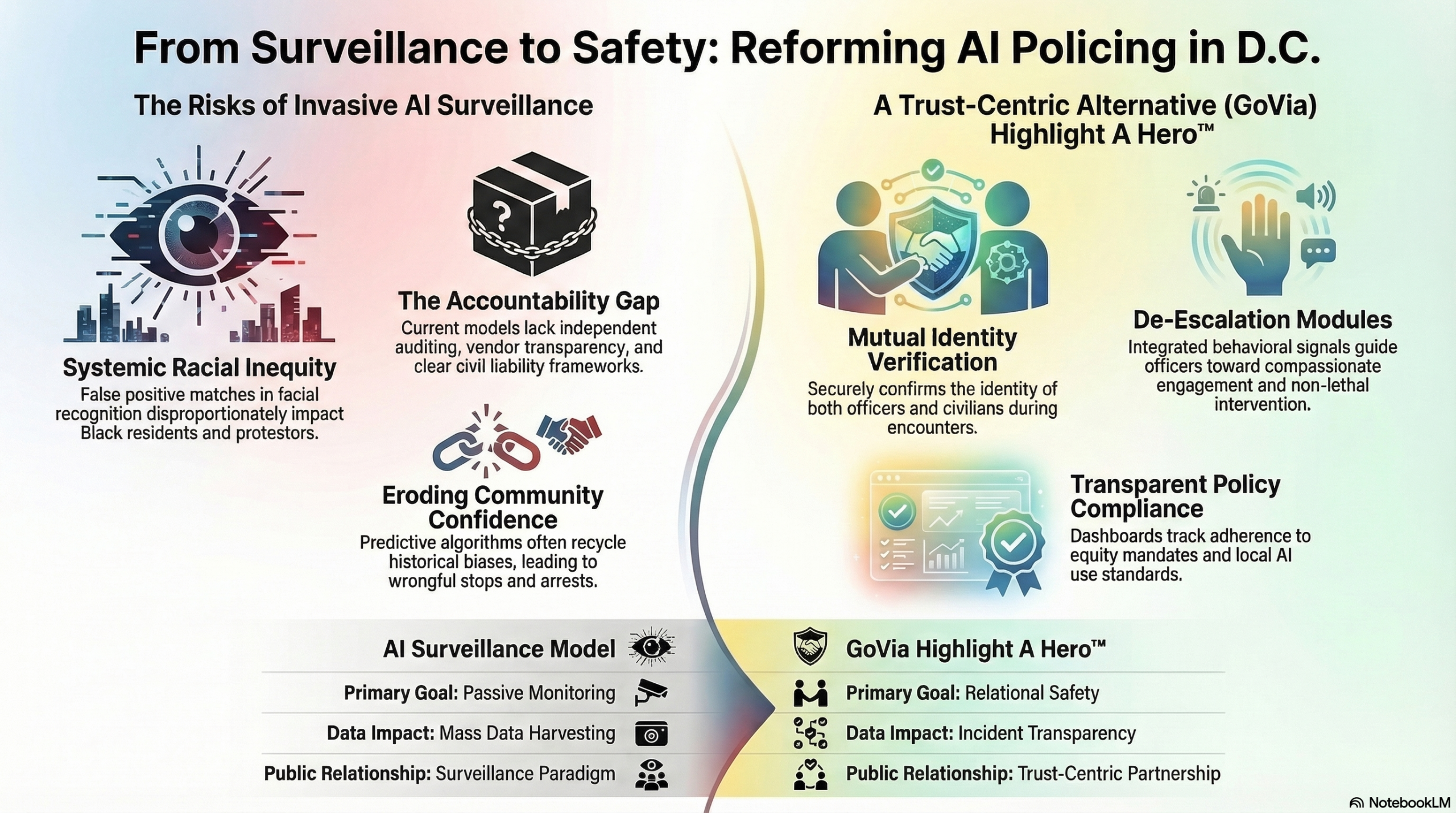
AI is only as fair as the data and assumptions behind it. If historical policing patterns reflect over-enforcement in Black and brown neighborhoods, then predictive systems can turn past inequity into future suspicion, a dynamic critics often describe as digital redlining. Facial-recognition systems also remain controversial because error rates can vary by demographic group, with NIST-related reporting showing higher false positives in some cases for Black, Asian, and American Indian faces, depending on the algorithm and use case.
That matters in real life because a false match is not an abstract error; it can be the first domino in a wrongful stop, a wrongful arrest, or a violent confrontation. In Brown’s case, the mistake happened in person, but the same logic applies to AI-assisted policing: if the signal is wrong, the force built on top of it can be disastrously wrong too.
What justice needs now
The stronger the technology, the more the system needs guardrails. One useful benchmark is transparency: who used the tool, what data went in, what confidence threshold was applied, and how a human supervisor checked the result. Another is auditability: independent review of false matches, disparate impact, and whether officers are relying too heavily on automated suspicion.
This is especially important in New York, where the comptroller found serious delays and compliance failures in NYPD body-camera FOIL production, and officials have since moved toward faster release of critical-incident footage. If public oversight is delayed, misconduct becomes harder to challenge and trust becomes harder to rebuild.
What GoVia can do
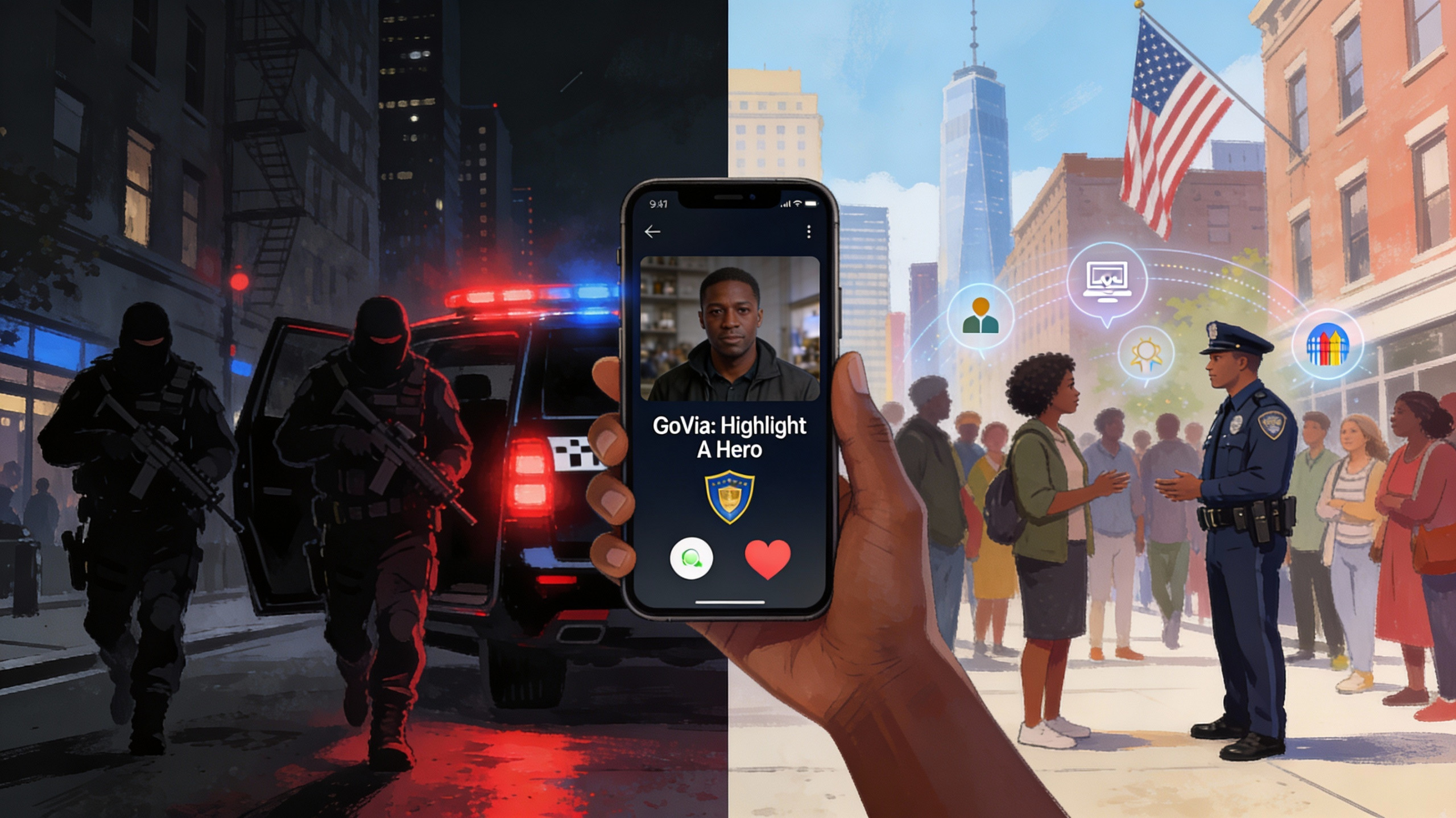
GoVia can position itself as a civic trust layer between residents and the justice system. It can help citizens document encounters, preserve timelines, organize evidence, and surface patterns that matter in complaints, legal claims, or public pressure campaigns. It can also help communities understand rights, track local incidents, and see whether a department’s actions match its promises.
A strong GoVia feature set could include:
- Incident documentation with secure timestamps, uploads, and location context.
- A guided rights-and-next-steps workflow after police contact.
- Community alerting around repeated complaints, use-of-force clusters, or body-camera delays.
- Plain-language explanations of AI-related police tools and the risks they create.
- A trusted evidence package that users can share with counsel, advocates, or oversight bodies.
In a moment when the DOJ is expanding AI use and local departments are under pressure to modernize, citizens need more than slogans about reform. They need tools that make accountability easier to prove, not just easier to promise.
Why this story travels
Brown’s case is not only about one arrest in one Brooklyn store. It is about what happens when human authority, surveillance culture, and increasingly automated systems operate in the same direction without enough skepticism. The lesson for police departments is that precision is not optional; the lesson for the public is that transparency is not a luxury.
GoVia can help turn that lesson into action by giving ordinary people a way to record, verify, and defend their experience before the story gets buried in procedure.
If you want, I can turn this into a polished GoVia blog post with a stronger opening hook, subheads, and a call-to-action section tailored to your brand voice.