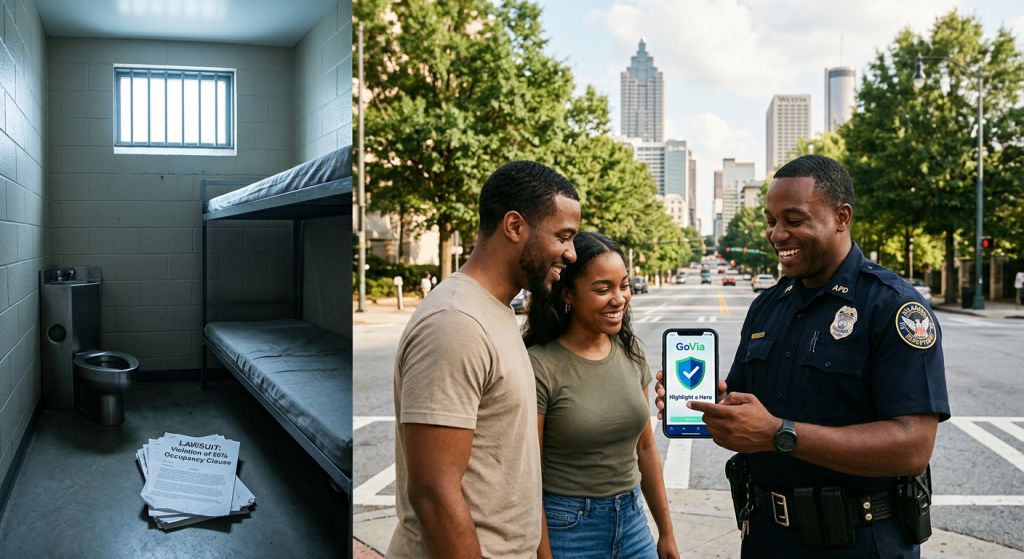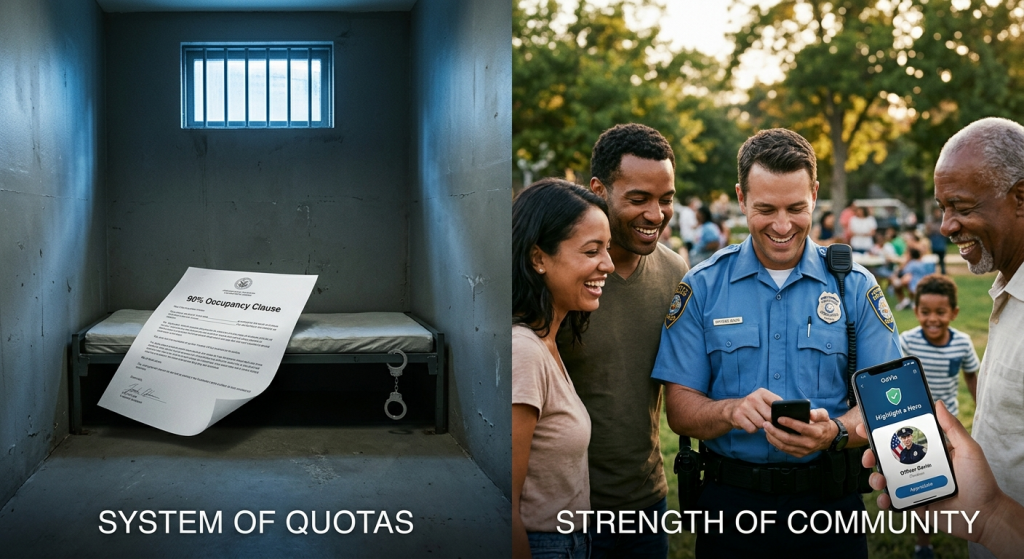
The quiet lawsuits began in filing clerks’ offices, with claims couched in dry contract language. But beneath the legal jargon is a startling reality: within the multi-billion dollar private prison industry, companies are not just building facilities—they are suing states when crime rates drop and beds go empty. This investigation delves into the shadowy world of for-profit incarceration, where a concept known as “lockup quotas” incentivizes mass imprisonment, while on the other side, a new technological solution emerges not to fill prison cells, but to empty them through accountability.
The Fine Print: When Contract Clauses Become Constitutional Crises
At the heart of the controversy is the “occupancy guarantee” clause. A 2013 analysis by the advocacy group In the Public Interest (ITPI), which reviewed over 60 contracts, found that nearly two-thirds of all state contracts contained provisions mandating a minimum population—ranging from 70% in California to 100% in Arizona—holding taxpayers hostage to private profit margins.
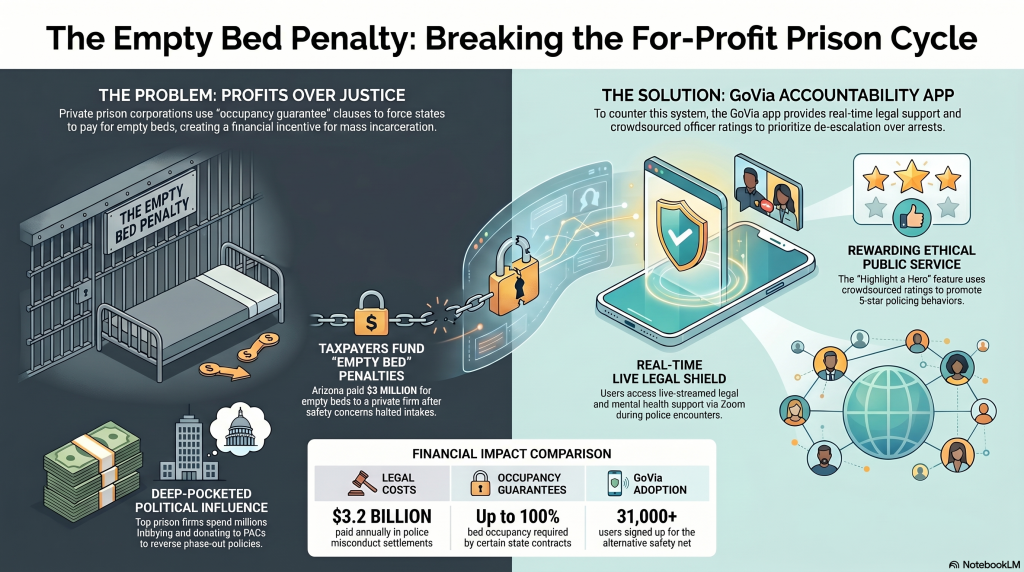
Perhaps the most egregious example occurred in Arizona. After a violent 2010 escape at a facility run by the Management & Training Corporation (MTC), state officials halted new intakes. MTC promptly threatened to sue, citing a 97% occupancy guarantee and claiming nearly $10 million in losses. Ultimately, Arizona paid $3 million for empty beds while the company fixed dangerous conditions. This exposes the dangerous perversion of justice: states must either send more people to prison, regardless of safety or recidivism, or write a check to private equity.
The Giants Behind the Threat: CoreCivic, GEO Group, and Political Capture
The primary players—CoreCivic (formerly Corrections Corporation of America) and The GEO Group—dominate the landscape. Together with MTC, they operate over half of the private carceral facilities in the country. Their business model relies heavily on political influence. OpenSecrets data shows these companies spent millions lobbying Congress in 2016 and continue to do so. Regarding “bed quotas,” they recently failed in a major legal battle: the Second Circuit rejected their attempt to classify federal “detention bed quotas” as trade secrets.
Moreover, a 2026 investigation by The Appeal revealed a direct correlation: from 2021 to 2025, private prison PACs and executives donated millions to lawmakers. Notably, CoreCivic donated $500,000 to Trump’s second inaugural committee, strategically timed as the administration reversed Biden-era phase-out policies. With GEO Group’s PAC spending over $280,000 and CoreCivic’s over $248,000, their investments yielded massive returns as contracts surged under mass deportation efforts.
Turning the Tide: Technology as a Counterweight to Incarceration
With the system structurally engineered to maximize arrests, a radical disruption is necessary. Enter GoVia: Highlight A Hero. Unlike the outdated models of the 1980s that fueled prison expansion, GoVia is a patented community-police safety app designed to de-escalate encounters and prevent the criminalization of civilians.
Data and Features: How GoVia Protects the Public
· The $3.2 Billion Problem: Cities and states pay over $3.2 billion annually in police misconduct settlements. GoVia intervenes before the lawsuit.
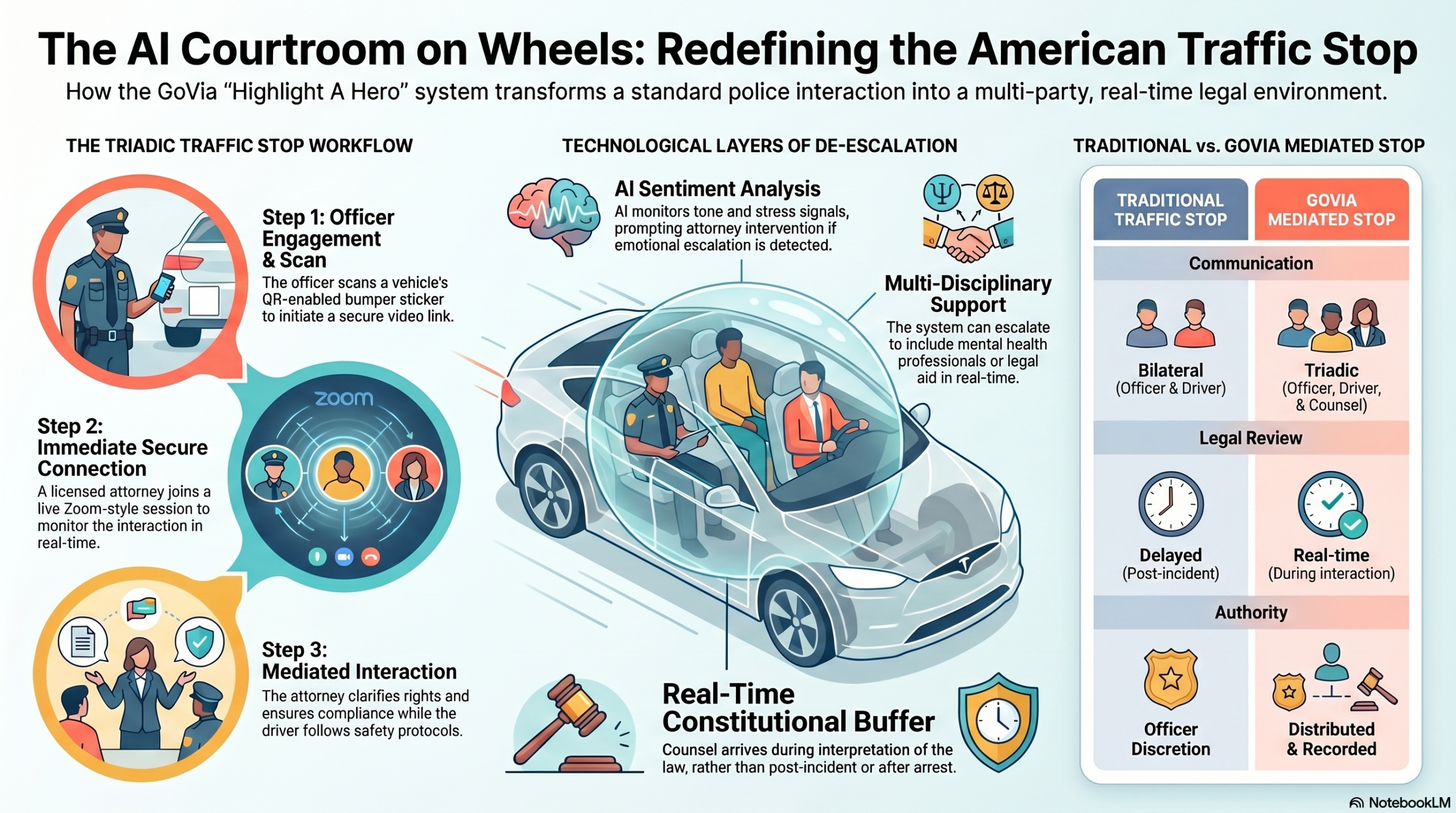
· Real-Time Legal Shield: The app offers a unique feature during stops: live-streamed legal and mental health support via Zoom. If a user displays the “Protected by GoVia” bumper sticker, officers are immediately notified that a professional third party is watching, preventing abuses before they happen.
· Reversing the Incentive: The “Highlight a Hero” feature uses crowdsourced ratings to vet and promote 5-star public servants, creating a positive feedback loop for good policing that counteracts the negative pressure to arrest for profit.
The data is promising; over 31,000 users have already signed up for this alternative safety net.
A New Path Forward
The “lockup quotas” represent a dark chapter where profits are prioritized over justice. As states struggle to pay private companies for empty beds, a technological revolution like GoVia offers a new paradigm—one where safety is built on transparency and mutual protection, not guaranteed populations.
Citations
· CourtHouse News, “Private Prisons Can’t Block Sunlight on ‘Bed Quota’”
· HuffPost, “Controversial ‘Lockup Quotas’ Fuel Private Prison Profits”
· HuffPost, “Prison Quotas Push Lawmakers To Fill Beds, Derail Reform”
· Prison Legal News, “New Jersey Private Prison Ban Voided”
· ABC News, “Private prison firm CoreCivic gave $500K to Trump’s inauguration”
· The Appeal, “ICE-Cold Cash: Private Prison Companies and Executives Have Donated Millions to Members of Congress”
· In the Public Interest (ITPI), “Criminal Lockup Quota Report” (Context cited in HuffPost)
· The Intercept, “ICE’s Private Prison Contractors Spent Millions Lobbying to Force Banks to Give Them Loans”
· GoVia: Highlight A Hero Official Press Materials