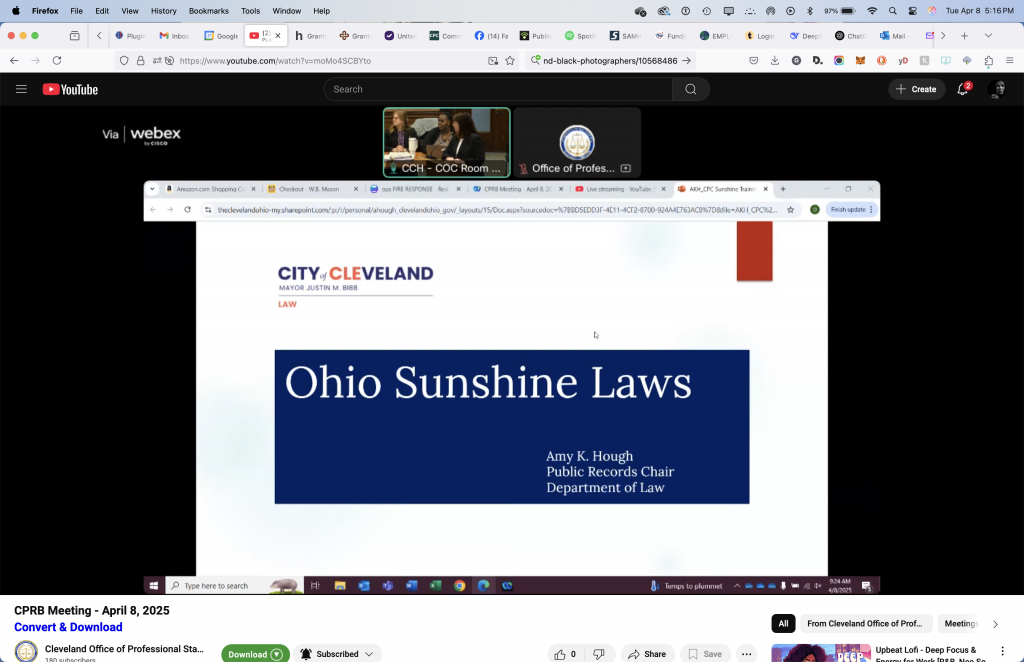
GoVia’s Highlight a Hero sits at the fault line between two worlds: a criminal justice system that too often hides its failures behind redactions and closed doors, and an Ohio legal framework that, on paper, demands radical transparency from every public office in the state. This is the story of how one app could weaponize Ohio’s Public Records Act and Sunshine Laws—not as a slogan, but as an operational system—to force sunlight into the places where cases die, evidence disappears, and community trust erodes.
Scene‑Setter: A Stop, A Phone, A Law
On a cold weeknight on Cleveland’s east side, a GoVia user taps “Highlight a Hero” as blue lights bloom in the rearview mirror. Within seconds, three systems go live: a livestream to an attorney, a secure recording to GoVia’s cloud, and a parallel legal machine built on the Ohio Public Records Act (PRA), Ohio’s Open Meetings Act (OMA), and the Sunshine Laws that bind them together.
The officer’s bodycam footage, dispatch audio, CAD logs, and cruiser GPS tracks are not abstract “data points” in that moment—they are future public records that the law already presumes must be released. GoVia’s bet is simple and aggressive: design patents, workflows, and subpoena strategies that treat those rights as code, not hope.
Ohio’s Five Fundamentals, Turned Into Code
Advocates and attorneys often describe Ohio’s public records landscape in five fundamentals; GoVia’s architecture translates each into concrete product behaviors and legal triggers.
1. “Any Doubt” Favors Release
Ohio courts and the Attorney General have repeatedly emphasized that the PRA must be liberally construed in favor of broad access to records, and any doubt is resolved on the side of disclosure. That isn’t rhetoric for GoVia; it is the default assumption behind every automated records request the platform prepares after an encounter.
- The app time‑stamps the stop, identifies the jurisdiction, and auto‑drafts PRA requests for bodycam, dashcam, CAD, 911 audio, arrest reports, and use‑of‑force reports—each framed around the statutory duty to release unless a specific, narrow exception applies.
- When agencies stall with “pending investigation” language, GoVia’s legal backend flags ambiguity, citing the PRA’s requirement that exemptions be strictly construed and non‑exempt portions released.
In a newsroom, a reporter might manually grind through this process across dozens of agencies. GoVia tries to industrialize it: the same skepticism and persistence, but scaled as a consumer tool.
2. No Balancing Test With “Privacy”
Ohio’s PRA does not set up a general balancing test between a vague privacy right and the public’s right to know; instead, it relies on specific statutory exemptions such as certain confidential law enforcement investigatory records, trade secrets, or records barred by other laws. Courts have recognized limits, especially for some personal identifiers, but the baseline is still strong: if it’s a public record and not squarely exempt, it should be released.
GoVia’s investigative posture is shaped by that reality:
- Its public‑facing messaging and attorney scripts during encounters emphasize to users that officer names, badge numbers, incident reports, and most use‑of‑force documentation are not private favors—they are presumptively public records.
- When agencies invoke “privacy” to shield officer misconduct files or bodycam video, GoVia’s attorneys respond with targeted challenges, demanding the exact statutory exemption and pushing back on overbroad personal‑privacy claims that courts have historically narrowed.
The underlying contrast is stark: lived experience in many Black neighborhoods says, “They always find a way to hide it.” Ohio law, properly used, says, “Show me the statute.”
3. Redactions Must Fit “Squarely” in an Exception
Under R.C. 149.43, when a record contains both exempt and non‑exempt information, the public office must release the non‑exempt portions, make redactions visible, and explain the legal basis for withholding. That explanation is not optional; it is a core safeguard against the quiet erasure of uncomfortable facts.
GoVia’s approach mimics the work of elite data and FOIA desks:
- The platform stores both the user’s video/affidavit and whatever the department eventually produces under the PRA, then runs AI‑assisted comparisons between the narrative in reports and the timeline visible in footage.
- When documents arrive blacked out, GoVia’s legal team demands written citation to each claimed exemption, creating a searchable database of redaction patterns by department over time—who over‑redacts, who complies, and which excuses collapse under mandamus actions.
In an investigative series, that pattern analysis might become a front‑page story on systemic over‑redaction. In GoVia’s ecosystem, it becomes a risk score, visible to users and attorneys who want to know how an agency treats the truth.
4. Anonymous, No‑Reason Requests
Ohio’s PRA explicitly forbids public offices from conditioning access on who you are or why you want the records, except in narrow circumstances required by other law. Any demand for identity or purpose is treated as a denial.
For communities that have learned to fear retaliation, this is not a technicality; it is survival. GoVia designs around that:
- Users can opt into a mode where PRA requests are filed through GoVia or partner counsel, not directly in their name, while still preserving legal standing for enforcement if the requests are denied or ignored.
- The system logs every interaction with records custodians—the date of the request, the follow‑ups, the responses—and auto‑generates the affidavits needed to support complaints with the Court of Claims or mandamus actions if agencies stonewall.
The same principle governs GoVia’s subpoena workflows: when attorneys, acting for users, seek evidence in active cases, the platform treats identity exposure and retaliation risk as design problems to be solved, not individual burdens to carry.
5 & 6. Knowing PRA and OMA Obligations
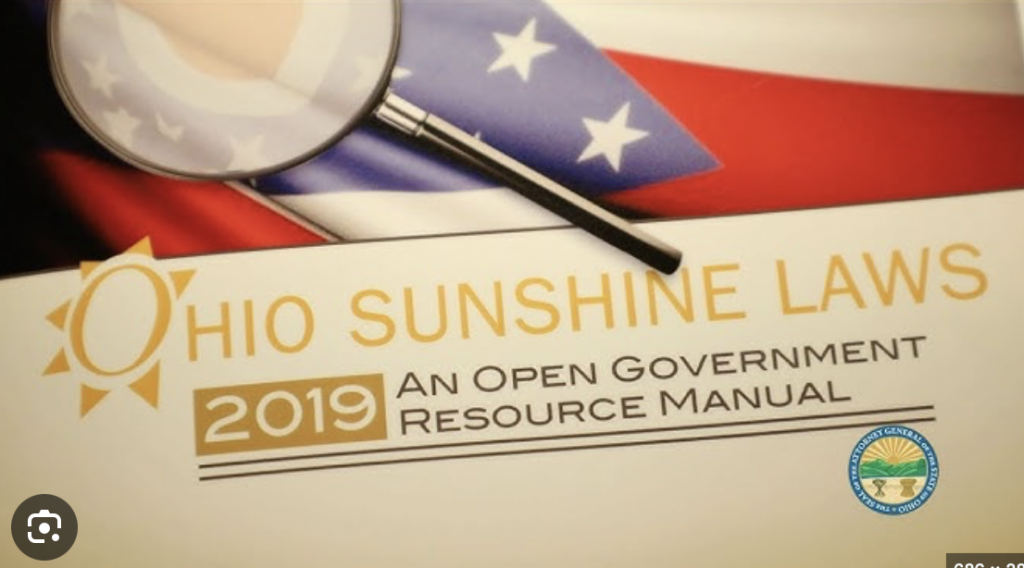
Ohio’s Sunshine Laws are really two intertwined regimes: the Public Records Act in R.C. 149.43 and the Open Meetings Act in R.C. 121.22. Together, they establish not only what records must be released, but how decisions must be made—in public, on the record, with minutes that themselves become public records.
GoVia’s architecture leans into that synergy:
- After a contentious encounter, the app can guide users and attorneys to track the lifecycle of the case: internal affairs reviews, use‑of‑force boards, disciplinary hearings, and city council or safety committee meetings where policies are debated.
- PRA requests target not just the incident file but also meeting minutes, agendas, internal memos, and emails that show how leadership responded—or failed to respond—to patterns of abuse.
In effect, GoVia treats every serious incident as both a case and a policy story: what happened on the street, and what the institution did about it once the cameras were off.
Sunshine Laws: Where Records and Meetings Collide
Ohio’s Open Meetings Act requires that public bodies take official action and conduct deliberations of official business in meetings open to the public, with advance notice and minutes that capture enough detail to let citizens understand what was decided and why. Executive sessions are tightly limited to specific topics, and violations can result in fines and invalidated actions.
For GoVia, that legal terrain is a second battlefield:
- When a high‑profile incident triggered by a GoVia recording reaches a city council safety committee, the company can alert impacted users and local media that a meeting is coming, then ensure minutes and any recordings are promptly requested and analyzed under the PRA.
- If a public body appears to be laundering key decisions through closed‑door executive sessions—discussing discipline or policy beyond the narrow exceptions permitted by law—GoVia’s legal partners can press OMA claims that mirror the kind of litigation historically pursued by investigative outlets.
In investigative terms, PRA supplies the documents that reconstruct the past, while OMA exposes, in near‑real‑time, how officials respond when they know the community is watching.
How PRA and OMA Work in Synergy for GoVia
| Legal Tool | Core Duty | GoVia Use Case | Impact on Highlight a Hero |
| Public Records Act (R.C. 149.43) | Release public records unless a specific exemption applies; explain redactions and denials. | Auto‑generated, attorney‑backed requests for bodycam, reports, CAD, IA files, with tracking and escalation. | Converts one encounter into a documentary record that can validate a citizen’s affidavit and spotlight hero officers. |
| Open Meetings Act (R.C. 121.22) | Require public bodies to deliberate and act in open, noticed meetings with minutes. | Monitor hearings on police policy and discipline linked to GoVia‑flagged incidents; request minutes and recordings. | Shows whether heroic or abusive behavior leads to real policy change or quiet backroom protection. |
| Sunshine Law Enforcement (courts, AG) | Provide remedies, including fines, attorney fees, and invalidation of actions for violations. | Use PRA/OMA violations as litigation levers when agencies hide or delay evidence tied to a GoVia case. | Raises the cost of secrecy, making compliance and transparency the cheaper, safer path for agencies. |
Patents, Subpoenas, and the Architecture of Accountability
Behind the user‑friendly language of “Highlight a Hero” lies a more aggressive legal thesis: technology can coordinate evidence, witnesses, and legal rights fast enough to matter in real time.
Patented Workflows as Evidence Engines
GoVia’s published materials describe a system where users can call attorneys during encounters, stream video, and have affidavits stored as legal evidence, while AI cross‑references those citizen narratives with officer reports. Patented or patent‑pending components center on:
- Secure, time‑synced capture of video, audio, and geolocation data from citizen devices, coupled with immediate upload to tamper‑resistant storage.
- An “affidavit system” that converts user descriptions and attorney notes into structured, sworn statements linked to specific officers, agencies, and incident IDs.
In practice, that means PRA and subpoena demands are no longer fishing expeditions. They are precision strikes: “We know this officer said X at 21:03:17 based on our synced stream; produce the bodycam segment, radio traffic, and CAD log that correspond to that window.”
Subpoena Strategy and PRA as Backstop
In criminal and civil proceedings, GoVia‑connected attorneys can use traditional subpoenas to demand the same records that citizens might seek under the PRA, but with court‑enforced deadlines and sanctions. When agencies drag their feet, the PRA provides secondary pressure:
- If records are denied or delayed outside of court, PRA complaints and Court of Claims processes can move in parallel, creating a paper trail of non‑compliance that may influence judges in related litigation.
- Because the PRA prohibits conditioning access on identity or purpose, GoVia can pursue some requests as a watchdog entity while leaving users insulated from direct retaliation.
The investigative analogy is clear: where a newsroom might deploy parallel FOIA requests and discovery demands, GoVia deploys PRA, subpoenas, and its own logs as three aligned channels, all feeding one narrative of what really happened.
The Real‑World Friction: Law vs. Practice
On paper, Ohio offers some of the strongest access rights in the country: any person can request records without ID or explanation; denials must cite law; open meetings must be noticed and recorded well enough for the public to follow the story. In practice, agencies still lose or “misplace” videos, redact entire pages with a single black box, and schedule critical policy conversations in mid‑afternoon meetings that working residents can’t attend.
GoVia’s theory of change is that this gap between law and lived reality is, itself, a design problem:
- For citizens: transform the abstract promise of transparency into an everyday expectation “If something happens, the system will automatically chase the records, not just me.”
- For agencies: make it easier to comply than to obfuscate by standardizing formats, integrating with records systems where possible, and publicly recognizing officers and departments that consistently release footage and documents that confirm good policing.
And for the broader ecosystem—attorneys, journalists, community groups—the platform can become an evidence clearinghouse: a place where records, minutes, affidavits, and case outcomes can be studied at scale to detect patterns of abuse and excellence.
The Investigative Question Going Forward
If GoVia’s Highlight a Hero succeeds, the most telling stories may not be individual viral videos, but the long‑arc datasets: which Ohio jurisdictions comply fastest with PRA requests, which boards and councils move discipline into executive session, and which departments quietly change policy after a wave of recorded stops.
That is the deeper investigative frame: in a state whose laws already promise that any doubt must favor transparency, GoVia is betting that the missing ingredient is not a new statute, but infrastructure—an app and a legal strategy that treat the Ohio Public Records Act and Sunshine Laws as living code, constantly executed whenever blue lights flash in the dark.