In the fractured architecture of American justice—where technology is advancing faster than law, and perception often outruns fact—a single encounter can ignite a national reckoning.
This is the story of one such encounter.
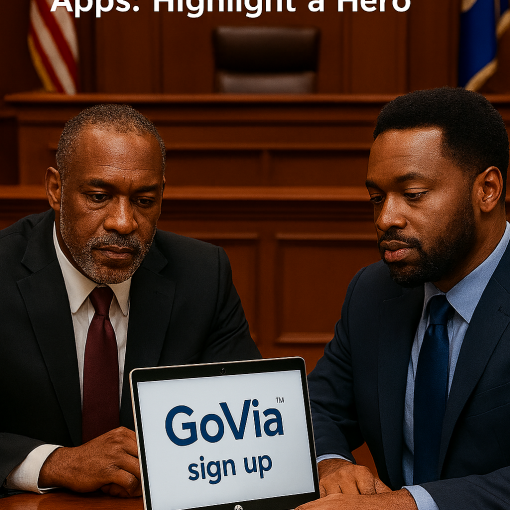
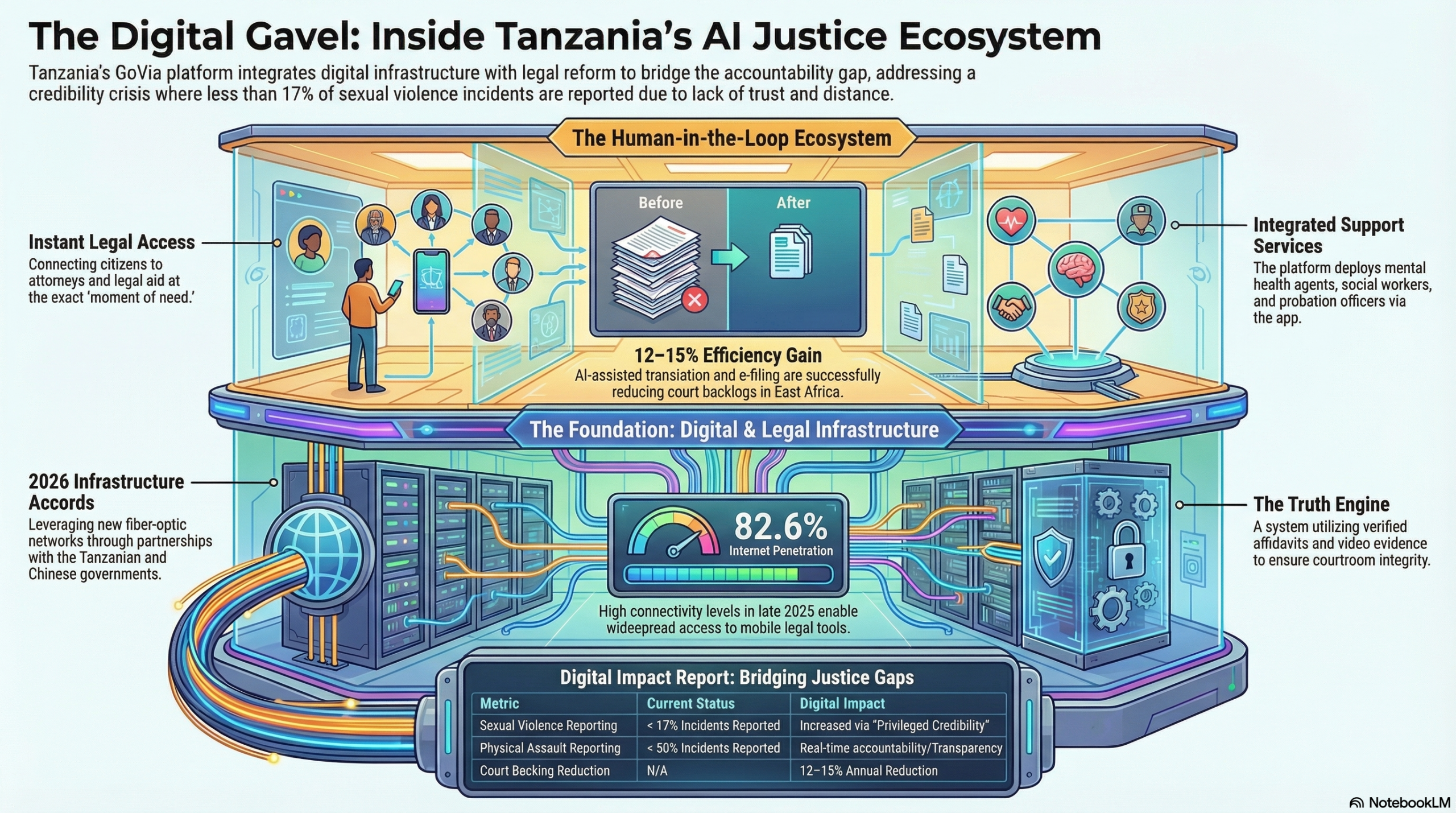
But it is also a deeper investigation into a system under pressure: local police departments navigating life-and-death decisions, a federal government grappling with oversight in the age of artificial intelligence, and a new generation of civic technology—like GoVia Highlight A Hero—promising to reshape the moment truth is captured.
The Incident: Minutes That Became a Movement
It began, as so many crises do, with a 911 call.
Steven Jones, armed with a knife, was reported to be behaving erratically—family members and bystanders describing a man in the grip of a mental health emergency. When officers arrived, they encountered a volatile, rapidly evolving situation: a subject armed, unresponsive, and increasingly agitated.
According to official accounts, officers attempted de-escalation for several minutes. Commands to “drop the knife” were issued repeatedly—more than 60 times. One officer reportedly approached within a few feet during a Crisis Intervention Team (CIT) effort, a tactic designed to engage individuals in mental distress but widely acknowledged by policing experts as high-risk.
Then, a shift.
Officer Magnano arrived. Moments later, Jones advanced toward him with the knife. The officer retreated. The distance collapsed. Deadly force was used.
Jones died at the scene.
The Legal Standard: Reasonableness vs. Reality
Under U.S. law—particularly the precedent set by the Supreme Court in Graham v. Connor—police use of force is judged by an “objective reasonableness” standard. That is, what a reasonable officer would do in the same moment, without the benefit of hindsight.
From a strictly legal standpoint, many use-of-force experts would point to key factors:
- An armed individual
- Refusal to comply after repeated commands
- Immediate threat to officer safety
- Rapidly evolving circumstances
In such scenarios, courts have often ruled deadly force justified.
Yet legality does not end the story. It begins a second, more volatile phase: public interpretation.
The Narrative War: Law, Advocacy, and Public Trust
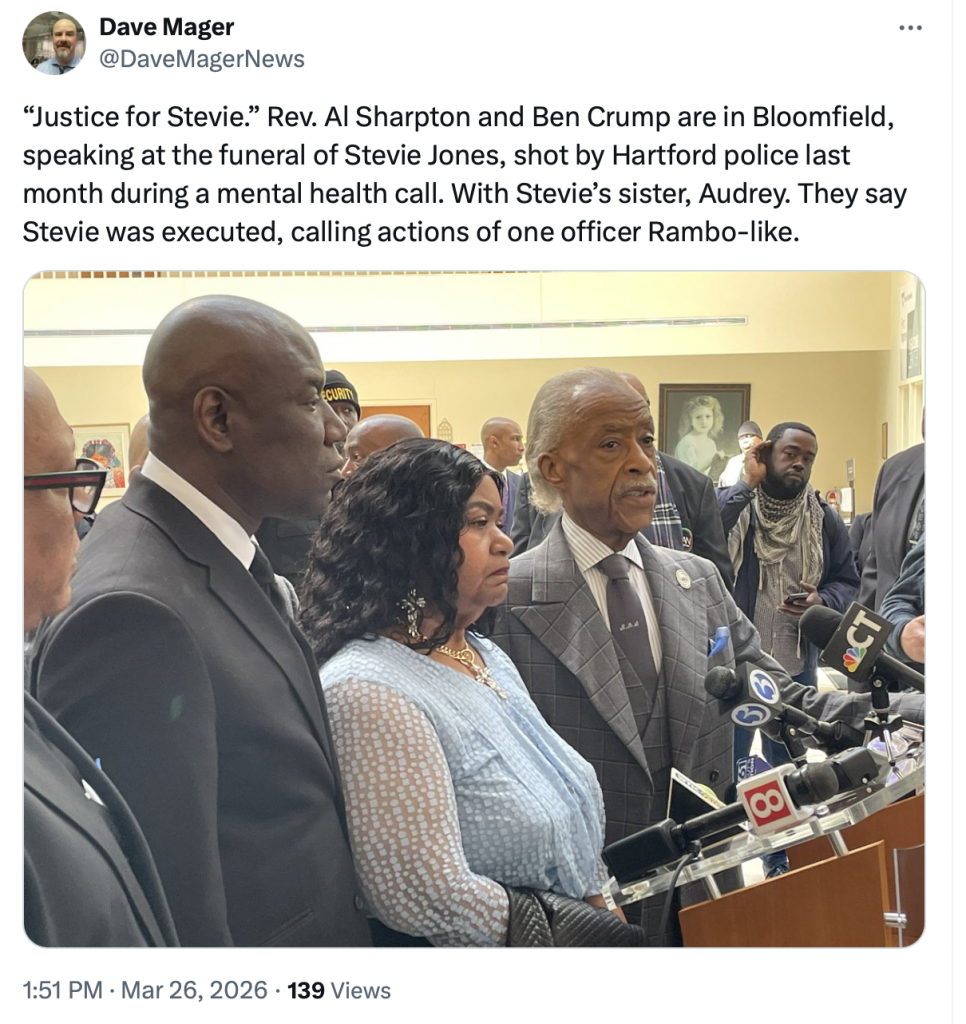
Civil rights attorney Ben Crump entered the case representing the Jones family—part of a broader pattern in high-profile police killings where legal advocacy intersects with public mobilization.
Protests followed.
Calls for accountability intensified, fueled not only by the facts of the case, but by a deeper well of mistrust. In communities across the United States, confidence in policing—particularly in use-of-force incidents involving mental health crises—remains fragile.
Organizations associated with the broader Black Lives Matter movement amplified demands for termination and prosecution.
Here, the case became something larger than itself: a proxy for unresolved national questions.
- Can police effectively respond to mental health emergencies?
- Are legal standards too deferential to officers?
- And who controls the narrative when evidence is incomplete or contested?
The Federal Layer: DOJ, Data, and the Trump-Era Legacy
During the administration of Donald Trump, the Department of Justice took a markedly different approach to police oversight compared to prior administrations.
Consent decrees—federal agreements used to reform troubled police departments—were scaled back. Emphasis shifted toward supporting law enforcement agencies rather than aggressively investigating them.
Critics argued this reduced accountability.
Supporters countered that it restored morale in departments facing rising scrutiny and declining recruitment.
What remained constant, however, was a structural gap: the absence of standardized, real-time, transparent data in critical incidents.
And that is where technology—especially AI—enters the frame.
AI in Justice: Promise, Power, and Peril
Artificial intelligence is already embedded across the justice system:
- Predictive policing tools attempt to forecast crime hotspots
- Risk assessment algorithms influence bail and sentencing decisions
- Body camera analytics are being tested to flag use-of-force incidents
Yet these systems carry profound risks.
Research from institutions like MIT and Stanford has shown that some AI systems can replicate or amplify existing biases—particularly in facial recognition and predictive analytics.
The paradox is stark:
- AI promises objectivity
- But is trained on historically subjective data
In use-of-force cases, AI could theoretically reconstruct timelines, analyze officer commands, measure distance, and assess threat levels in ways no human jury can.
But it cannot yet answer the most human question: fear.
The Missing Layer: Real-Time Civilian Perspective
In the Jones case, as in many others, the narrative relied on:
- Police reports
- Witness accounts
- Possibly body camera footage
But what if there had been a parallel, independent, real-time civilian record?
This is where platforms like GoVia Highlight A Hero enter the conversation—not as replacements for policing, but as accountability infrastructure.
Counterfactual: If GoVia Had Been Activated
Imagine this:
A bystander, recognizing the escalation, activates GoVia.
- A live stream begins, timestamped and encrypted
- Audio captures every command—“drop the knife” repeated dozens of times
- GPS data establishes positioning and movement
- AI-assisted tagging flags key moments: approach, retreat, escalation
Simultaneously:
- Alerts are sent to trusted contacts
- A real-time incident log is created
- Potentially, trained civilian or mental health responders could be notified
In the aftermath, there is no vacuum.
No immediate battle over “what happened.”
Instead, there is a shared evidentiary baseline—accessible to investigators, attorneys, and the public.
Would It Change the Outcome—or the Aftermath?
It is unlikely that GoVia—or any technology—would have changed the immediate outcome once Jones advanced with a knife.
Police officers are trained to respond to imminent lethal threats. In that moment, decisions are measured in fractions of seconds.
But the aftermath?
That is where the impact could be profound.
- Transparency: A fuller, multi-angle record reduces speculation
- Trust: Communities can see—not just be told—what occurred
- Accountability: Both officers and civilians are protected from false narratives
- Policy Reform: Data-rich incidents inform better training and response models
The Deeper Problem: Policing Mental Health
The Jones case underscores a systemic failure that technology alone cannot solve.
Police are often the default responders to mental health crises—a role many experts argue they are not adequately equipped to handle.
According to national data:
- A significant percentage of police shootings involve individuals with mental illness
- CIT training, while valuable, varies widely in effectiveness
- Alternative response models (unarmed crisis teams) are still limited in scale
The result is a structural mismatch:
A public health problem answered with a law enforcement solution.
GoVia’s Take: The Future of Truth in Policing
The United States is entering a new phase of justice—one where:
- AI can analyze
- Cameras can record
- Platforms like GoVia can broadcast
But none of these tools resolve the core tension:
Who is trusted when lives are on the line?
In the seconds before Officer Magnano fired, the law demanded reasonableness.
In the days after, the public demanded accountability.
Between those two demands lies a widening gap—one that technology may help narrow but cannot fully close.
The next chapter of American justice will not be written by police alone, nor by protesters, nor by politicians.
It will be written in data, in transparency, and in whether systems like GoVia can turn moments of crisis into moments of clarity—before narratives harden and truth fractures.