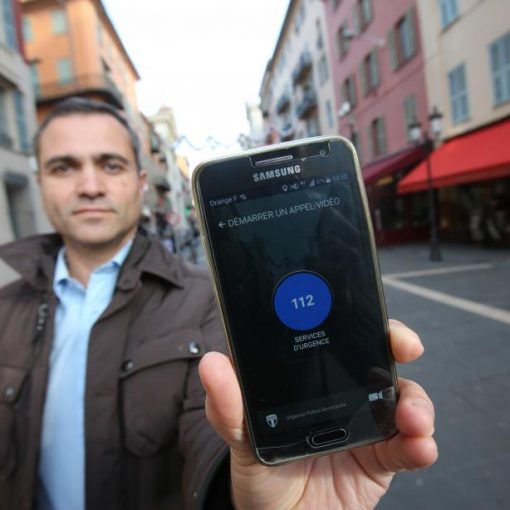
At 2:13 a.m. on a freezing Cleveland night, a mother dials 911 — not for a crime, but for her son’s psychotic break. In too many American cities, that call dispatches armed officers instead of trained therapists. But in a small corner of Cuyahoga County, a different kind of response is quietly taking shape, powered not by sirens — but by software.
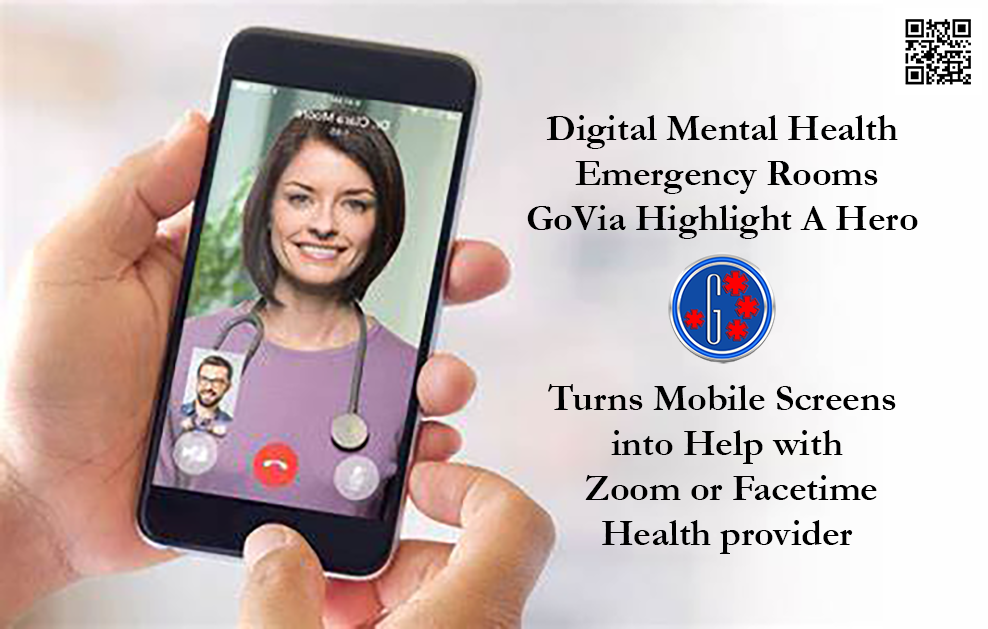
The GoVia “Highlight A Hero” initiative, a 24/7 web and mobile platform built to connect residents instantly with mental health responders via FaceTime or Zoom, is reimagining the first moments of mental health crises. Born out of Cleveland’s expanding behavioral health network, and now in pilot partnerships across Los Angeles, Chicago, and New York City, the platform offers an alternative to 911 that could save both lives and trust in a system still struggling with racial and psychological inequities.
The Crisis Behind the Code
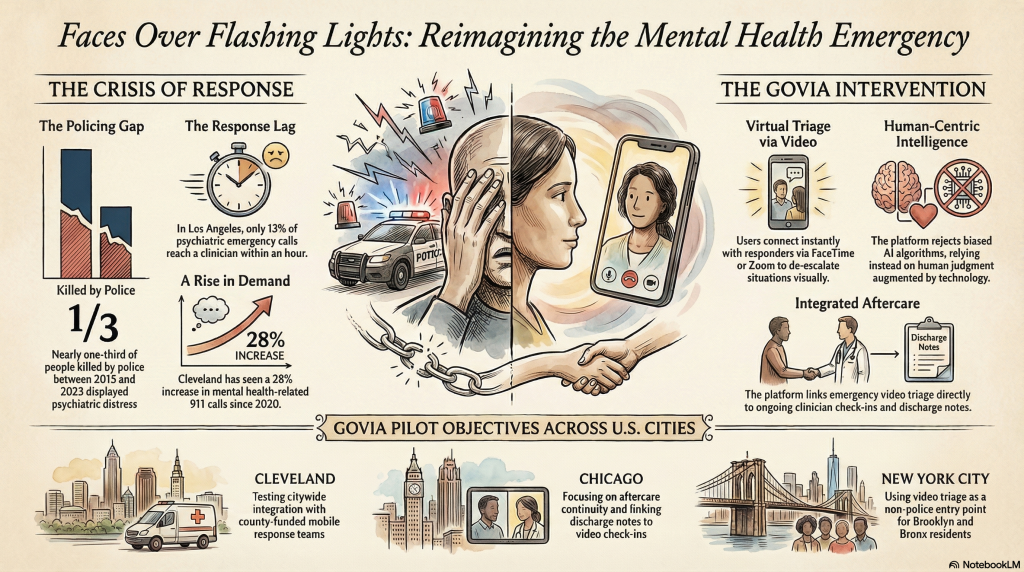
According to the National Alliance on Mental Illness (NAMI), roughly one in five adults in the U.S. experiences mental illness each year. Yet nearly one in three of all people killed by police between 2015 and 2023 displayed signs of psychiatric distress, according to data from The Washington Post’s “Fatal Force” database.
These numbers expose what many reform advocates describe as a crisis of response, not only in medicine but in justice.
Cleveland’s response — including its new $4.5 million crisis stabilization center, funded in March 2026 by the Cuyahoga County Mental Health and Addiction Services Board — represents both progress and paradox. The facility promises walk-in emergency care, peer counseling, and de-escalation support, yet it also underscores how uneven public access remains nationwide. In cities like Los Angeles and Chicago, where emergency rooms are overwhelmed and crisis lines chronically understaffed, digital tools like GoVia’s could potentially close a life-and-death gap in real time.
Technology Meets Trust
GoVia’s model — video triage through everyday technology — leans on empathy and immediacy rather than restraint and enforcement. The system allows users to request live emotional support via mobile or web browser, day or night, within seconds. A user can connect face-to-face with a trained mental health agent, licensed therapist, or support volunteer in their area, effectively transforming a smartphone into a virtual community safety hub.
“The idea,” says one of the project’s early advisors, “is that the first intervention should be human, not carceral. We want to replace the flashing lights with faces.”
What sets GoVia apart from standard teletherapy platforms is its integration with public safety protocols. In pilot cities, app-based mental health responders can coordinate with 911 dispatchers or social service departments through encrypted handoff technology, ensuring that individuals in acute crisis aren’t left stranded between systems. Its “Highlight A Hero” campaign seeks to publicly honor those who intervene compassionately — police officers, EMTs, counselors, and residents alike — celebrating justice done through understanding rather than force.
Four Cities, One Struggle
The geographic distribution of GoVia’s pilot zones reveals systemic gaps.
- Cleveland: With the new crisis center set to open by late 2026, GoVia is testing citywide integration with county-funded mobile response teams. Local data shows that mental-health-related 911 calls have risen 28% since 2020, while use-of-force incidents involving those in crisis have dropped modestly due to new de-escalation training.
- Los Angeles: L.A. County averages 45,000 psychiatric emergency calls annually, according to the Department of Mental Health, but only 13% reach a clinician within an hour. GoVia’s prototype trials with the county’s “Alternative Crisis Response” division aim to fill that lag.
- Chicago: Amid rising reports of anxiety and substance abuse since the pandemic, the city’s Crisis Assistance Response and Engagement (CARE) program has reduced police involvement in some dispatches. GoVia integration there centers on providing aftercare continuity, linking discharge notes to ongoing video check-ins.
- New York City: Despite high-tech investments and the new “B-HEARD” crisis response initiative, over 60% of crisis calls still go to police — a figure the Mayor’s Office hopes to reverse. GoVia’s pilot with community nonprofits in Brooklyn and the Bronx positions real-time video triage as an entry point to fairer, faster care.
AI’s Shadow Over Justice
Underneath the hopeful promise of tech-enabled compassion lies the razor edge of digital ethics.
Artificial Intelligence, now widely embedded in judicial risk assessments and police surveillance, has often deepened racial and class biases rather than erased them. Predictive algorithms used in various state courts have been shown to overestimate “recidivism risk” for Black defendants and underestimate it for white ones, according to a ProPublicareview.
GoVia’s designers insist their model rejects algorithmic triage — no biased databases, no automated severity scoring. Instead, they frame the app as “human judgment augmented by tech interface.” That distinction could mark a turning point if adopted broadly, shifting AI’s role from policing tool to preventive health ally.
Beyond Crisis — Toward Fairness
If GoVia’s Cleveland-based prototype succeeds, it could offer a national model of digital justice balance — where AI systems support empathy instead of enforcement, and where every citizen can access professional care without fear of criminalization.
For now, as Cuyahoga County finalizes construction of its newest crisis center, the vision remains partial but potent: a world where a smartphone tap can calm a crisis, divert a death, and — perhaps — restore faith in institutions too often marked by mistrust.