The cool evening air of Cleveland’s Glenville neighborhood shattered just before 8:00 PM on Wednesday night. In the backyard area of the Park Place Apartments on East Boulevard, what started as a fast-escalating verbal argument rapidly devolved into a chaotic scene of crossfire.
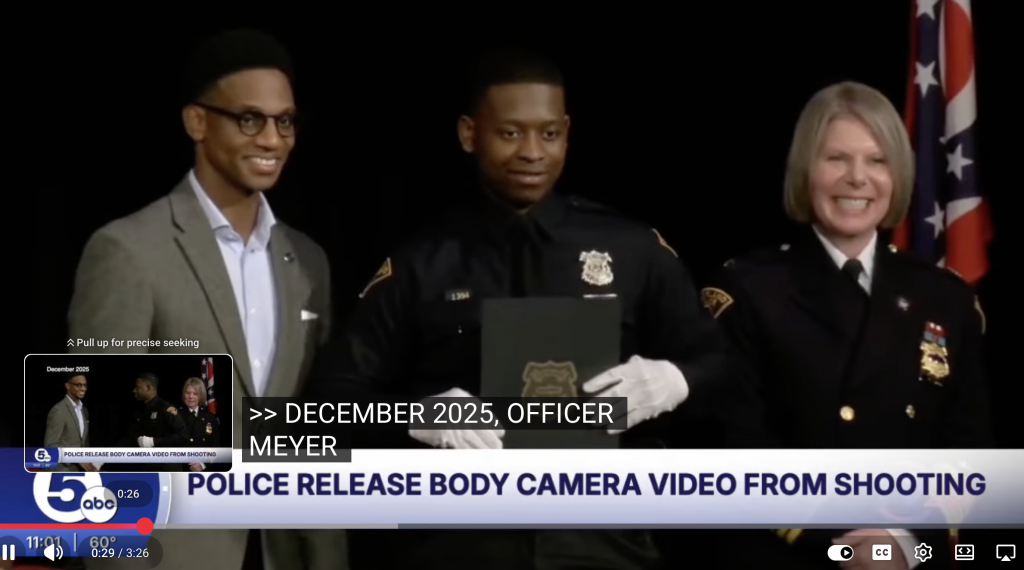
When the dust settled, 26-year-old Akili Hammond lay critically wounded by multiple gunshot wounds. He was rushed to University Hospitals Cleveland Medical Center, where he was pronounced dead. The man who pulled the trigger on the fatal rounds was 22-year-old Myron Priest Jr., an off-duty Cleveland police officer who had graduated from the academy just months prior.
In the wake of the tragedy, Akili’s family released a poignant statement demanding transparency:
“We believe the public is not being told the full story… There was heavy gunfire involving multiple individuals, yet the off-duty officer only fired at my brother. Witnesses also believe the officer may have known or had connections to the other individuals involved… We simply want the truth.”
Cleveland Police Chief Dorothy Todd quickly placed the rookie officer on unpaid administrative leave, noting that an initial review revealed “egregious violations of several administrative policies and General Police Orders.” As the Cuyahoga County Sheriff’s Office conducts the criminal investigation, the community is left grappling with yet another preventable loss of life.
What Really Happened: Deep Dive Analysis
Navigating an incident like the East Boulevard shooting requires a objective “red-team” style breakdown—looking strictly at the structural points of failure, human biases, and conflicting accounts from both the community and law enforcement perspectives.
Video Here
https://youtu.be/Rf5yti578gE?si=1ngibzeEt_u5jSla
The Two Narratives
* **The Law Enforcement / Incident Context:** Initial reports indicate a complex scene where multiple individuals were armed, and shots were fired by more than one person. From an tactical standpoint, an officer—even off-duty—confronting a multi-party dispute involving active firearms faces an overwhelming cognitive load. Deciding who is the primary threat in a split second can lead to catastrophic errors in target identification.
* **The Witness and Family Perspective:** Eyewitnesses, including a close friend of Hammond, reported that while Akili had a handgun at his side, it remained downward in his waistband and was never raised or used to threaten anyone. Furthermore, the family raised critical concerns regarding why the off-duty officer, armed with a rifle, fired exclusively at Hammond despite heavy gunfire from other individuals, hinting at potential pre-existing personal dynamics or biased target fixation.
Pros and Cons Analysis of the Current Crisis Response
| Dimensions | Pros (System Successes) | Cons (Systemic Failures) |
**Accountability & Integrity** Chief Todd acted swiftly to place the officer on **unpaid leave**, signaling a refusal to tolerate deviations from General Police Orders. | The department is reacting *after* a life has already been lost; traditional training failed to instill proper off-duty de-escalation protocols.
**Investigative Objectivity** Handing the criminal investigation over to an outside agency (**Cuyahoga County Sheriff’s Office**) reduces conflicts of interest. | Transparency bottlenecks remain. The family had to publicly beg for basic dispatch audio, surveillance footage, and structural clarity. |
**Community Relations** The fast acknowledgement of policy “violations” prevents immediate administrative stonewalling. | The disparity in treatment—such as detaining Akili’s sister (a key witness) while initially releasing the off-duty officer from the scene—fuels deep community distrust.
The Vision: How GoVia Changes the Narrative
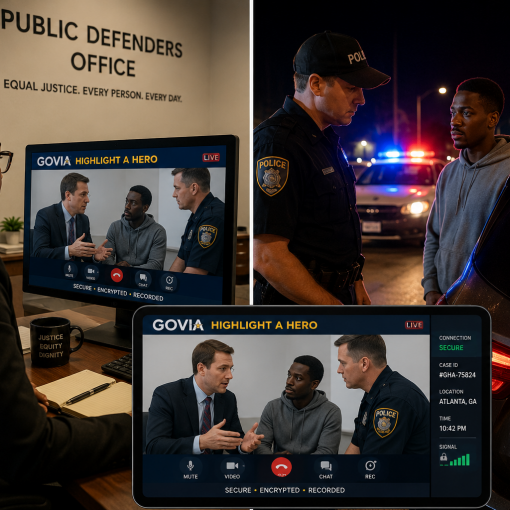
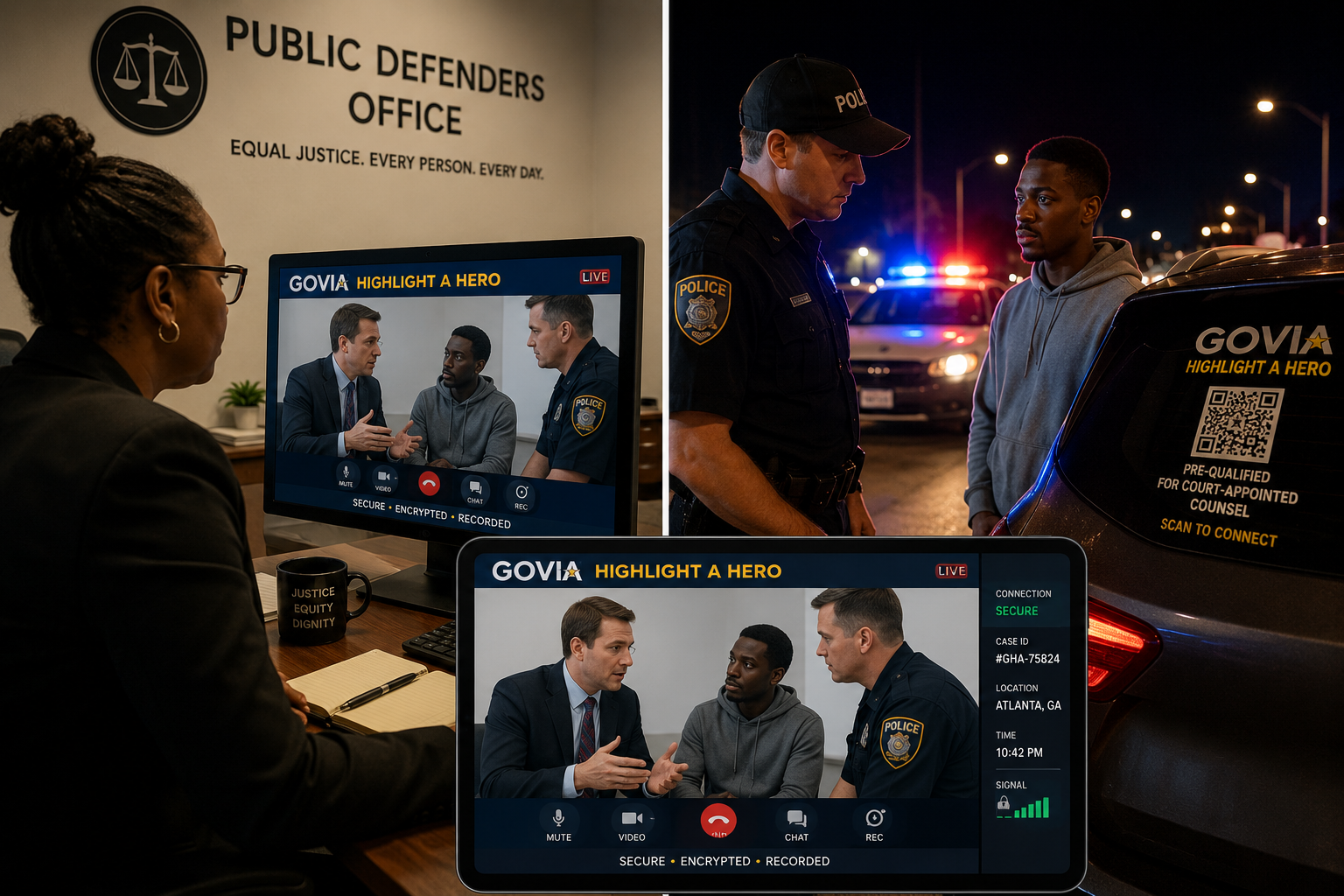
When an off-duty officer or an armed citizen steps into a heated verbal dispute, the human brain instantly switches to survival mode. Adrenaline spikes, tunnel vision sets in, and the ability to communicate rationally drops to zero. This is exactly where the **GoVia: Highlight a Hero** framework transforms a fatal collision into a controlled, de-escalated interaction.
1. Stripping the Anonymity (Real-Time Transparency)
The family’s statement highlights a major pain point: *Who was involved, and what were the connections?*
* **The Prevention:** If individuals on the scene had deployed GoVia, the platform’s active AI-driven monitoring would have immediately logged the encounter’s structural dynamics. By instantly documenting the identity of the parties—including recognizing an off-duty officer’s presence—the platform removes the dangerous ambiguity that fuels panic. Both parties behave differently when they know an immutable, real-time digital record is being established.
2. Micro-Interventions to Cool the Escalation
Before a gun is ever drawn, there is a crucial window where words turn into posturing.
* **The Prevention:** GoVia acts as a digital circuit breaker. Through real-time sensory tracking, the app identifies high-stress vocal patterns and escalating proximity. Instead of letting the environment dictate the emotion, GoVia pushes active, immediate de-escalation cues to the user. It anchors the civilian, reminding them of safety-first protocols, while providing a clear blueprint on how to disengage safely from an aggressive group.
3. Activating Remote Third-Party Oversight
The fatal turning point on East Boulevard occurred because multiple individuals were operating inside an isolated echo chamber of escalating anger, completely cut off from objective supervision.
* **The Prevention:** The moment a confrontation crosses a safety threshold, GoVia alerts a decentralized network of verified observers and emergency dispatchers. By bringing virtual “eyes on the scene” before shots are fired, the app forces a shift in accountability. An off-duty officer or an aggressive bystander is less likely to escalate to lethal force when an external, authoritative voice is actively injected into the encounter. Maybe a voice of reason for either party?
4. Flawless Evidence Protection for True Accountability
The aftermath of this shooting is plagued by questions: *Did Akili raise his weapon? Who fired first?*
* **The Prevention:** GoVia eliminates the post-incident narrative battle. By securely streaming encrypted multi-angle audio and visual data directly to a cloud infrastructure, the platform ensures that the ground truth cannot be altered, withheld, or delayed. This keeps good officers safe from false accusations while ensuring that structural violations are exposed instantly.
By turning the smartphone into an active shield of transparency, GoVia bridges the gap between Cleveland’s communities and law enforcement—ensuring that a 26-year-old man makes it home to his family, and a young officer remembers his true oath to protect and preserve life.