
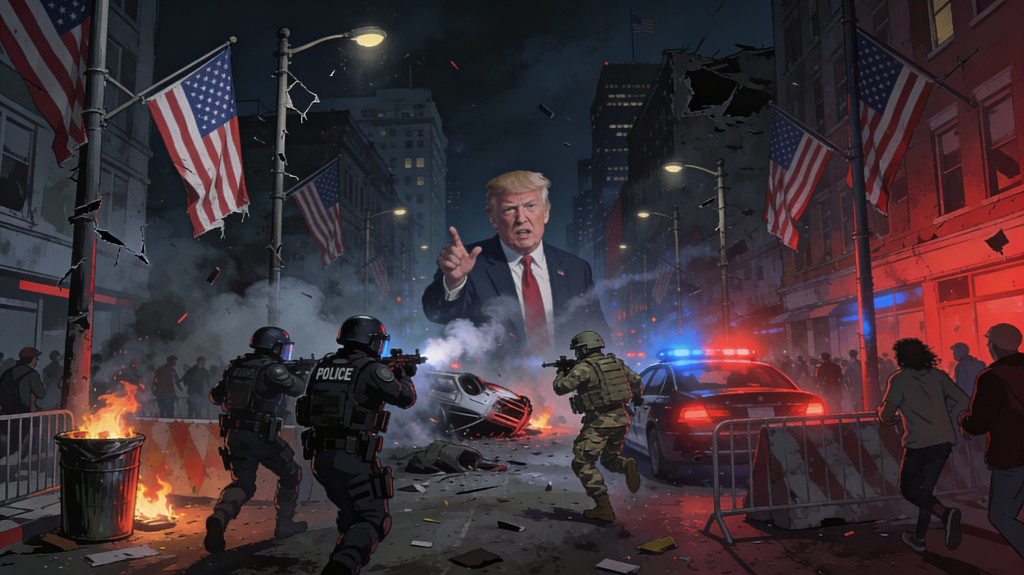
Federal immigration firepower has turned parts of Minneapolis into a live‑fire test bed for how far Washington will go in using police‑style and military‑grade tactics against its own residents, including U.S. citizens protesting in their own streets. At the same time, organizers and technologists are racing to build tools like GoVia that help immigrants, legal observers, and bystanders document abuse, assert their rights, and turn chaotic encounters into legally actionable evidence instead of just trauma.
Primary: Minneapolis immigration shooting, Alex Pretti Border Patrol, Renee Good ICE shooting, federal agents Minneapolis protests, Trump immigration surge Minneapolis.
Secondary: immigrant rights Minneapolis, ICE shooting US citizen, GoVia protest app, know your rights ICE, bystander video legal defense.
What happened in Minneapolis
In late January 2026, 37‑year‑old ICU nurse Alex Jeffrey Pretti was shot and killed by a U.S. Border Patrol agent on a south Minneapolis street during a federal immigration operation. Pretti, a U.S. citizen who worked at the Minneapolis VA hospital and had joined protests against the immigration crackdown, died after agents wrestled him to the ground; videos show him holding a cellphone, not a weapon, when shots were fired.
CBS and local outlets report that federal officials initially said the agent fired in self‑defense during an attempt to disarm Pretti, but Minnesota Governor Tim Walz called that narrative “nonsense” after reviewing the footage. In verified videos, an agent appears to emerge from the scuffle with a gun already in hand and then turn away as the first shot is heard, raising questions about imminent threat and use of lethal force.
Pretti’s killing was not an isolated incident but the most visible flashpoint in what the Department of Homeland Security has described as the largest interior immigration enforcement operation in modern U.S. history, code‑named “Operation Metro Surge.” Just weeks earlier, on January 7, ICE officer Jonathan Ross shot and killed 37‑year‑old Minneapolis resident Renee Nicole Good while she sat in her SUV; video suggests she may have been steering away from officers, despite officials describing her actions as an attempted attack and even “domestic terrorism.”
A city under federal surge
Roughly 2,000 federal agents from ICE, Border Patrol, and other DHS components have been deployed to the Minneapolis–St. Paul area, with DHS touting the operation as a major show of force against undocumented immigrants and alleged cross‑border crime. Local officials say the scale is so large that ICE officers now “outnumber” local police in parts of the Twin Cities, and residents describe seeing federal vehicles conducting traffic stops and door‑to‑door operations in neighborhoods and near workplaces.
On a single Monday early in the operation, DHS reported about 150 arrests in Minneapolis alone, as tactical units swept homes, factories, and streets. National ICE data compiled by researchers show that from January 20 to October 15, 2025, there were about 142,975 ICE arrests across the country, more than 1,000 per day, with Minnesota recording 593 arrests in the first part of that period and 1,180 in the second — nearly doubling as Trump’s second‑term interior enforcement ramped up.
Critics argue that many of these arrests involve people with little or no criminal history. An analysis of ICE’s own October 2025 data found that 71 percent of arrests over a two‑week span were of people with no criminal convictions. Meanwhile, Minnesota prison officials have publicly accused DHS of inflating the number of “criminal illegal aliens” held in the state, saying their survey identified about 300 noncitizens with ICE detainers, roughly 1,000 fewer than DHS claimed.
Civil‑rights groups warn that this surge is happening in an agency culture with a long record of lethal encounters and preventable deaths. An ACLU of Texas project has documented at least 177 fatal encounters with Customs and Border Protection personnel since 2010, including 34 deaths in custody, while a separate ACLU report calls deaths in ICE detention “deadly failures,” noting that 2020 was the deadliest year since 2005 for deaths in ICE custody. Against that backdrop, the killings of Good and Pretti in a major U.S. city are seen as the interior “coming home” version of abuses that border communities have reported for years.
Rights, protests, and the legal gap
On paper, people in Minneapolis — citizens, permanent residents, undocumented immigrants, legal observers, and bystanders — retain core constitutional rights when confronted by federal agents: the right to remain silent, the right to refuse consent to a search in many situations, and the right to record public officials performing their duties in public spaces. In practice, witnesses say fast‑moving arrests, heavy gear, and the blending of police and military tactics make it extremely difficult to assert those rights in the moment.
In the wake of Good’s killing, protests erupted around ICE facilities and downtown streets, with advocates demanding that federal agents “get out of Minneapolis” and calling for local authorities to refuse cooperation. The ACLU and ACLU of Minnesota have demanded an immediate halt to the surge after Pretti’s death, accusing DHS of “brutally beating” him and then shooting him while he lay on the ground, and they have pushed for independent investigations and a binding court order to restrict federal tactics.
Those legal challenges are beginning to produce results. A federal judge in Minnesota has granted a temporary restraining order limiting some DHS crowd‑control tactics and requiring agents to preserve evidence and allow clearer visibility for legal observers and credentialed press during operations. But without consistent, verifiable ground‑level documentation — time‑stamped video, audio, and corroborated testimony — many cases still come down to the word of heavily armed officers vs. traumatized civilians, a balance of power that historically favors the government.
How GoVia can help immigrants and bystanders protest smarter
GoVia is being developed as a community‑centered protest and public‑safety platform designed for exactly these environments: hybrid police‑military operations where people need real‑time legal support, documentation tools, and mental‑health backup. While not a replacement for lawyers or organizers on the ground, it can act as infrastructure that makes protests and everyday encounters less chaotic, more legally robust, and safer for all sides.
Key ways GoVia can help in Minneapolis and beyond:
Real‑time, auto‑backed‑up video
GoVia can help bystanders securely record encounters with federal agents, automatically backing up footage to encrypted servers so it cannot be deleted if phones are seized or destroyed. Time stamps, location tags, and chain‑of‑custody logs make that footage more useful in court or investigations, something especially critical when official narratives later contradict what videos show, as in the cases of Good and Pretti.
“Know Your Rights” prompts and scripts
When users approach a protest zone or see ICE or Border Patrol activity, the app can surface location‑specific rights information: what to say if agents demand ID, when you must show documents, when you can walk away, and how to safely assert your right to record. In Minneapolis, where ICE arrests in communities roughly doubled through 2025, that kind of just‑in‑time legal coaching can help immigrants avoid self‑incrimination and unnecessary detention.
Instant connection to legal observers and hotlines
GoVia can route users to volunteer legal observers, immigration attorneys, and civil‑rights hotlines, turning isolated incidents into coordinated responses. In a city where DHS has sent roughly 2,000 agents and arrests are occurring at homes, workplaces, and on the street, rapid escalation to lawyers can make the difference between someone disappearing into detention and someone having representation within hours.
Evidence bundles for litigation and policy change
Instead of scattering videos across social media, GoVia can “bundle” incidents — videos, witness statements, medical notes, and timestamps — into case files that lawyers, journalists, and investigators can use. When civil‑rights lawyers or policymakers challenge DHS statistics or official accounts, as in Minnesota’s dispute with Homeland Security over detainer numbers, having structured, community‑generated evidence strengthens their ability to prove patterns of abuse or misrepresentation.
Highlighting “heroes” on all sides who de‑escalate
The platform’s “Highlight a Hero” concept allows communities to recognize ICU nurses, immigrant parents, local officers, or federal agents who chose restraint and de‑escalation in tense moments. In a city now associated with lethal federal force, lifting up examples of agents who refuse unlawful orders, officers who protect protesters’ rights, and neighbors who shield targeted families can reshape the narrative from fear to shared responsibility.
Built‑in trauma and mental‑health support
GoVia can integrate crisis‑line access and trauma‑informed prompts for people who have just witnessed or experienced violence, connecting them to counselors or peer‑support networks. That is particularly important in Minneapolis, where immigrant communities have already lived through years of raids and, now, two highly publicized killings by immigration agents in a single month.
For Minneapolis, a city that once again finds itself a symbol of America’s struggle over policing, race, and immigration, tools like GoVia cannot reverse what happened to Renee Good and Alex Pretti. But they can make every future encounter — from a traffic stop to a march down Nicollet Avenue — more visible, more accountable, and more grounded in the rights the Constitution promises to every person, regardless of their status.


