In cities across the United States, a familiar pattern unfolds with quiet regularity: a 911 call placed in distress, a police unit dispatched, and an encounter that was never meant to be criminal becomes entangled in the machinery of law enforcement. For individuals experiencing mental health crises, the outcome can hinge less on need and more on circumstance—who responds, how they interpret behavior, and whether systems built for enforcement are forced to substitute for care.
This structural tension—between public safety and public health—has become one of the defining challenges in modern policing.
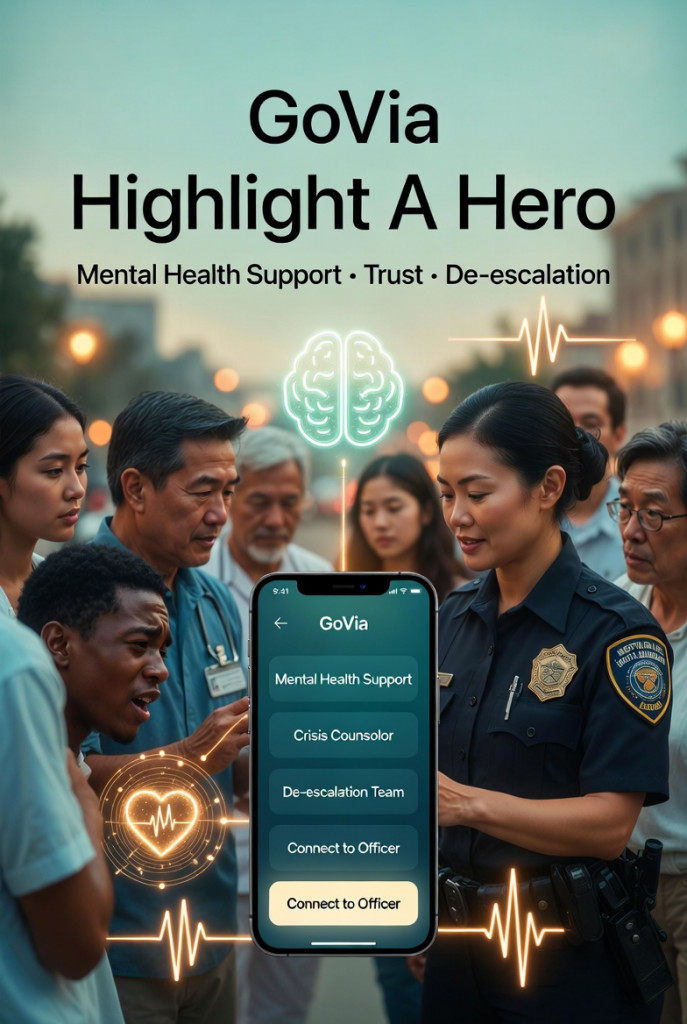
GoVia, a rising civic-tech platform founded by Georgio Sabino, is attempting to intervene at precisely this fault line. Its latest initiative, “Highlight A Hero,” introduces a new kind of role: a research-driven, psychology-centered position embedded within its broader ecosystem. The goal is both simple and ambitious—ensure that when mental health and law enforcement intersect, the response is informed by evidence, not improvisation.
The Problem: Criminalizing Crisis
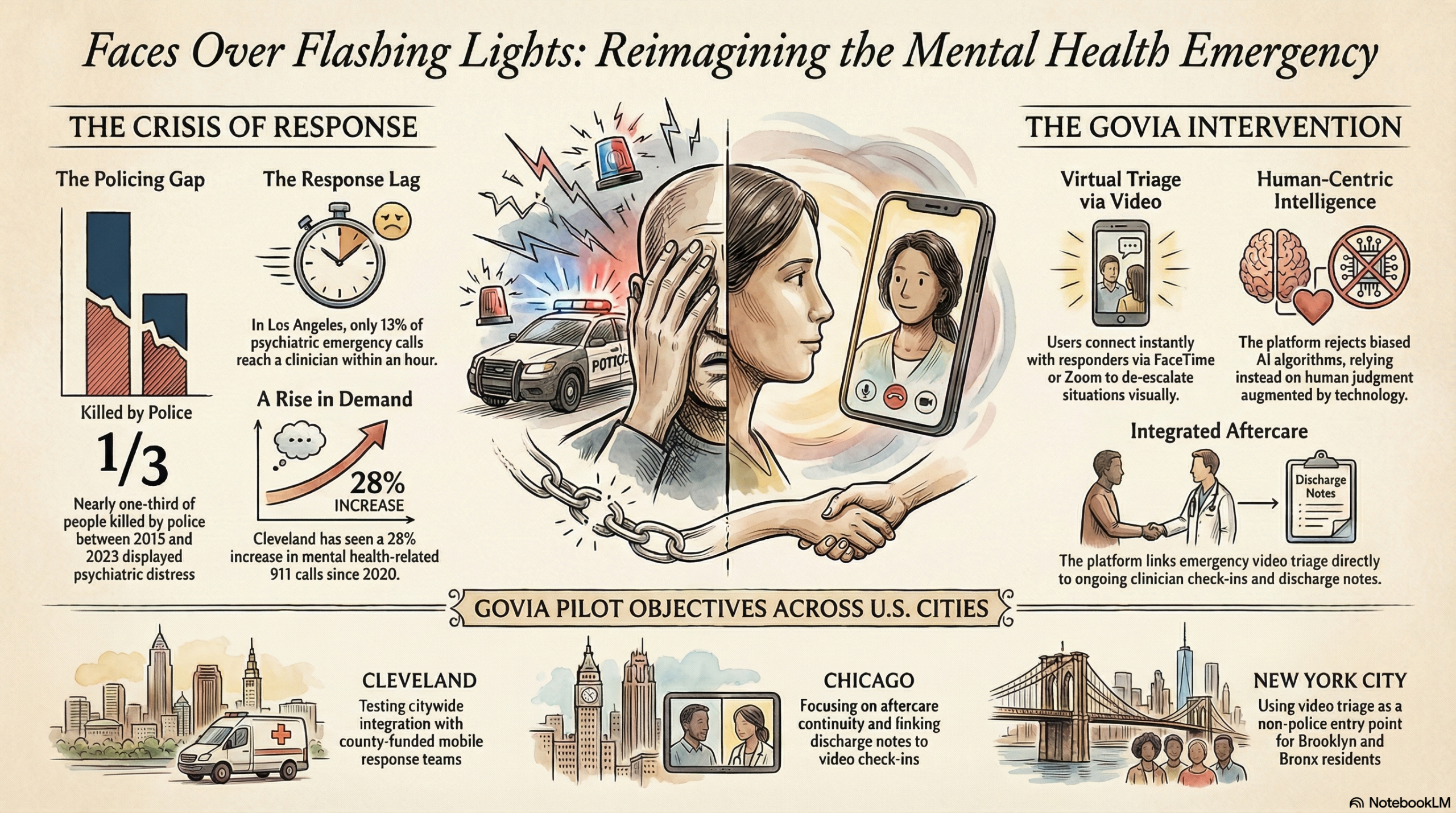
Data underscores the urgency. According to the National Alliance on Mental Illness, approximately 1 in 5 adults in the U.S. experiences mental illness each year, yet individuals with untreated mental health conditions are 16 times more likely to be killed during a police encounter. The Treatment Advocacy Center estimates that nearly 2 million people with serious mental illness are booked into jails annually.
Police officers, often with limited specialized training, have become default responders to crises they were not designed to manage.
Federal oversight has attempted to address this imbalance. Cleveland, Ohio—one of GoVia’s proposed pilot cities—has operated under a Department of Justice consent decree since 2015, following findings of excessive force and systemic deficiencies in policing practices. The decree mandates reforms including crisis intervention training and de-escalation protocols. Progress has been measurable, but uneven.
Atlanta, Georgia presents a different but equally complex landscape: rapid urban growth, strained behavioral health infrastructure, and increasing calls for non-police crisis response models.
Los Angeles, another potential launch site, has already piloted alternatives such as unarmed crisis response teams. Yet scalability and coordination remain ongoing challenges.
The GoVia Model: Embedding Psychology Into Response Systems
GoVia’s approach reframes the issue. Instead of treating mental health as an adjacent concern to policing, it integrates psychological expertise into the core architecture of response.
The newly created research role under the “Highlight A Hero” initiative is designed to operationalize this integration. The position focuses on:
- Designing standardized mental health assessment tools for use before, during, and after crisis encounters
- Partnering with local agencies to align field responses with clinical best practices
- Producing public-facing research that translates behavioral science into actionable insight
- Supporting livestream-based community education to normalize and contextualize mental health discussions
- Contributing to criminal psychology analysis to better understand patterns of escalation, bias, and misinterpretation
The premise is that better data and better understanding can lead to better decisions in moments where time is limited and stakes are high.
Police and Judicial Fairness: A System Under Scrutiny
The fairness of police encounters involving mental health remains deeply contested. Studies from the Bureau of Justice Statistics show that individuals with mental illness are disproportionately represented in use-of-force incidents. Implicit bias, misinterpretation of symptoms (such as paranoia or non-compliance), and lack of crisis-specific training all contribute.
Judicial outcomes often compound the issue. Once individuals enter the system, they face longer detention periods, higher likelihood of re-arrest, and limited access to adequate treatment.
GoVia’s framework attempts to intervene upstream—before escalation becomes incarceration.
By equipping cities with data-driven tools and embedding psychological insight into response protocols, the model aims to reduce unnecessary arrests, improve officer decision-making, and create alternative pathways to care.
Why Cities Are Watching
The appeal of GoVia’s model lies in its hybrid structure: part research institution, part digital platform, part community connector.
For municipalities, the potential benefits include:
- Reduced strain on police departments handling non-criminal calls
- Improved outcomes in mental health crisis interventions
- Enhanced public trust through transparent, community-centered engagement
- Access to real-time data that informs policy and funding decisions
Livestream integration—a distinctive feature—allows agencies to engage directly with the public, demystifying processes and offering education at scale.
The Tradeoffs: Promise and Risk
The model is not without challenges.
Pros:
- Introduces evidence-based approaches into traditionally reactive systems
- Bridges gaps between law enforcement, healthcare, and community organizations
- Scales digital engagement in ways traditional programs cannot
Cons:
- Requires sustained funding and cross-agency cooperation
- Risks uneven implementation across jurisdictions with differing resources
- Raises questions about data privacy and ethical use of psychological information
- May face resistance from institutions accustomed to siloed operations
The success of such a model depends less on design than on adoption.
Funding Reality: Can Innovation Be Sustained?
Mental health funding in the U.S. has expanded, but remains fragmented.
- Ohio allocates hundreds of millions annually through its Department of Mental Health and Addiction Services, supplemented by Medicaid expansion
- Georgia has increased behavioral health funding, though access disparities persist, particularly in urban centers like Atlanta
- Federally, programs through SAMHSA and community mental health block grants provide billions in support, yet distribution varies widely
GoVia’s research arm is tasked with navigating this patchwork—identifying grants, aligning with funding priorities, and ensuring financial viability at local and national levels.
Scaling the Model: From Cities to Systems
If successfully implemented, GoVia’s approach could reshape how cities respond to mental health crises.
In the United States, adoption would likely begin in reform-oriented municipalities—cities already grappling with consent decrees, budget pressures, or public demand for change.
Internationally, the model could adapt to different policing and healthcare systems, particularly in countries exploring alternatives to enforcement-heavy responses.
The central question is not whether the need exists—it is whether institutions are willing to reconfigure themselves around it.
GoVia’s A Structural Shift, Not a Program
What GoVia proposes is not a program layered onto existing systems, but a restructuring of how those systems think about crisis itself.
Mental health is not peripheral to public safety—it is foundational to it.
And in the narrow window between a call for help and a knock on the door, that distinction can determine everything.
As cities search for answers, the emergence of models like GoVia suggests a shift already underway: from reaction to prevention, from enforcement to understanding, and from fragmented response to integrated care.
Whether that shift can take hold at scale remains an open—and urgent—question.
:::