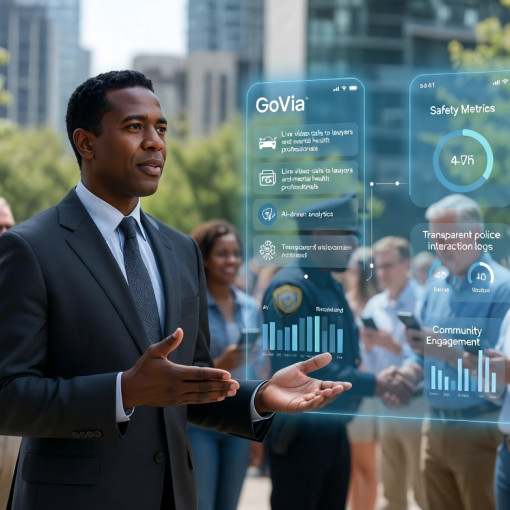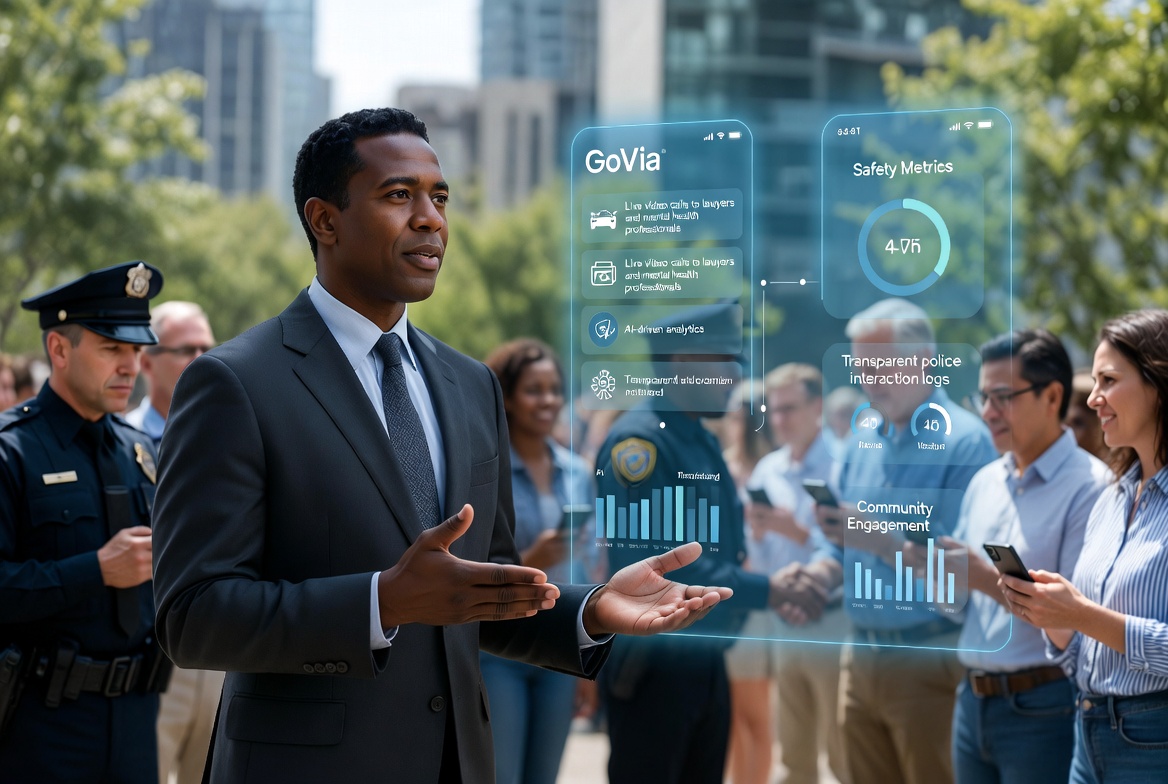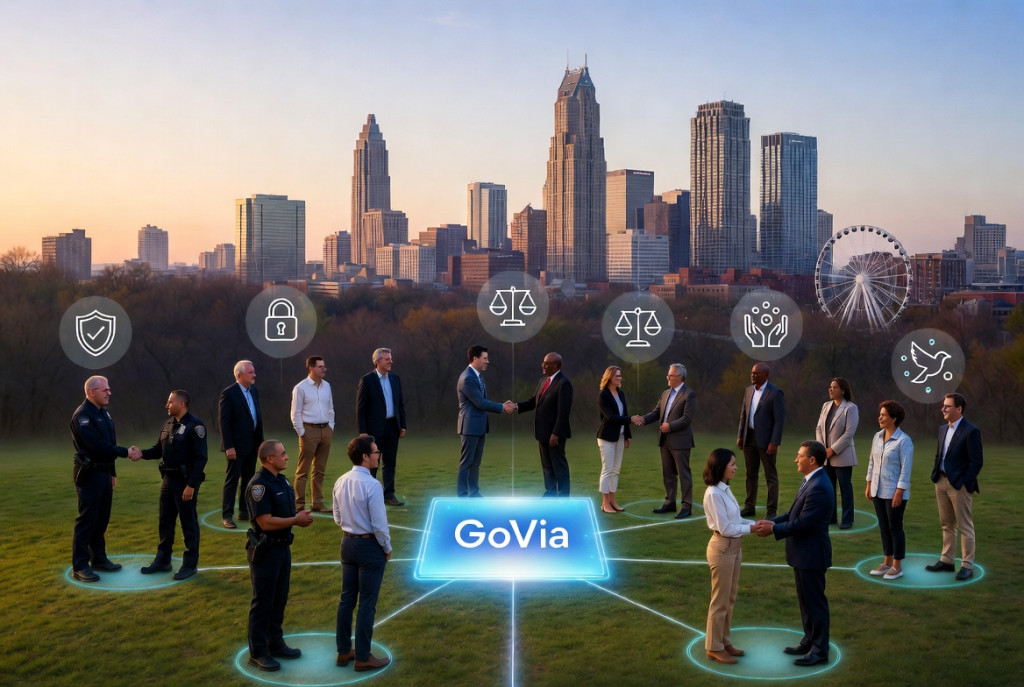
GoVia is best understood as a community safety and trust platform: a tool meant to connect citizens, attorneys, mental-health support, and public institutions in moments where confusion, fear, and escalation can turn a routine encounter into a crisis. Its story is powerful because it sits at the intersection of civil rights, public safety, legal access, and care.
The story
Imagine a traffic stop, a welfare check, or a tense neighborhood encounter. A person feels anxious, the officer feels pressure, and a small misunderstanding can escalate quickly. GoVia’s vision is to insert knowledge, documentation, and real-time support into that moment so both the citizen and the officer have a better chance to stay calm, informed, and safe.
That is the heart of the platform’s message: know justice, know peace. When people understand their rights, when officers have clearer tools and backup, and when mental-health or legal support is available in real time, the situation becomes less about fear and more about resolution. That is why GoVia’s story is not just about software; it is about rebuilding trust where trust has been damaged.
Why partnerships matter
GoVia’s success depends on partnerships because no single organization can solve police-community harm alone. The platform’s own materials describe it as a multifaceted ecosystem that combines legal access, mental-health support, accountability, and community engagement. That means the platform needs institutions that can help with deployment, legitimacy, training, referrals, ethics, and long-term adoption.
The most plausible partner categories are:
- Local and state public safety agencies.
- Community advocacy and civil rights organizations.
- Legal aid offices and law firms.
- Schools, universities, and vocational programs.
- Municipal innovation or digital service offices.
- Nonprofits focused on accountability, mediation, and community trust.
- Health, youth, and social service organizations.
- Technology vendors that can support secure communication, data handling, and case workflow integration.
These groups are important because they touch the exact points where a safer encounter is built: education before the encounter, support during the encounter, and follow-up after the encounter.
What each partner does
Public safety agencies can help GoVia pilot lawful de-escalation workflows, test officer-facing training, and identify where the platform fits without creating unsafe confusion in the field. Civil rights and community groups can help ensure the system protects dignity, avoids abuse, and stays grounded in real community needs.
Legal partners matter because the platform’s biggest promise is legal awareness in real time. Public defenders, legal aid offices, bar associations, and law firms can help define what can be said, when representation can begin, how conflicts are handled, and what ethical and confidentiality rules must be respected.
Mental-health partners matter because many encounters are not purely legal events; they are human crises. Licensed clinicians, crisis counselors, hospitals, and telehealth providers can support de-escalation, trauma-informed responses, and referral pathways so a person in distress is treated as a human being, not just a case.
Schools, universities, and vocational programs matter because change starts with education. GoVia’s model depends on teaching citizens how to act during a stop, how technology works, what the law allows, and how to stay calm under stress; academic partners can help build curriculum, train students, and measure outcomes.
Why the model is needed
The public record around police reform shows that trust-building cannot rely on slogans alone. Research and reform efforts have repeatedly found that procedural justice, accountability, and reconciliation are necessary, but not sufficient, without real mechanisms that people can use in the moment of need. GoVia tries to operationalize that idea by making support visible, reachable, and human at the point of contact.
The platform is also powerful because it is not anti-police when done well. A system that helps citizens stay calm and helps officers feel safer can reduce unnecessary force, reduce complaints, and reward professionalism. That is how you create a model where good officers are supported and communities are protected at the same time.
What partners should do
Partners should not just endorse GoVia; they should help build it responsibly. They should participate in pilot design, legal review, ethics review, clinical review where needed, community listening sessions, and training materials that explain how the app works in the real world.
They should also help define guardrails:
- When a recording starts.
- When an attorney can join.
- What the officer is told.
- How privacy and data retention work.
- How mental-health support is activated.
- How the app avoids interference with lawful police duties.
Those guardrails are what make the platform credible to institutions and safe for the public.
Why investors should care
This is an investment story because the need is large and the use case is repeatable. A platform that can be adopted by public agencies, legal providers, schools, health systems, and community organizations has multiple paths to growth, including pilots, licenses, service contracts, and B2G/B2B2C deployments.
The deeper investment thesis is that trust itself is infrastructure. Communities spend enormous social and financial energy on conflict, complaints, litigation, trauma, and broken relationships; a platform that reduces escalation and improves outcomes can create value for governments, families, attorneys, clinicians, and taxpayers.
The larger vision
The bigger story is moral as much as technical. The world came together after George Floyd because people saw that public safety without dignity is incomplete. GoVia’s vision says that we do not have to choose between accountability and peace; we can build both through education, access, mental-health support, and real-time legal help.
That is the promise: a society where a citizen can know their rights, an officer can feel safer, a mental-health professional can intervene when needed, and a public defender or attorney can help turn a dangerous moment into a more human one. That is how trust is rebuilt—one encounter, one partnership, and one act of courage at a time.