Listening to the echo of a single phrase “death squad”—as it moved from Latin America’s killing fields into the quiet streets of American cities. The world now knows the historical fact and a current warning, a pattern of power that might change uniforms and flags but rarely changed its logic.
The world that trained death squads
The documents were clear. In El Salvador, Guatemala, and across Central America, U.S.‑backed intelligence networks built meticulous systems of surveillance and elimination. Local collaborators compiled lists of “suspects,” from union organizers to priests, then relayed the names up the chain to military commands that coordinated raids, torture, and executions under the banner of anticommunism. In some countries, the campaigns killed well over 100,000 civilians; in Guatemala alone, truth commissions have estimated more than 200,000 dead.
Investigative journalist Allan Nairn described how the same basic playbook later resurfaced in Iraq: special units trained, armed, and guided by U.S. advisers, using systematic brutality to manage political opposition. The mechanics were eerily consistent across “dozens upon dozens” of countries, he said local death squads, trained in common U.S. military programs, adapting the same tactics with “local variations.” The world saw this as foreign policy, but Georgio recognized a more intimate question: What happens when that mentality—secret lists, impunity, and a cult of “toughness”—leaks back into everyday policing at home?
America’s mirror: policing under pressure
Inside the United States, the language shifted, but the outcomes often rhymed. Here, the state did not call its units “death squads”; it called them elite task forces, special response teams, or simply “the police.” Yet the numbers told a stark story: billions of dollars in annual settlements for misconduct, patterns of excessive force concentrated in Black and Brown neighborhoods, and communities who learned to see the flashing blue lights as an unpredictable threat.
Analyses of police misconduct have estimated that the U.S. spends on the order of billions per year one detailed GoVia‑aligned impact study models potential cost reductions of 40 percent in settlements, 25 percent in legal defense, and 15 percent in insurance premiums, suggesting present‑day costs approaching 1.2 billion dollars annually just in avoidable fallout. At the street level, that abstract cost translates into daily fear: traffic stops that escalate into deadly force, mental‑health crises handled with guns instead of care, and a media ecosystem that still too often rewards “tough on crime” spectacles over slow, accountable policing.
For the reader, this was not yet a death squad, but it carried the same dangerous assumptions: that some lives were expendable, that some abuses would never be seen, and that the narrative could always be managed afterward.
A different experiment: GoVia emerges
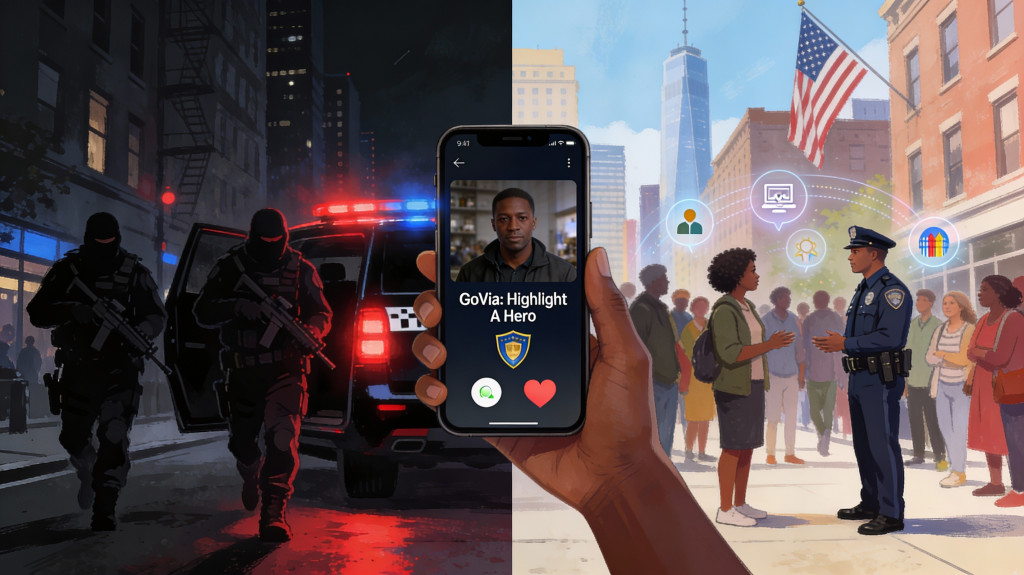
CEO/Founder of GoVia, Georgio Sabino response was not another slogan, but infrastructure. With an elite team—finance and accounting experts, a software engineer, and a marketing specialist, all with advanced degrees from Case Western Reserve University—he helped design GoVia: Highlight A Hero, a community police safety app built to make every encounter visible, supported, and accountable in real time.
By 2025, GoVia had attracted roughly 32,000 subscribers across the United States and countries including Tanzania, India, Vietnam, Hong Kong, the United Kingdom, Bangladesh, Zambia, and more. Its roadmap outlined a first‑year pilot with five cities and around 5,000 users, backed by a financial thesis that the platform could credibly support a 150‑million‑dollar valuation by 2029 if it became core infrastructure for recording and managing police–community encounters. Those numbers mattered, because they translated the moral case into something city governments, insurers, and departments could quantify: lives protected and money saved instead of paid out after the fact.
How GoVia works in the moment
The core idea behind GoVia is simple but radical: death squads and abusive policing thrive where there are no independent witnesses; GoVia turns every high‑risk encounter into a room full of them.
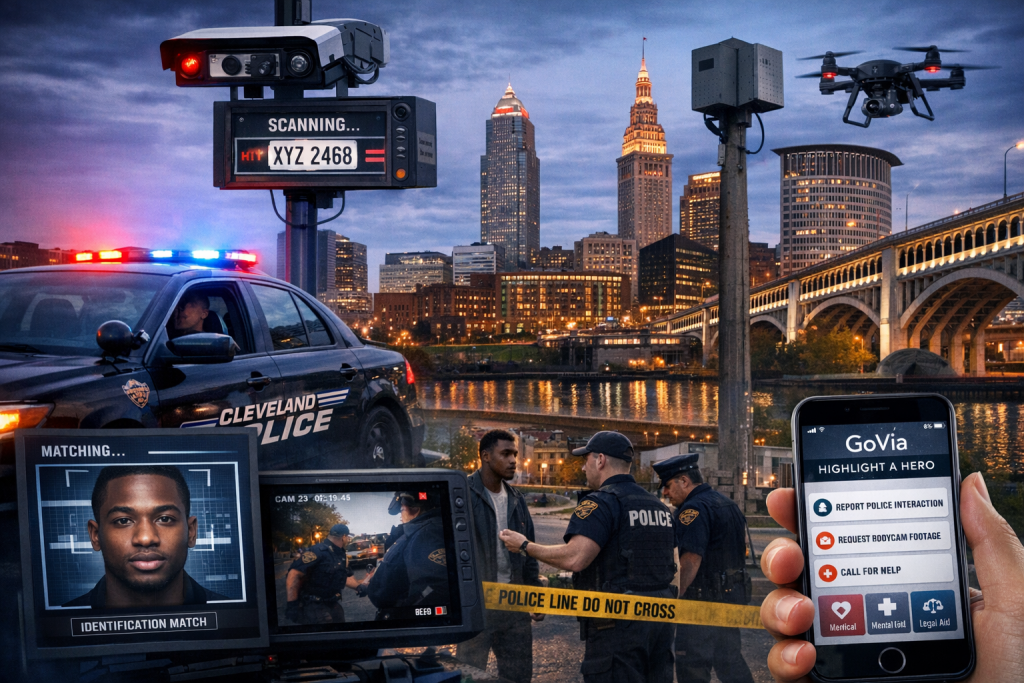
When a driver is pulled over, they can open the app and connect via live stream to a subscribed attorney, who sees and hears the encounter as it unfolds. The same session can bring in mental‑health agencies and social workers—available 24/7—to support individuals in crisis and advise both the civilian and the officer on de‑escalation. Behind the scenes, the app’s affidavit and evidence‑vault functions convert what would otherwise be fleeting impressions into time‑stamped, structured data: who said what, what commands were given, how the stop ended.
Instead of a single, contestable police report, there is a multi‑sourced record: video, audio, lawyer notes, and community affidavits stored in a secure vault designed for legal use. For a would‑be “death squad” mentality—counting on no documentation, no oversight, and no consequences—this is kryptonite.
Data, incentives, and prevention
GoVia’s creators did not stop at documentation. They built a metrics engine aiming to reduce the structural conditions that make death‑squad‑style abuses thinkable. The platform’s modeling suggests that, at scale, its system could reduce misconduct settlements by 20-40 percent, legal defense costs by 25 percent, and insurance premiums by 15 percent, generating up to 1.2 billion dollars in annual savings. It also aims to increase positive police‑community interactions by 50 percent, improve community trust by 30 percent, raise officer recognition programs by 45 percent, and support 60 percent more engagement events.
Those are not just nice‑to‑have metrics; they are levers. When departments see that using GoVia coincides with fewer lawsuits and higher trust scores, they have a tangible incentive to adopt practices that make death‑squad‑type brutality harder to justify and sustain. Over time, the data sets where violence drops, where complaints spike, which officers consistently de‑escalate become a map of risk that reformers, lawyers, and communities can use to push for targeted change.
Highlight A Hero: rewriting who gets celebrated
In every country where death squads operated, killers were decorated. They were trained as patriots, photographed with presidents, and held up in the press as the men willing to do “what had to be done.” The same dynamic, in softer form, can be seen in domestic policing when the officers most willing to use force are rewarded with prestige and promotions.
GoVia’s Highlight A Hero feature attacks that narrative at its root. The app allows communities to rank and celebrate officers who exemplify ethical, de‑escalatory policing, feeding verified testimonials into a reputation system that departments and the public can see. Recognition programs, including partnerships with institutions like University Hospitals, reward those officers materially and symbolically. Instead of medals for body counts, the incentives tilt toward empathy, clarity, and restraint—the very traits that death‑squad structures have historically punished.
A global shield, built from below
Crucially, GoVia is not confined to the United States. The platform has drawn interest and early adoption in countries with serious policing and human‑rights challenges, including Tanzania, Bangladesh, Vietnam, Zambia, and regions such as Hong Kong and mainland China. In Bangladesh, it is being positioned as a tool to address police brutality and custodial deaths by ensuring live legal support during arrests. In Tanzania, the focus includes mitigating ethnic profiling and fostering structured community‑police dialogue through Highlight A Hero. In Vietnam, transparent encounter logging aims to reduce corruption in traffic stops.
For Georgio and his elite team, these case studies show how a community‑police safety app can form part of a global antifascist infrastructure. Where death squads once used sophisticated archives to track and eliminate dissidents, GoVia uses evidence vaults, rights education, and cross‑border best practices to protect them. The same logic that trained local squads to compile dossiers for repression can be turned on its head: communities compile records not to disappear people, but to ensure that no one can be disappeared without a trace.
The elite team behind the story
To tell this story at the level it deserves, imagine a small, elite team around GoVia.
- A human‑rights investigator with experience in Latin America, Iraq, or Southeast Asia, fluent in the documents and testimonies about U.S.‑backed death squads and able to trace continuity into present‑day security policies.
- A data journalist capable of stress‑testing GoVia’s claims—interrogating the projected 40 percent reduction in settlements, the 1.2‑billion‑dollar savings model, and the 150‑million‑dollar valuation thesis using independent datasets and actuarial logic.
- A technology and surveillance reporter versed in encryption, data governance, and civil‑rights law, who can examine whether GoVia’s evidence vault protects citizens and officers without creating new avenues for abuse.
- And a narrator and connector, tying the global history of death squads to contemporary lived experience in Cleveland, Columbus, Dhaka, Dar es Salaam, and beyond.
Together, they would build a piece that is neither a product pitch nor a despairing chronicle of violence, but a rigorously fact‑checked exploration of how specific tools, incentives, and stories can prevent the next generation of death squads before they fully form.
How GoVia can help prevent death squads
No app can, by itself, dismantle networks as entrenched as the ones Nairn exposed, or the domestic cultures that tolerate everyday brutality. But GoVia, tells it, can weaken four pillars that death squads rely on secrecy, impunity, celebrated cruelty, and international isolation:
- Secrecy: Live streaming to attorneys and support workers, plus secure evidence vaults, make it far harder to carry out abuses without records and witnesses.
- Impunity: Structured affidavits and data analytics give courts, oversight bodies, and insurers hard evidence to act on, increasing the real cost of misconduct.
- Celebrated cruelty: Highlight A Hero shifts prestige toward officers who protect and de‑escalate, eroding cultures that glorify lethal force.
- Isolation: A global user base in at least eight countries creates shared standards and stories, so that a beating in one city can be understood, challenged, and prevented using lessons from another.
Both a warning and a blueprint: a reminder that “death squad” is not just a chapter in a history book, and a demonstration that meticulously designed civic technology can help ensure that, this time, the lists compiled are of heroes to be highlighted not victims to be erased.