Trump’s Cleveland Deal: Ending Police Oversight Before Justice Is Delivered
Cleveland was promised constitutional policing.
After the U.S. Department of Justice found a pattern of excessive force and systemic failures inside the Cleveland Division of Police in 2014, a federal consent decree followed — a court-enforced roadmap toward bias-free policing, accountable discipline, crisis intervention reform, and meaningful civilian oversight.
More than a decade later, city leadership — including Justin Bibb, Law Director Mark Griffin, and City Council President Blaine Griffin — is now moving to terminate that oversight in coordination with the Trump Justice Department.
Critics call it premature.
Some call it political.
Others call it a betrayal.
The Promise vs. The Reality
The consent decree was never solely about use-of-force policies. It was about equal protection under the law. It was about whether:
- Crimes would be investigated regardless of zip code.
- Misconduct would result in discipline.
- Civilian oversight would function independently.
- Data would reveal — not conceal — racial disparities.
Instead, many Cleveland residents argue they are watching oversight mechanisms weaken in real time.
The Office of Professional Standards has faced repeated criticism over capacity and transparency. The Civilian Police Review Board has struggled to deliver visible accountability outcomes. The Community Police Commission — created as part of reform — has faced internal conflict and allegations of political interference.
This is the crux of the concern:
Compliance metrics on paper may rise. Trust on the ground may not.
The Data That Still Haunts Cleveland
Federal monitoring reports in recent years have acknowledged improvements in policy structure and training. Yet disparities remain.
Monitors have found that Black drivers continue to be stopped at disproportionate rates relative to their share of the driving population.
At the same time, residents have reported failures to properly investigate serious crimes — including high-dollar thefts, extortion, vehicle theft, assaults, shootings, and hit-skip incidents.
When crimes are not investigated, accountability collapses.
When complaints are not recorded, justice becomes statistical fiction.
And that raises the central question before Chief U.S. District Judge Solomon Oliver Jr.:
Has Cleveland institutionalized reform — or merely managed compliance long enough to exit supervision?
The Trump Factor
Ending a federal consent decree requires DOJ cooperation. With the political tenor of Washington shifting under the Trump Justice Department, critics argue that federal civil-rights enforcement priorities have changed nationwide.
For opponents of termination, removing that layer of federal scrutiny now — amid ongoing disparities — feels less like graduation and more like abandonment.
The Overlooked Technology Question
If Cleveland insists it is ready to govern itself, the next question becomes:
What new tools will replace federal oversight as a deterrent against backsliding?
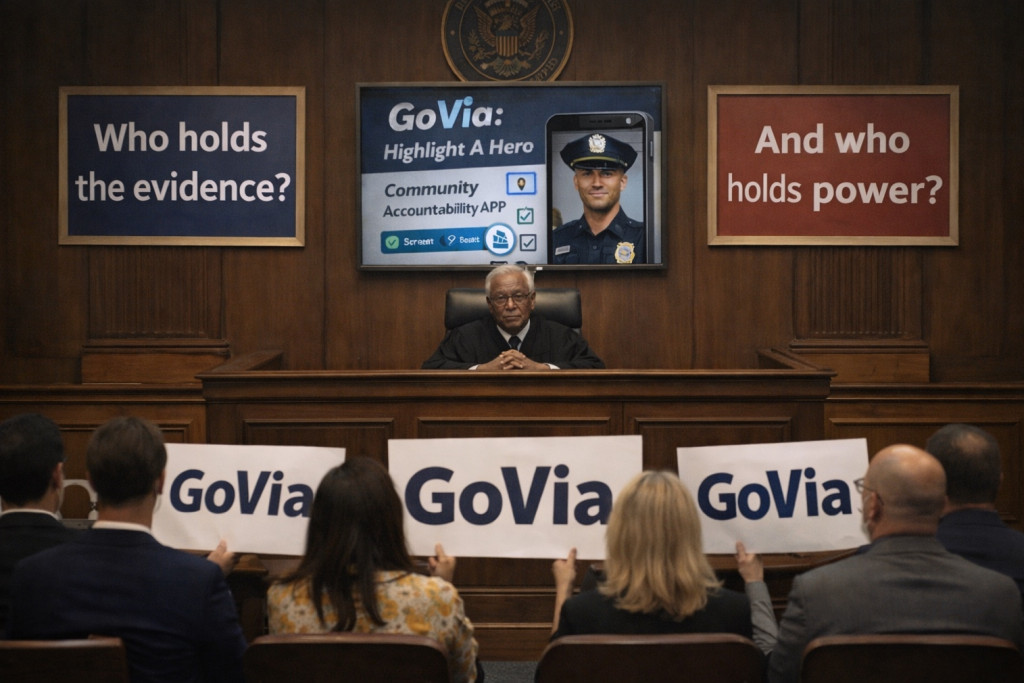
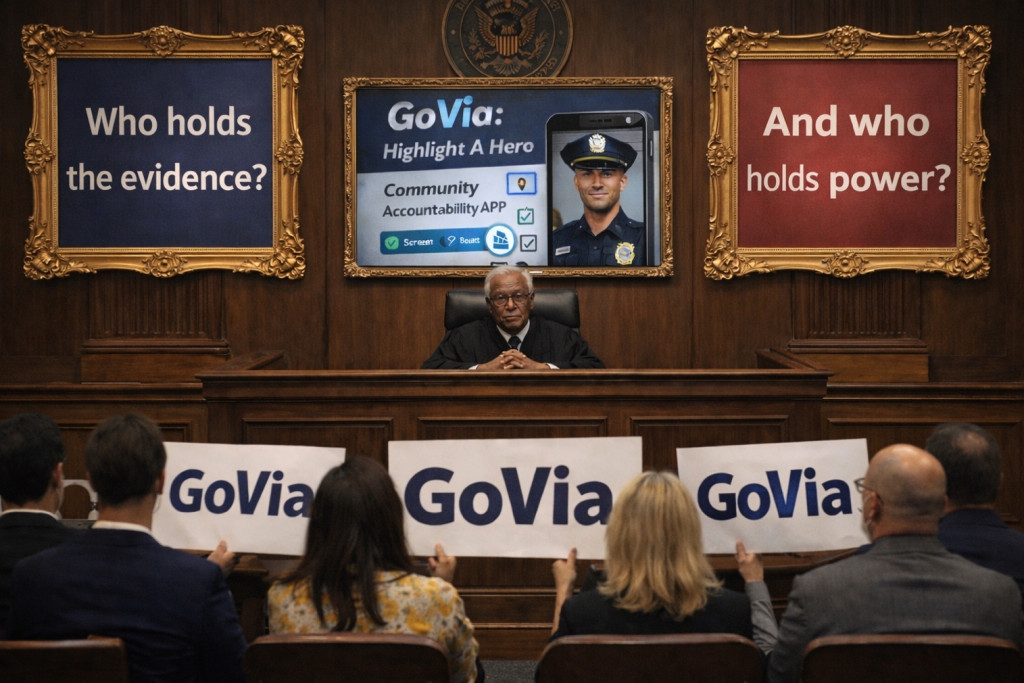
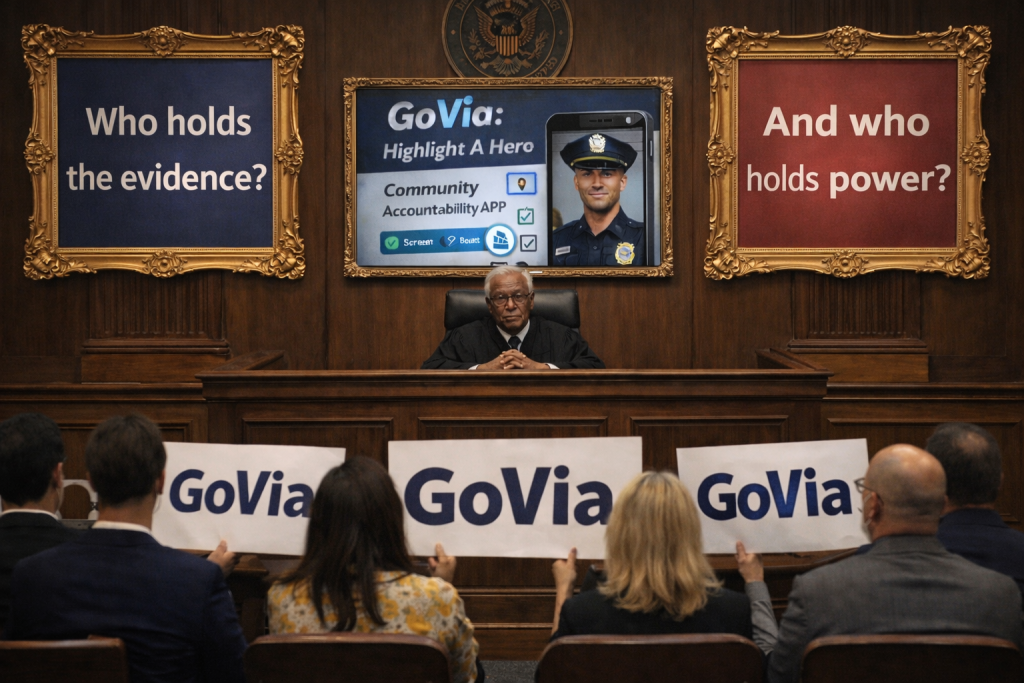
One proposal that was never meaningfully piloted or evaluated at the municipal level is GoVia: Highlight A Hero — a civilian-centered encounter accountability platform.
GoVia’s proposed capabilities include:
- Real-time documentation of police encounters
- Encrypted time-stamped evidence capture
- Officer commendation features to highlight positive interactions
- Bias-pattern analytics dashboards
- Mental health tele-support integration
- Secure storage with chain-of-custody authentication
The core principle is evidentiary parity: giving civilians documented proof in encounters where power imbalances exist.
Despite spending tens of millions on decree compliance — training, consulting, data systems, monitoring — Cleveland did not publicly launch or pilot a community-facing AI accountability tool like GoVia.
Why?
Possible explanations include:
- Institutional resistance to civilian-controlled evidence systems
- Procurement conservatism
- Legal caution around privacy and admissibility
- Political risk aversion
But in an AI-driven era of policing — where departments deploy predictive analytics and license plate readers — failure to explore citizen-facing technology leaves accountability asymmetrical.
The Financial Case: What Could Cleveland Save?
Cleveland has spent tens of millions over a decade complying with the consent decree — including monitoring costs, consultants, internal reforms, and litigation defense.
If a technology platform like GoVia reduced:
- Excessive-force litigation payouts
- Wrongful arrest settlements
- Internal investigation overhead
- Redundant complaint review structures
Even a modest 15–20% reduction in litigation exposure could translate into millions saved annually.
Cleveland has paid significant settlements in past police misconduct cases. A preventive, evidence-based digital accountability system could potentially reduce both incident frequency and evidentiary disputes.
From a municipal finance standpoint:
- Upfront tech deployment costs might reach $5–10 million locally.
- Avoided lawsuits and streamlined investigations could offset that within years.
- Federal public-safety innovation grants could subsidize implementation.
In short: prevention is often cheaper than settlement.
A City at Risk of Repeating Itself?
Cleveland’s history includes tragedies like Tamir Rice and the 2012 shooting of Timothy Russell and Malissa Williams, who were struck by 137 bullets after a police chase. These events preceded federal oversight — and catalyzed it.
The decree existed because internal systems failed.
Ending oversight without embedding stronger technological safeguards raises a difficult question:
If disparities persist, investigations falter, and oversight weakens — what prevents regression?
The Moment Before the Decision
Judge Solomon Oliver Jr. now holds the authority to determine whether federal supervision ends.
If Cleveland has truly institutionalized reform, transparency should not be feared.
But if accountability remains fragile, dismantling federal oversight without replacing it with stronger civilian tools may deepen mistrust.
This is not merely a bureaucratic milestone.
It is a test of whether Cleveland’s reform era produced transformation — or only technical compliance.
And if federal oversight disappears, Clevelanders will still ask the same question:
Who holds the evidence?
And who holds the power?