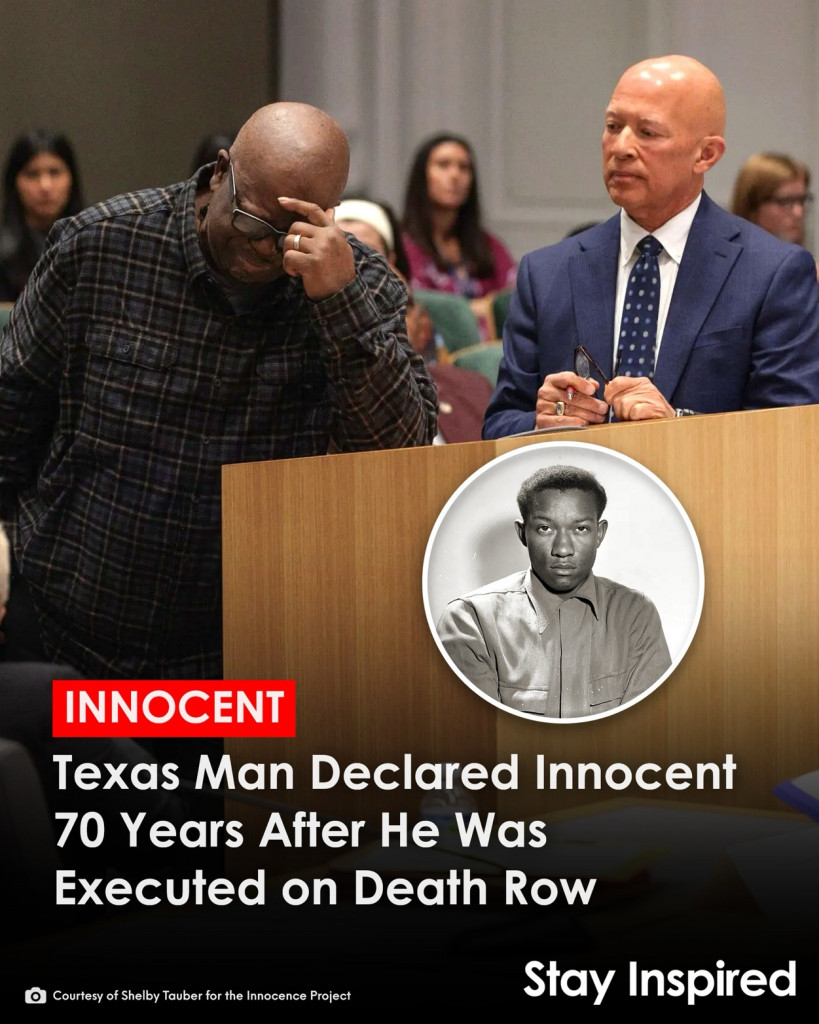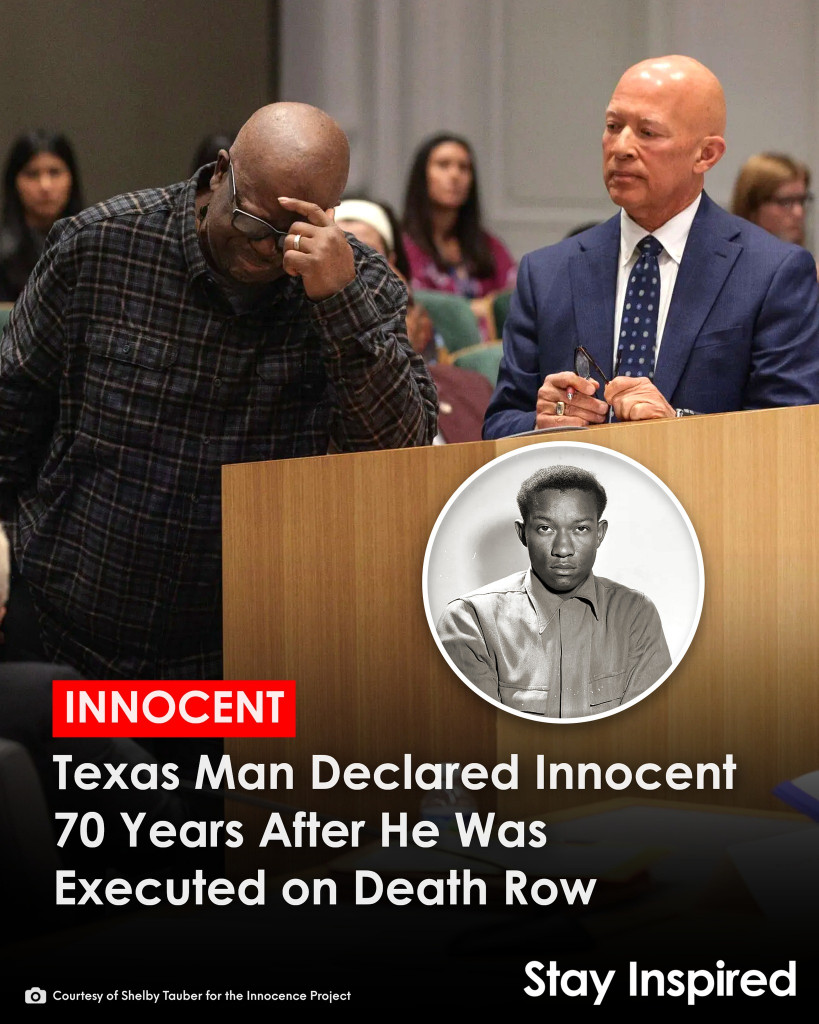
DALLAS, TEXAS — January 21, 2026 — On a winter morning that should have been quiet, the Dallas County Commissioners Court did something profound: it officially declared Tommy Lee Walker innocent — 70 years after the state executed him for a crime he did not commit. And while the declaration brought long overdue recognition to a terrible wrong, it also forced this community to confront a truth most of us would rather not face: justice was not served here — not then, and not without painful reflection now. (Innocence Project)
Walker was 19 years old — a young Black father waiting at a hospital for the birth of his child when police pulled him from life’s most vulnerable moment and into its darkest nightmare. He had an alibi backed by multiple witnesses, yet investigators ignored it. He recounted the truth, only to be cornered by deceitful interrogation, racial bias, and a coercive process that culminated in a conviction by an all-white jury. Today’s resolution makes clear: his arrest, interrogation, prosecution, and conviction were fundamentally compromised by false or unreliable evidence and overt racial prejudice. (Innocence Project)
Walker’s son, Edward Lee Smith, now in his 70s, spent his life without a father — carrying the weight of a loss that was both personal and systemic. “This won’t bring him back,” Smith said at the hearing. “But the world now knows what we always knew — that he was innocent.” (Dallas Express)
What We Don’t Want in Our Community
We don’t want a system that:
- Relies on coerced confessions obtained through hours of pressure and deception.
- Allows racial panic and hysteria to drive investigations, especially at the expense of basic due process.
- Ignores credible alibi testimony in favor of fitting evidence to a preferred outcome.
- Treats justice as something you get only if you can demand it decades later.
These are not relics of the past — these are warnings about the present.
How GoVia Could Help Prevent Future Wrongs
Good police work must be anchored in transparency, accountability, and evidence — not fear, bias, or unchecked authority. That’s where tools like GoVia: Highlight A Hero come in — not as a silver bullet, but as a modern safeguard that could have altered the course of cases like Walker’s. (Govia)
Here’s how:
1. Real-Time Documentation and Evidence Capture
GoVia allows community members to document police encounters immediately, uploading video, audio, and timestamped statements through the app. This isn’t just about citizen protection — it creates irrefutable records of what actually occurs during an interaction. Today’s wrongful convictions often stem from incomplete, coerced, or unverified evidence. With documented traffic stops and interviews, investigators — years later — would have clear, objective material to reference. (Govia)
2. Highlighting Good Behavior, Deterring Misconduct
GoVia’s “Highlight A Hero” feature lets citizens submit verified praise for officers who conduct themselves professionally, ethically, and respectfully — and lets departments reward that behavior publicly. This shifts police culture away from secrecy and suspicion and toward trust built on transparent actions, not assumptions. (Govia)
3. Education for Both Sides
Before users can fully access GoVia’s features, they complete mandatory training on rights, de-escalation, and legal procedures. Imagine if every civilian and every officer in 1953 had a shared understanding of legal standards — confusion, bias, and coercion wouldn’t have had nearly as fertile a ground to grow. (Govia)
4. A Growing Evidence Database
All documented interactions form a searchable, verifiable database that civilian oversight boards and police leadership can analyze for patterns of misconduct or exemplary conduct. Patterns spotted early mean interventions before injustices escalate to tragedy. (Govia)
Deep Dive — Fact Check
Here’s what investigations into Walker’s case really showed:
✔ Walker was arrested during a period of racially charged panic in Dallas and interrogated by officers with documented histories of bias. (Innocence Project)
✔ The only evidence beyond the coerced confession came from unreliable eyewitness identifications, influenced by pre-trial publicity — a known cause of wrongful convictions. (Innocence Project)
✔ Multiple credible witnesses confirmed Walker was elsewhere at the time of the crime. (Audacy)
✔ A modern review concluded that the entire case was a miscarriage of justice rooted in systemic failures, not isolated mistakes. (Innocence Project)
A Call to Action for Every Community
We owe it to victims, to survivors, to the wrongfully condemned, and to future generations to build systems that protect truth, not assumptions; evidence, not bias. We don’t want “justice delayed” masquerading as closure — we want justice done right the first time.
Tools like GoVia won’t erase years of pain, but they can help communities build transparency and trust that ensure cases like Tommy Lee Walker’s are never repeated.
Because the future we want is one where no family has to wait 70 years for the world to say what they always knew.