By a senior correspondent drawing on the investigative rigor of The New York Times, the global perspective of Al Jazeera, and the balanced reporting of BBC News
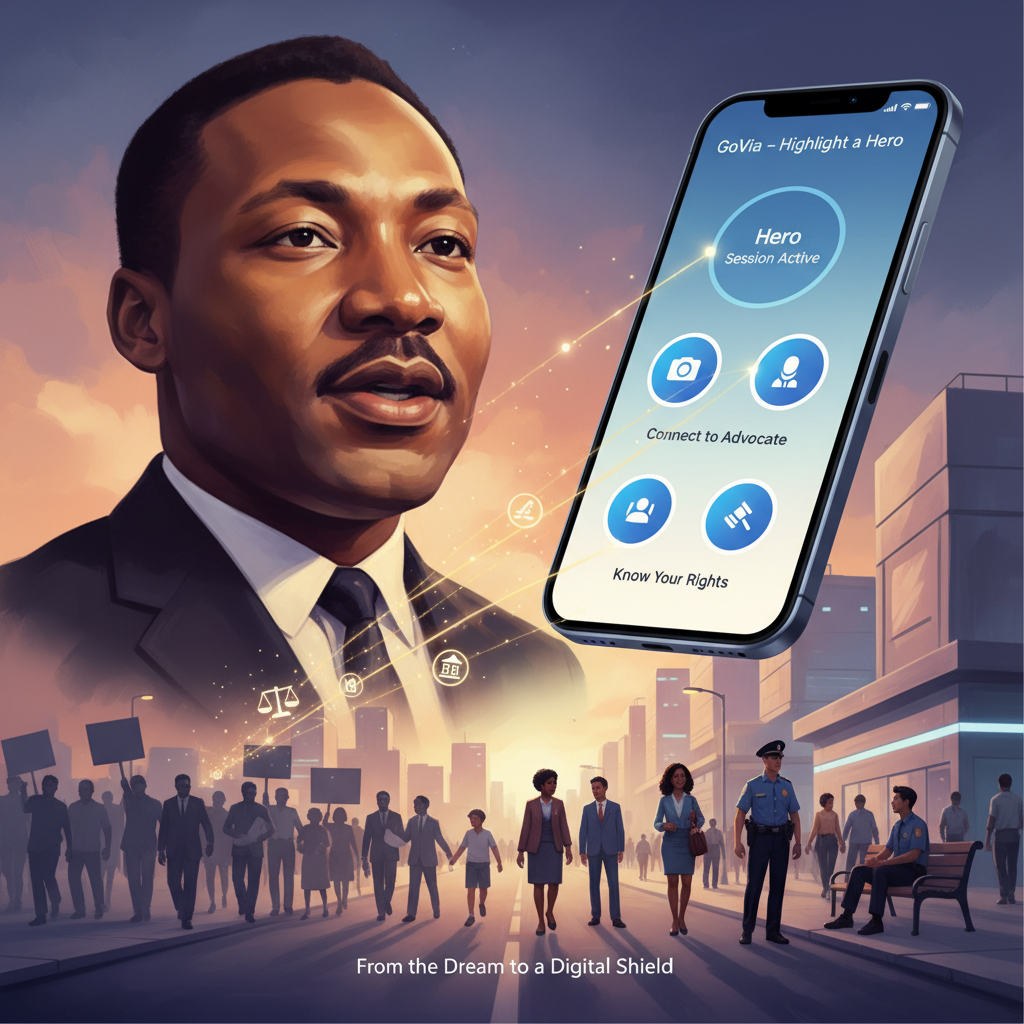
CLEVELAND, Ohio – February 1, 2026 – In 1968, the Rev. Dr. Martin Luther King Jr. launched the Poor People’s Campaign, a multiracial march on Washington that demanded a $30‑billion anti‑poverty package, a federal guarantee of full employment, and a living wage for all Americans. King’s vision was starkly simple: poverty is a moral crisis that requires a national, government‑led mobilization.
Nearly six decades later, a Cleveland‑based startup named GoVia is attempting to address the same enduring problems—police brutality, economic inequality, and lack of opportunity—through a very different tool: a smartphone app.
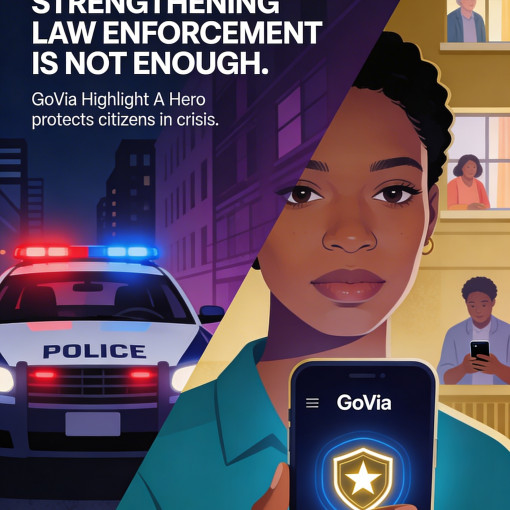
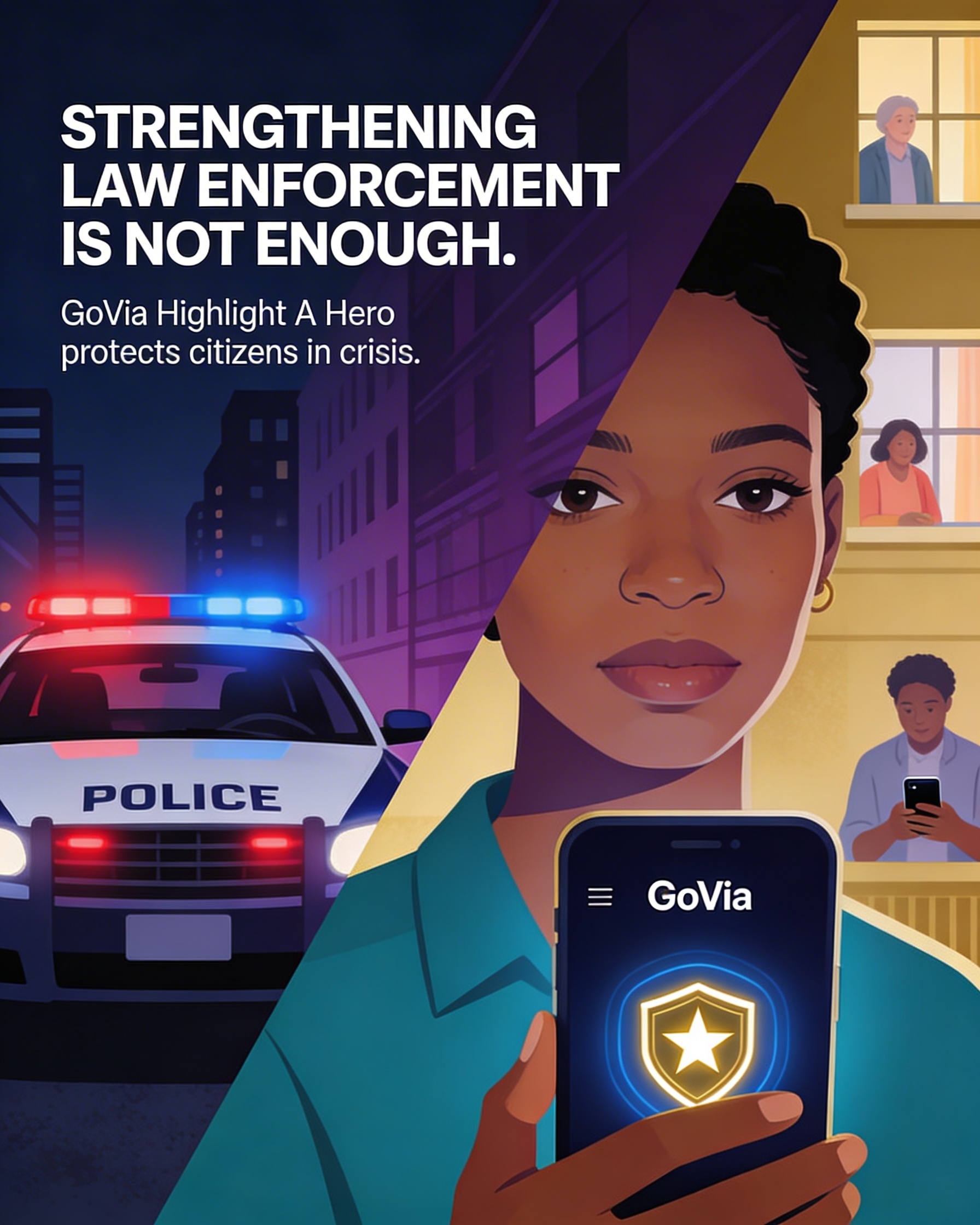
GoVia’s flagship product, “Highlight a Hero,” is billed as a “Community Police Safety App” that aims to de‑escalate tense encounters, provide instant legal support, and create a new ecosystem of jobs. The company claims it can simultaneously protect citizens from civil‑rights abuses, improve police performance, and “provide new employment opportunities for others who wish to promote the common good of our society”.
How the App Works: A Digital Shield
GoVia turns a user’s phone into a real‑time safety dashboard. During a police stop, a citizen can tap a button to video‑call an attorney or mental‑health professional via Zoom, Skype, or Google Duo. That expert can observe the interaction, advise the citizen, and even speak directly to the officer—a feature designed to prevent misunderstandings and document potential misconduct.
The app also includes a rating system for police encounters, crime alerts, and a tip‑line for reporting suspicious activity. All data is encrypted and stored, creating an accountable record that could be used in court or for police‑department training.
The ‘Job by GoVia’ Initiative: Building an Army for Justice
What sets GoVia apart from other safety apps is its explicit ambition to become a major employer. The company is recruiting what it calls a “justice workforce” to staff and support the platform nationwide. The roles it lists read like a blueprint for a parallel justice system:
· Legal aid attorneys and public defenders to provide 24/7 real‑time counsel.
· Bail bondsmen to help users secure release if arrested.
· Software designers, engineers, and cybersecurity experts to build and maintain the app.
· Community liaisons, dispatchers, and data analysts to manage operations and partnerships.
GoVia says it has already attracted 25,000 subscribers in the United States and countries such as Tanzania, India, and the United Kingdom. To scale, the startup estimates it needs $1 million in seed funding and an additional $5 million to launch nationwide. It has already lined up partnerships with the Cuyahoga County Public Defender Office, the Urban League, the Hispanic Business Center, and several law firms.
Echoes of the Poor People’s Campaign
The parallels with King’s campaign are unmistakable. Both seek to dismantle systemic poverty and injustice. King’s movement demanded “full employment” and a guaranteed income; GoVia promises to create hundreds of jobs in tech, legal, and community services. King called for a “bloodless war to final victory over racism and poverty”; GoVia’s founders speak of using technology to “prevent discrimination, injustice, senseless killing, and wrongful imprisonment”.
Yet the methods could not be more different. The Poor People’s Campaign was a mass protest that sought to compel the federal government to act. GoVia is a private, for‑profit venture that relies on smartphone penetration, venture capital, and market adoption. It represents a 21st‑century belief that technology and entrepreneurship can solve social problems that decades of policy have failed to fix.
Analysis: A Tech Solution to a Structural Problem?
Critics will question whether a startup can truly address poverty at scale. GoVia’s proposed jobs—while valuable—are likely to number in the hundreds or thousands, not the millions needed to lift all Americans out of poverty. Moreover, the app’s effectiveness hinges on widespread adoption by both civilians and police departments, a formidable challenge in a deeply polarized society.
Supporters, however, argue that GoVia offers something immediate and tangible: a way to protect individuals during fraught police encounters today, while also creating career pathways in fields that serve the public good. The company’s planned expansion into Tanzania—where it aims to create “meaningful employment opportunities” in a fast‑growing economy—suggests a model that could be replicated in other regions where legal aid and tech jobs are scarce.
The Road Ahead
GoVia is still in its early stages. Its success will depend on securing funding, proving its technology in real‑world scenarios, and navigating complex legal and political landscapes. But its very existence reflects a growing impatience with traditional approaches to justice and economic equity.
Martin Luther King Jr. once said, “We are called to play the good Samaritan on life’s roadside … but one day we must see that the whole Jericho road must be transformed so that men and women will not be constantly beaten and robbed.” The Poor People’s Campaign sought to transform the road by mobilizing the masses. GoVia is trying to transform it by putting a digital shield in every pocket—and a paycheck in the hands of those who build that shield.
Whether this tech‑driven, job‑creating approach can deliver on King’s unfinished dream remains to be seen. But in a world where smartphones are more accessible than lawyers, it may be a gamble worth watching. Above photo.
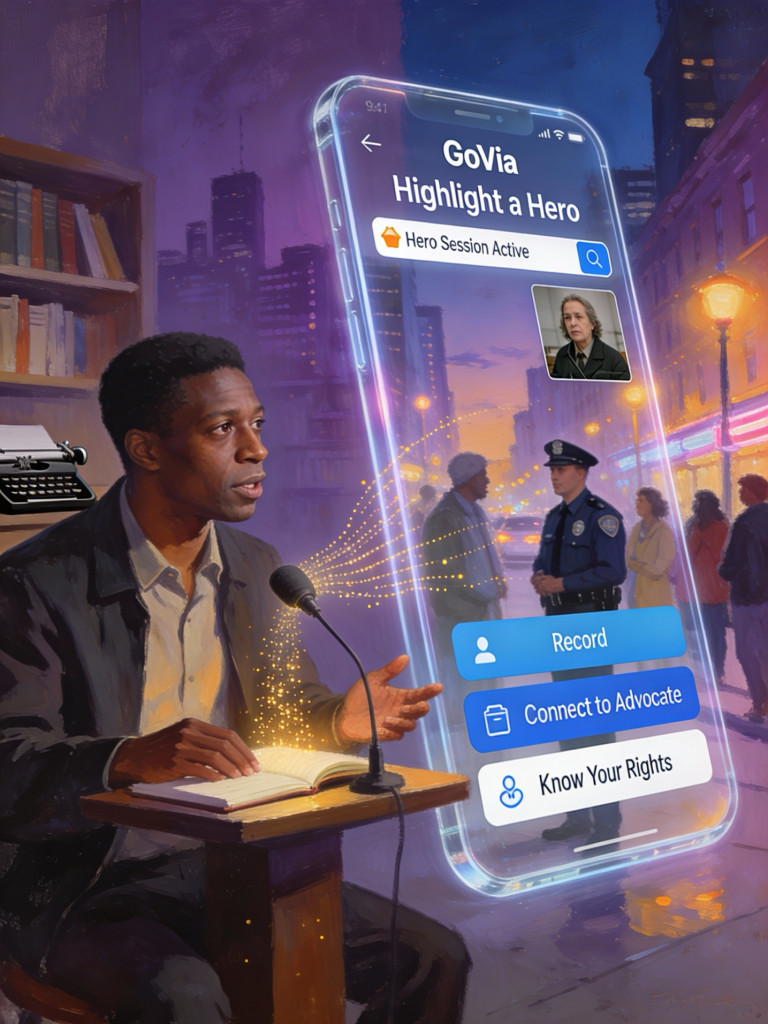
James Baldwin and GoVia Highlight A Hero
James Baldwin
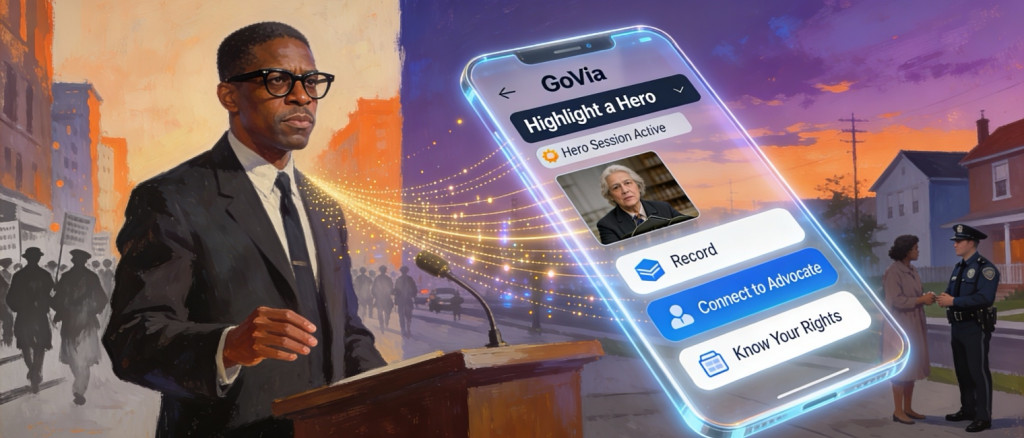
Baldwin said the truth about justice is found not in judges and police, but in “the unprotected… who need the law’s protection the most” and whose testimony reveals whether a nation loves justice at all. From that lens, he might value GoVia Highlight A Hero only insofar as it amplifies the voices of the unprotected, records what really happens on the street, and forces the country to confront its own actions. His brief thought might be:
“A tool like this means nothing if it does not hear the unprotected and make their testimony inescapable. But if it helps them speak, and makes the country look at what it has done, then it may serve justice.”
Malcolm X and GoVia Highlight A Hero
Malcolm X
Malcolm X argued that people facing criminal mistreatment have the right to use whatever effective means to get the oppressor “off [their] back,” and he was clear that communities must protect themselves rather than wait for mercy. In his spirit, he might view GoVia Highlight A Hero as one tactical means of self-defense: a way to document abuse, call in advocates, and make it harder for the system to lie about what happened. His brief thought might be:
“If this tool helps you watch the police while they watch you, if it helps you call for help and prove the truth when they lie, then it is one more way of defending yourself—and I am for anything that truly defends our people.”
Marcus Garvey and GoVia Highlight A Hero
Marcus Garvey
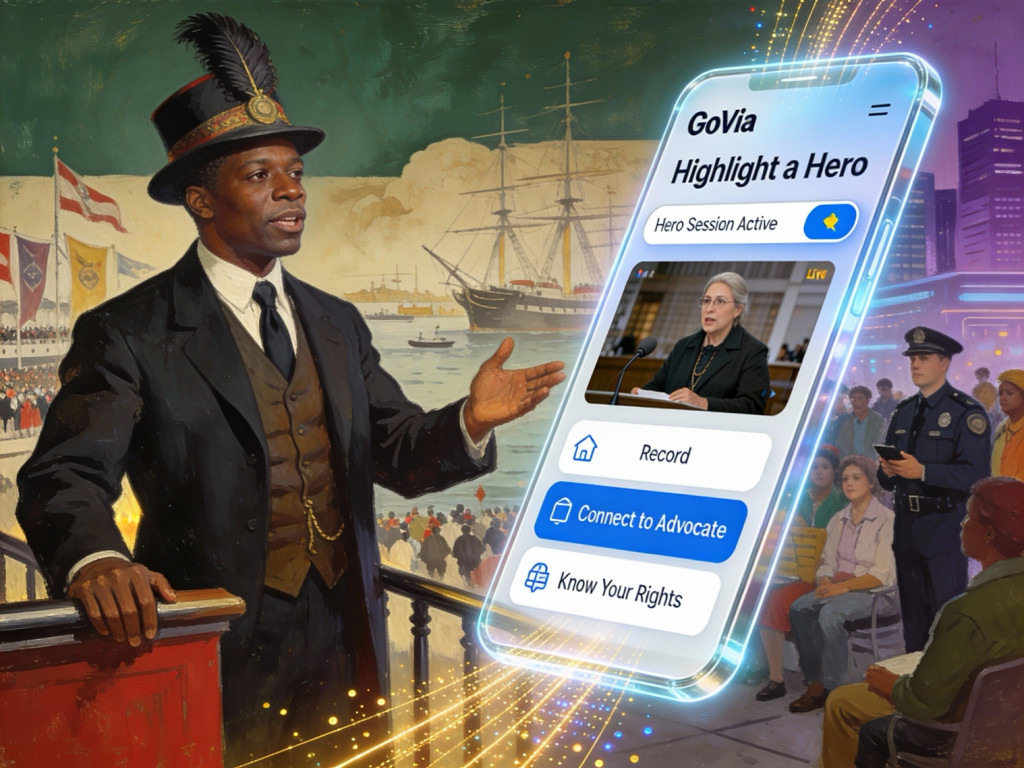
Garvey insisted that only organized Black power can protect Black people, and that protection had to be physical, financial, and scientific. In his spirit, he might see GoVia Highlight A Hero as “one small piece of scientific power in our own hands,” a tool that helps Black communities document injustice, connect to legal aid, and refuse mental slavery by knowing their rights in real time. His brief thought might be:
“Every race must build its own instruments of protection. If this device helps you defend your body, your liberty, and your mind, then use it as one more weapon in the struggle for your own freedom.”