Ohio keeps producing the same nightmare headline: people who did nothing wrong end up in handcuffs, in cells, and sometimes in prison for years before the truth finally catches up. GoVia: Highlight A Hero is built as a safety net around those moments, so that the next Michael Sutton or Kenny Phillips never has to wait 15 years for justice.
The Pattern: How Wrongful Arrests Happen
These recent Ohio cases show the same failure modes repeating in different uniforms and zip codes:
- Hidden or distorted evidence. In the Cleveland case of Michael Sutton and Kenny Phillips, an appeals court found that exculpatory evidence had been withheld, leading to their convictions for a 2006 shooting allegedly involving shots at police; they spent 15 years in prison before being released in 2021 and acquitted at a 2022 retrial. In 2025, Ohio’s Controlling Board approved nearly 3.6 million dollars for three wrongfully imprisoned Cleveland‑area men, with Sutton and Phillips each receiving initial payments of more than 475 thousand dollars.
- Bad ID and bad paperwork. A Galloway man was wrongfully arrested by Lorain police in 2022 and later received a 263 thousand dollar settlement in 2025; the officer involved was disciplined with a suspension, underscoring basic identification and procedure failures.
- Using arrest powers to silence or punish. Trumbull County Commissioner Niki Frenchko was arrested during a July 7, 2022 public meeting; a 2024 federal ruling stated she suffered a “false arrest” and other potentially unlawful acts, even though some claims were narrowed later on appeal.
- Fourth‑Amendment breakdowns at home. In New London, Huron County, a couple alleges that officers stormed their home without a warrant in 2022, arrested them, and used excessive force; by 2025, they had filed a federal civil‑rights lawsuit and two officers faced (later dismissed) felony assault charges and departmental discipline.
Force where control is enough. In Akron in 2021, officers arrested 28‑year‑old Charles Hicks II; body‑camera video shows a now‑former officer packing multiple handfuls of snow into Hicks’s mouth and nose while he was on the ground, leading to a federal civil‑rights lawsuit for excessive force.
Nationally, official misconduct—falsifying or hiding evidence, coercing witnesses, or withholding exculpatory information—is now the single most common factor in exonerations, particularly in serious cases. Ohio is not an outlier; it is a microcosm of a national risk.
Inside the Incident: The Cross‑Functional View
Imagine a snowy Cleveland night in 2006. Patrol cars race through the city after reports of shots fired. Somewhere between radio calls, adrenaline, and incomplete witness accounts, two teenagers—Michael Sutton and Kenny Phillips—become “the suspects” that fit the story forming in officers’ minds.
Here is how each member of our cross‑functional team reads that moment, and the later cases across Northeast Ohio:
- Police advisor. The first duty is to secure the scene and identify real threats, but high‑stress calls push officers toward “closure” instead of accuracy: once someone is tagged as the shooter or aggressor, alternative explanations get filtered out. The Lorain wrongful arrest and the fast, punitive response in Frenchko’s meeting show how quickly control concerns can eclipse careful probable‑cause analysis.
- Public‑community member. From the sidewalk or living room, these encounters look arbitrary: a Galloway man pulled from his home, a couple in New London watching officers cross the threshold without a warrant, an Akron resident held down with snow packed into his face. Trust doesn’t just erode; it shatters.
- Govtech strategist (fixing systems). Each case exposes missing infrastructure: no automatic “second opinion” when probable cause is thin, no digital audit trail tying each decision to policy, no standardized way for bystanders and subjects to preserve evidence that contradicts the immediate police narrative.
- Union representative and tech operator. Officers also pay a price: suspensions in Lorain, termination in Huron County, resignation in Akron, and years of litigation hanging over their careers. Good officers want tools that prove they acted within policy and protect them from false accusations, while unions want reforms that don’t turn every mistake into a career‑ending scandal.
- Mental‑health systems expert. Many volatile encounters begin with a crisis—domestic disputes, emotional breakdowns, or substance use—where officers are trained to see danger, not distress. Hicks’s struggle in Akron, for example, is treated as resistance first, not as a state that might require specialized de‑escalation. Yet about 80 percent of people in severe mental‑health crisis meet police first, not clinicians, which increases the risk that symptoms are misread as defiance or threat.
- Law‑enforcement training specialist. The doctrine is clear: probable cause, clear commands, proportional force, no airway obstruction, no warrantless home entry without exigent circumstances. When officers shove snow into a suspect’s mouth or cross a doorway without a warrant in the absence of imminent danger, that’s a break from training, not its execution. Body‑cam and court records then become the test of whether the department corrects or excuses that break.
- Data scientist. Across the United States, the National Registry of Exonerations recorded 153 exonerations in a single year (2023), with nearly 84 percent involving people of color and official misconduct as the leading cause in homicide cases. Sutton and Phillips add two more data points showing withheld evidence in Ohio; their compensation orders and federal lawsuit sit atop a larger, mostly invisible denominator of wrongful arrests that never reach exoneration stage.
- Police counsel. Every deviation—false arrest claim in Trumbull County, excessive‑force allegation in Akron, warrantless entry complaint in Huron County—turns into civil‑rights exposure, consent‑decree risk, and personal liability battles over qualified immunity. Counsel wants early‑warning systems and real‑time documentation to stop a bad arrest before it becomes a federal case.
- Ohio policy analyst. Ohio already has mechanisms to declare someone “wrongfully imprisoned” and pay compensation, as seen with Sutton and Phillips and their co‑exoneree. But that is retrofit justice; the statutes and grant programs are paying for damage that better front‑end systems—transparent evidence handling, crisis response alternatives, digital oversight—could have prevented.
Story: A Cleveland Night With GoVia Turned On
Now replay one of these cases as it could look in a near‑future Cleveland with GoVia embedded in the ecosystem.
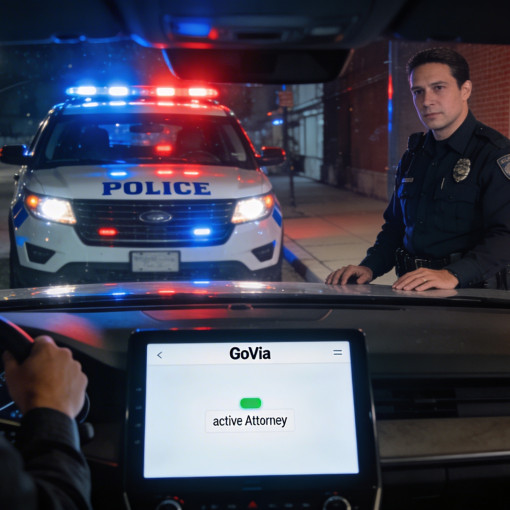
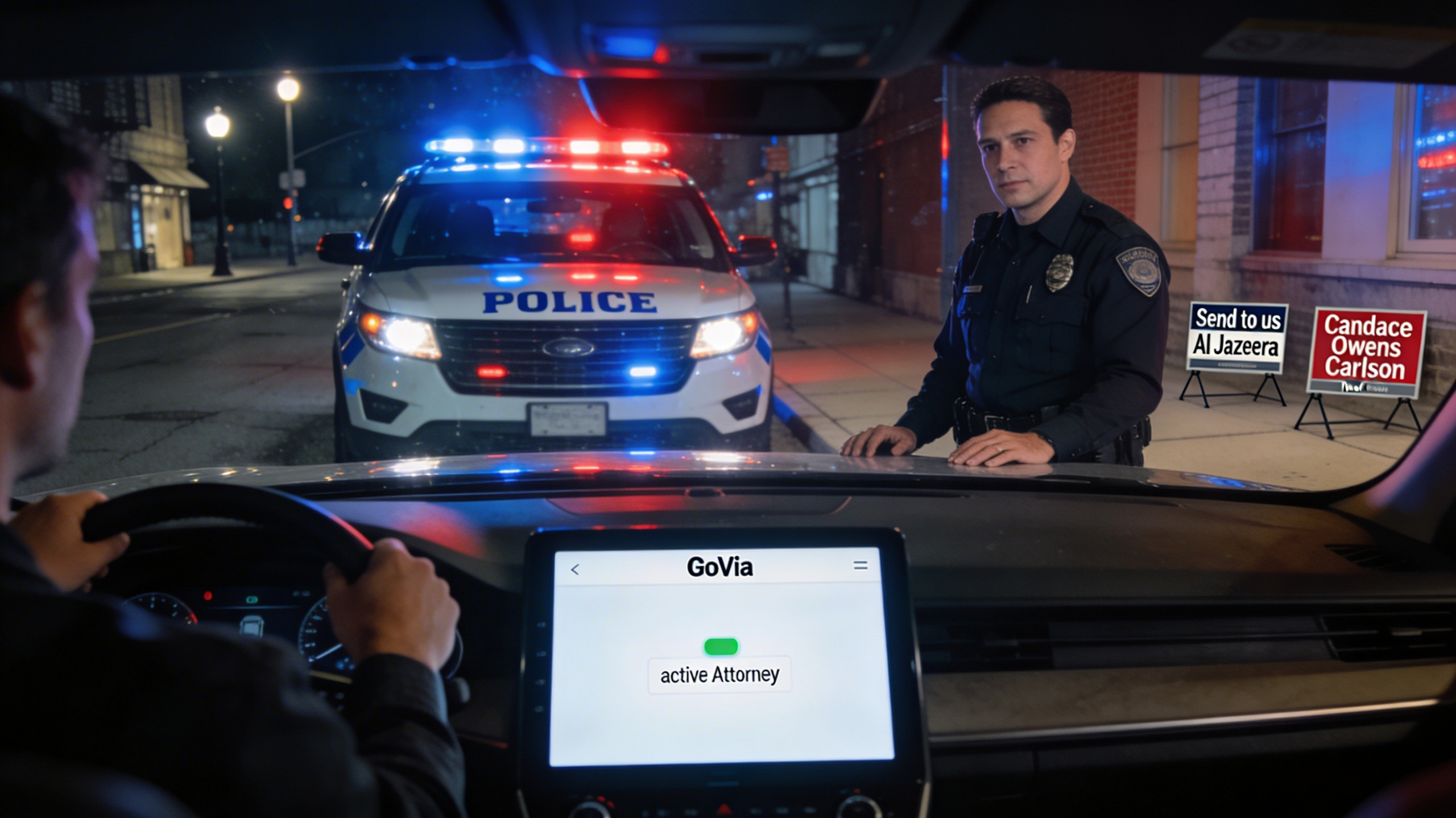
The night is cold; lights bounce off the snow‑lined streets near St. Clair. Officers respond to reports of shots fired near a parked car. Two young men are pulled over several blocks away. They are scared, hands shaking on the steering wheel. One of them has GoVia already installed.
As the cruiser doors slam:
1. The citizen taps “Highlight a Hero.”
The app begins multi‑party, live, encrypted video streaming, capturing dash‑lights, officer commands, and every movement in and around the car. It hashes and time‑stamps the footage so it is courtroom‑ready and cannot be quietly edited or lost.
2. An attorney joins in real time.
Within seconds, a duty attorney from a local defender partnership appears on the phone screen, introduces themselves to the officers, and confirms the legal situation: why the stop, what evidence links these men to shots fired, what are the precise grounds for any arrest. That lawyer is not just advising after the fact; they are a live witness to each decision.
3. Mental‑health and de‑escalation support kicks in.
A mental‑health professional monitors body language and tone through the stream and sends plain‑language prompts: slow your breathing, keep your hands visible, ask calmly what you are being detained for. Officers see on their in‑car dashboard that behavioral‑health support is watching and that the encounter is being scored by GoVia’s AI‑driven sentiment and escalation model.
4. Policy guardrails appear on the officer’s screen.
GoVia is integrated into the department’s training platform. When an officer moves to open a car door or draw a weapon, the system overlays the department’s own policy language, reminding them, for example, that force must be proportional and that airway obstruction tactics like packing snow or other substances are prohibited. For home calls, it flags: “No warrant on file—document exigent circumstances before entry.”
5. Union‑backed safety for officers.
The union has negotiated that GoVia footage is admissible to exonerate officers from false complaints if they stay within policy, and that officers earn “Hero” designations when they demonstrate textbook de‑escalation and rights‑respecting behavior on difficult calls. Those commendations matter at promotion boards and in public perception, creating positive incentives rather than only fear of discipline.
6. Automatic bail and legal triage if an arrest occurs.
If the stop escalates to an arrest, GoVia automatically packages the video, officer audio, GPS, and timestamps into a case file shared with defense counsel, a vetted bail bondsman, and a family contact. This prevents the “disappear into jail” window where poor defendants sit for days, unable to call the right help, while narratives harden around them.
In that version of Cleveland, the question is not “how do we get you out after 15 years?” It is: “how do we make sure every decision tonight is visible, reviewable, and grounded in the law so you never get there?”
Concrete Ways GoVia Helps Prevent Wrongful Arrests in Ohio
From a cross‑functional lens, here is the practical prevention toolkit that GoVia can offer for Ohio:
1. Real‑Time Evidence That Neither Side Controls Alone
Live, multi‑angle recording from citizens, bystanders, and officers, with cryptographic time‑stamps and automatic cloud backup, creates a shared factual record that undermines false reports and hidden evidence.
Auto‑generated incident timelines make it harder for anyone to quietly alter the story months later, as happened in Sutton and Phillips’s case when exculpatory information surfaced years after trial.
2. Live Legal Presence Before the Cell Door Closes
Partnerships with public defenders and civil‑rights firms mean citizens can summon an attorney into the encounter in minutes, not after the arraignment.
That attorney can object in real time to a warrantless home entry in Huron County, or challenge the legal basis of removing a public official from a meeting in Trumbull County, creating a contemporaneous record that judges must reckon with later.
3. Embedded Training and Policy Reminders for Officers
GoVia integrates each department’s use‑of‑force rules, Fourth‑Amendment guidance, and crisis‑response protocols into the devices officers already carry, so that “muscle memory” is constantly reinforced by live digital prompts.
In cases like Akron’s “snow in the mouth” incident, the system could flag prohibited tactics in real time and require a written justification any time force approaches known red‑flag behaviors, deterring violations.
4. Mental‑Health and De‑Escalation Support
HIPAA‑compliant mental‑health consultations are available during active calls, guiding officers toward non‑violent interventions, especially in domestic disputes and crisis situations that often precede wrongful arrests or excessive force.
Post‑incident, GoVia routes both citizens and officers to counseling and social services, reducing the buildup of trauma and burnout that research links to impulsive, policy‑breaking decisions.
5. Data‑Driven Early‑Warning and Policy Reform
Aggregated, anonymized encounter data allows departments and communities to see where wrongful‑arrest risks are highest: specific shifts, units, neighborhoods, or call types.
Ohio agencies can compare their pattern of complaints, use‑of‑force, and dismissals to national exoneration trends, where official misconduct and poor defense are leading factors, and target training and oversight accordingly.
6. Faster Redress When Things Go Wrong
For people already wrongfully arrested, GoVia’s unified record significantly shortens the path to civil‑rights remedies and state compensation, similar to the wrongful‑imprisonment awards Sutton and Phillips received but with far less delay.
Standardized documentation also protects cities from paying out large settlements where officers did in fact act lawfully, because the record is clear from day one, not reconstructed from memory years later.
Highlighting the Hero
In this architecture, the “hero” is not just the person with a badge or the one in handcuffs. The hero is the officer who pauses at the door and says, “We don’t have a warrant, and there’s no exigency; we’re going to do this right.” It is the citizen who calmly opens GoVia, asserts their rights, and documents the encounter. It is the dispatcher who routes a crisis call to mental‑health support rather than only sending a patrol car.
Most importantly, the hero is the system we build together: attorneys who can see the truth as it happens, unions that back accountability as a shield for good officers, technologists who design for courtrooms rather than clicks, and communities that insist that no one in Cleveland, Lorain, Trumbull, Huron, or Akron should ever have to trade 15 years of their life just to prove they were innocent all along.