A mother sat in the wooden benches of the Luzerne County juvenile courtroom, clutching a paper that said her son’s hearing would be “informal.” She had not been told he needed a lawyer, and no one from the court insisted he should have one. Within minutes of the judge walking in, the boy would be found delinquent, shackled, and taken to a private youth detention center—part of a system that was secretly turning children into revenue. This was the reality behind what would become known as the Kids for Cash scandal in Luzerne County, Pennsylvania.
The real scandal in Luzerne County
Beginning around 2003, two Luzerne County judges—President Judge Michael Conahan and juvenile court Judge Mark Ciavarella—used their power to feed children into private detention facilities. Conahan helped shut down the county‑run youth center and ensured contracts for private facilities, including PA Child Care and Western PA Child Care, while both judges received about 2.6 million dollars in illegal payments tied to those centers.
In Ciavarella’s courtroom, the proceedings were shockingly fast and harsh. Reports and later investigations found that many juveniles appeared without lawyers and were not properly advised of their rights; some were sentenced for minor offenses like parodying a school official online, shoplifting, or schoolyard misbehavior. One teen, Hillary Transue, was sent to a boot camp for creating a MySpace page mocking an assistant principal—her case became a national symbol of “zero tolerance” taken to an abusive extreme.
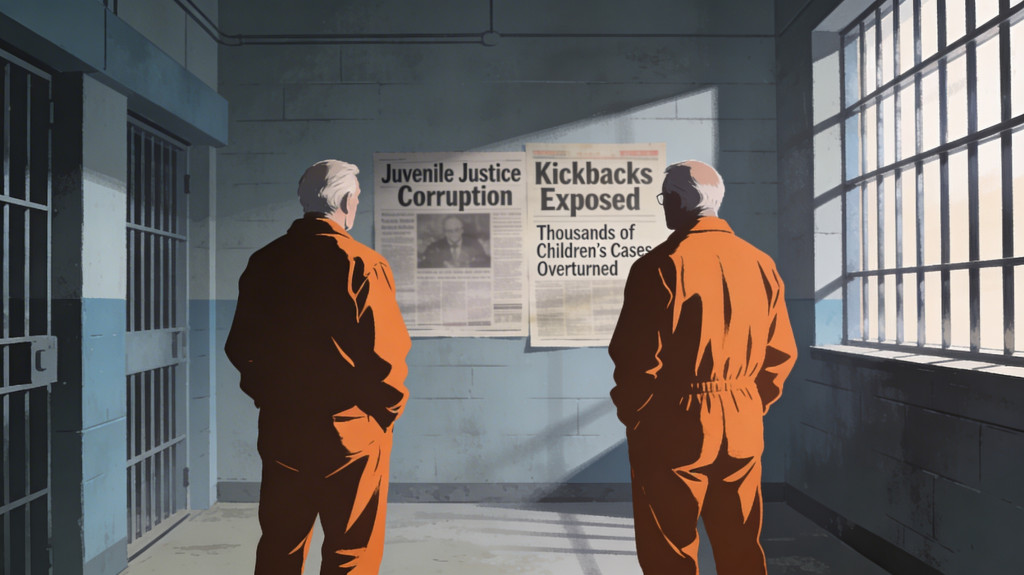
A federal investigation eventually exposed the scheme. Conahan and Ciavarella were charged in 2009, and evidence in civil and criminal proceedings showed they had accepted kickbacks in connection with sending juveniles to for‑profit detention centers. Ciavarella was convicted on multiple counts including racketeering and sentenced to a long federal prison term, while Conahan pleaded guilty to racketeering conspiracy and also received a substantial sentence.
The fallout was enormous. Pennsylvania courts moved to undo the damage: the Pennsylvania Supreme Court ordered all juvenile adjudications by Ciavarella from January 2003 to May 2008 vacated, and more than 2,000 juveniles had their records expunged as part of the cleanup overseen by Senior Judge Arthur Grim. Thousands of cases were tainted, and at least 2,400–2,500 juveniles were directly affected by wrongful or improper adjudications tied to his courtroom during those years.
What went missing: transparency and early warning
The scandal did not happen in a vacuum; it happened in silence. At the time:
- There was no shared, real‑time record of how many children were being sent to specific private facilities by a single judge.
- Families often came to court without attorneys, and there was no centralized place to log and compare those experiences.
- Patterns—like a judge ordering immediate shackling and removal for nonviolent, first‑time offenses—were visible only as private pain in individual homes, not as public data.
Journalists, advocates, and the Juvenile Law Center eventually pieced together the story through tips, individual complaints, and painstaking document review, but by then the damage extended across thousands of children. The Interbranch Commission on Juvenile Justice, created by Pennsylvania’s legislature, later concluded that the system in Luzerne County had been “run amok” and recommended safeguards to prevent similar abuses.
Enter GoVia Highlight A Hero: what the app is designed to do
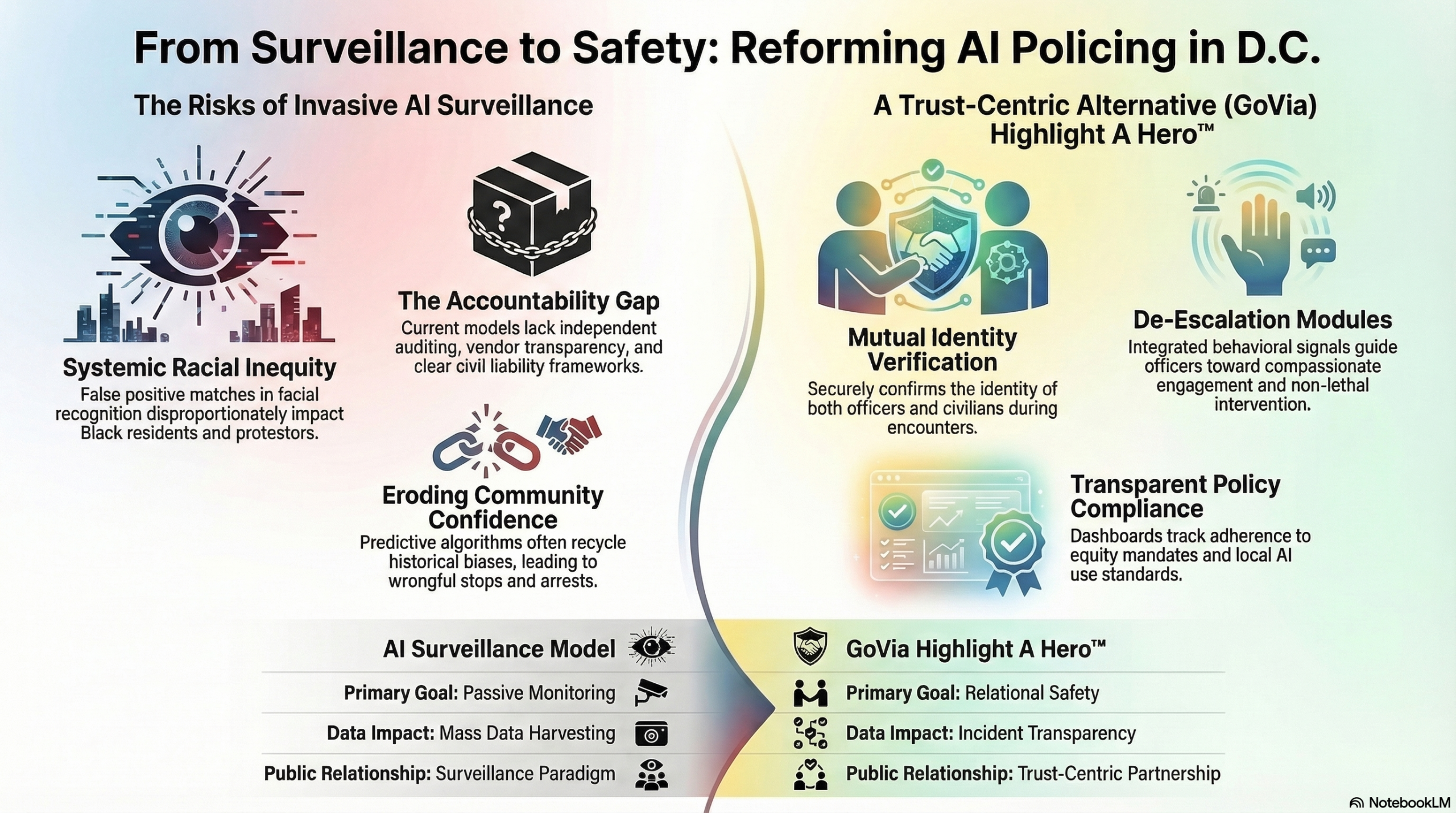
Years later, a very different kind of tool emerges from another part of the country: GoVia Highlight A Hero, a community police safety app designed to modernize encounters between the public and law enforcement with ratings, affidavits, and connections to support.
GoVia’s core ideas include:
- Recording encounters: Community members can document interactions with officers through the app and then submit affidavits—sworn statements—about what happened, creating a verified digital record of both positive and negative experiences.
- Highlighting “heroes”: The app uses an algorithm and a rating system (for example, five‑star ratings and written feedback) to identify officers whose conduct consistently reflects fairness, respect, and professionalism, while also surfacing repeated complaints.
- Real‑time help: GoVia is built to connect civilians to attorneys, crisis intervention specialists, and other supportive resources in real time during or shortly after an encounter, so people are not alone when they navigate stressful or dangerous situations.
While GoVia is framed around policing and community encounters, the underlying model—crowdsourced, affidavit‑backed feedback, combined with analytics to detect patterns—can be extended, at least conceptually, to the broader justice system, including juvenile courts and detention decisions.
How a GoVia‑style system could have changed Luzerne County
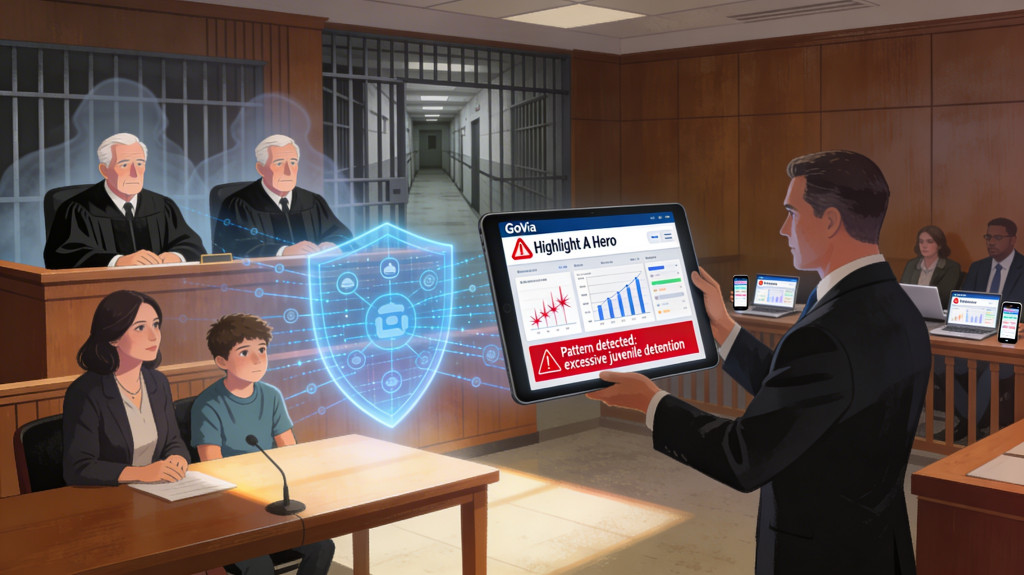
Imagine Luzerne County between 2003 and 2008 with a GoVia‑like ecosystem in place—not only for police, but as a broader “Highlight A Hero” justice platform:
- Documenting hearings and outcomes in real time
Families, youth, and advocates could log each juvenile’s hearing outcome into an app immediately after court: charge, whether the child had an attorney, whether the proceeding felt rushed, and where the child was sent. Affidavit‑style submissions would create a structured, searchable database of experiences, not scattered memories. - Pattern detection on placements and judges
Within months, the data could show that one judge—Ciavarella—was ordering an unusually high percentage of juveniles into the same private facilities, even for minor offenses, and frequently in cases where youth had no counsel. Analytics similar to GoVia’s rating algorithm could flag this as an outlier compared to other counties or statewide baselines. - Visibility of “zero tolerance” as a metric
The app’s dashboards could quantify behaviors the community only felt in their gut: average hearing length, frequency of immediate shackling for nonviolent offenses, and the ratio of detention to probation or community‑based alternatives. If a judge’s pattern showed extremely short hearings and a very high detention rate, the data would be difficult to ignore. - Faster escalation to watchdogs and media
With this data in hand—affidavits from dozens or hundreds of families, all pointing to the same judge, the same facilities, the same lack of counsel—local advocates and state or national organizations could approach the Juvenile Law Center, civil rights groups, or reporters much earlier. Instead of waiting years for a tip to trigger an investigation, clear digital patterns could surface a crisis in a fraction of the time. - Honest officials highlighted, not buried
At the same time, judges, probation officers, and police who safeguarded children’s rights—who insisted on counsel, rejected unnecessary detention, and treated youth with dignity—would generate a visible trail of positive, verified feedback. A “Highlight A Hero” scoreboard for justice actors could have made it easier for the public and policymakers to see who was doing the right thing, not just who occupied the most powerful role.
In a narrative sense, you can show a parent in 2005 opening such an app and seeing a map of Luzerne County: a cluster of red around Ciavarella’s courtroom and certain private facilities, with data‑driven warnings, while other judges and counties appear mostly green. The very existence of that dashboard could have attracted scrutiny before thousands of cases were tainted.
Real people, real harm, and the named criminals
Any fact‑checked story must clearly distinguish between those harmed and those found guilty. In the Luzerne County Kids for Cash scandal, the central convicted judicial actors are:
- Judge Mark Ciavarella Jr. – Luzerne County juvenile court judge, found to have accepted illegal payments connected with private youth detention centers while imposing harsh, often “zero tolerance” sentences on juveniles; his adjudications between 2003 and 2008 were later vacated, and he received a long federal prison sentence.
- Judge Michael Conahan – Former Luzerne County president judge, who helped close the county‑run juvenile facility and arranged for the use of private detention centers while taking illicit payments; he pleaded guilty to racketeering conspiracy and was sentenced to federal prison.
Thousands of children and families—more than 2,000 with expunged cases, and at least 2,400 juveniles in one key settlement class alone—carried the consequences of these decisions in their mental health, education, and records. Civil suits and later damages awards, including multimillion‑dollar settlements, could not fully repair those lives.
A story grounded in these facts can end in the present: the county still wrestling with the long shadow of the scandal, the juvenile system nationwide facing new challenges, and tools like GoVia Highlight A Hero proposing a different path—one where data, community voice, and verified testimony make it much harder for another Kids for Cash to grow in the dark.